

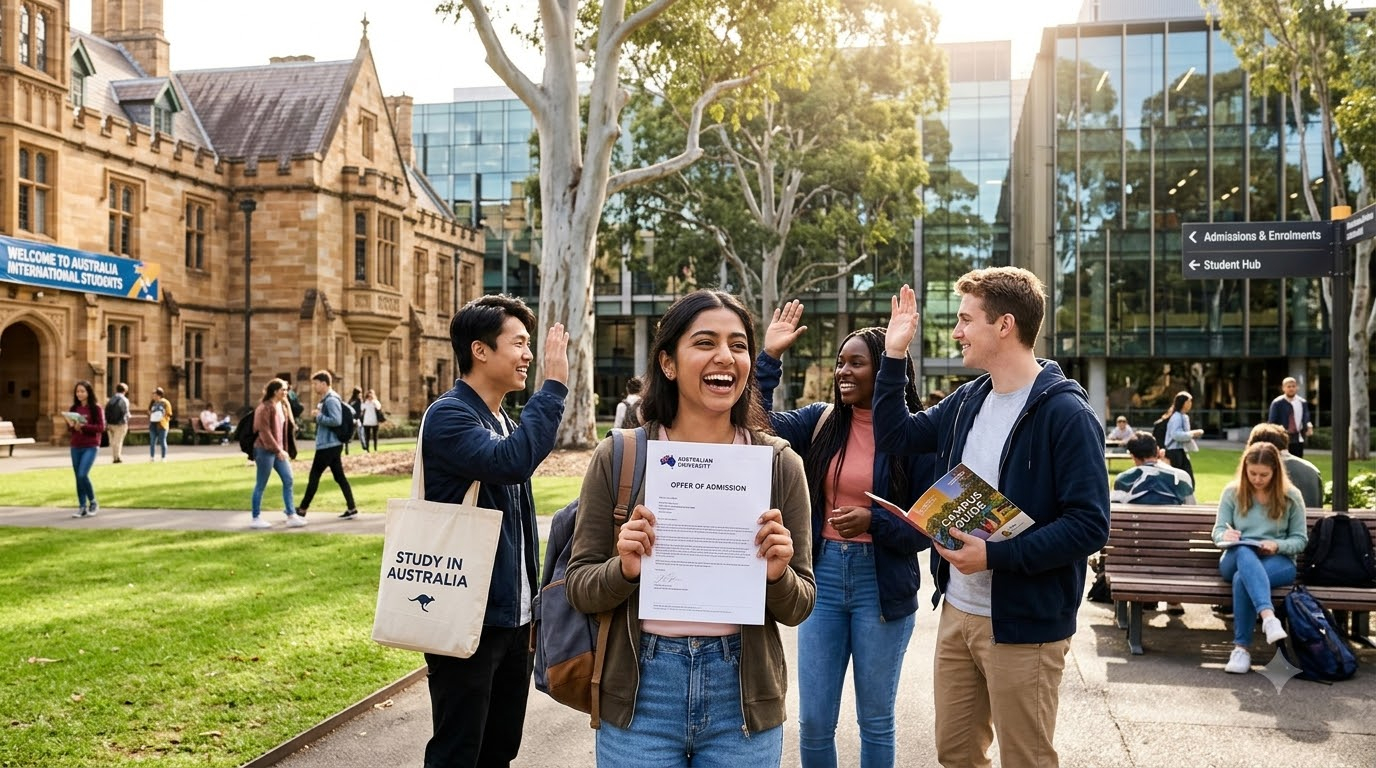

Waiting for a university decision can be stressful, especially when classmates have already received offers or when a course's application deadline is approaching. For Singapore students planning to study overseas, an application delay can also affect accommodation, financial planning and visa preparation.
However, a delayed response does not automatically mean an application has been rejected. Universities may need additional documents, time to assess academic qualifications or clarification about a student's results.
Understanding the next steps can make the process easier to manage. Students planning admission in Australia and preparing their university applications should keep track of deadlines and communicate with the university in a clear, organised way.
Why an Australian university application may be delayed
There is no single reason for every delay. Different universities, courses and application periods have different assessment processes.
Common reasons include:
1. Missing supporting documents
An application may not be ready for assessment if a required document has not been received.
Examples include:
-
Academic transcripts.
-
Examination certificates.
-
English-language test results, where required.
-
Identification documents.
-
Course-specific supporting materials.
-
Certified or officially translated documents, if requested.
A document may have been uploaded but not correctly matched to the application. Students should check the university portal rather than assuming that submission means the document has been accepted.
2. Results are still being assessed
Students applying with predicted results, pending qualifications or a combination of academic records may need to wait for further assessment.
The university may need to establish whether the student's qualification meets the academic entry requirements for the selected course.
3. High application volume
Some application periods attract a large number of applicants. Processing times may vary depending on the university, faculty and course.
A delay during a busy intake period does not necessarily indicate a problem with the application.
4. Course-specific assessment
Some courses may have additional requirements, such as interviews, portfolios, auditions or prerequisite subjects.
If an application involves extra assessment, the timeline may differ from that of a course that considers academic records alone.
5. Communication or administrative issues
An email may have gone to a spam folder, a university may have requested clarification, or a student's contact information may be incorrect.
Students should check every communication channel they provided during the application process.
What to do first when there is no application update
Before contacting the university repeatedly, carry out a structured check.
Step 1: Review the application portal
Log in to the official application portal and check the status.
Look for labels such as:
-
Submitted.
-
Under assessment.
-
Awaiting documents.
-
Additional information required.
-
Decision pending.
The wording varies between universities. If a status is unclear, ask the admissions team to explain it.
Step 2: Check your email carefully
Search the inbox for the university's name, admissions team and application reference. Check spam, junk and other filtered folders.
Also confirm that the university has the correct email address and phone number.
Step 3: Compare your documents with the checklist
Open the course's official application requirements and compare them with the documents you submitted.
Do not send duplicate documents without checking whether they are needed. If something is missing, ask how the university wants it supplied.
Step 4: Check the relevant application timeline
Use the university's published guidance for the specific course and intake. Avoid relying on a general processing estimate from a different faculty or academic year.
If a deadline is approaching, explain this when contacting the admissions team.
How to write an effective follow-up email
A useful follow-up message should be polite, specific and easy to process.
Include:
-
Your full name.
-
Application reference number.
-
Course name.
-
Intended intake.
-
Date of application submission.
-
A clear question about the current status.
-
Any approaching deadline that affects your planning.
Avoid sending an emotional or lengthy message. The admissions team needs enough information to locate the application and understand what you are asking.
Sample email:
Subject: Request for Update on University Application – [Application Reference]
Dear Admissions Team,
I hope you are well.
I am writing to request an update on my application for [course name] for the [intake] intake. I submitted my application on [date], and my application reference is [reference number].
Could you please confirm whether my application is currently under assessment or whether any additional documents or information are required?
I would also appreciate any guidance on the expected next steps, as I am planning my arrangements for the upcoming academic year.
Thank you for your assistance.
Kind regards,
[Full Name]
What if the university requests additional documents?
Respond as soon as reasonably possible and follow the university's instructions.
Before uploading anything, check:
-
Whether the requested document is the correct version.
-
Whether a certified copy or official transcript is required.
-
Whether the document needs to be translated.
-
Whether it must be submitted through a portal or sent by an authorised institution.
-
Whether there is a deadline for supplying it.
Keep a record of the submission date and any confirmation message.
Do not alter academic documents or provide unofficial information as though it were an official result.
How to protect your other application deadlines
One of the biggest risks of waiting for a single university is losing time for other applications.
Students should maintain a deadline tracker covering:
|
Item |
What to record |
|
University application |
Submission date and reference number |
|
Supporting documents |
Required documents and submission status |
|
Offer response |
Acceptance deadline, if an offer is received |
|
Deposit |
Amount and payment deadline, if applicable |
|
Accommodation |
Application dates and cancellation conditions |
|
Visa planning |
Relevant requirements and estimated preparation time |
|
Alternative options |
Other courses and universities still available |
Do not assume that every university will extend a deadline because another institution has delayed its decision.
If an offer deadline is approaching, contact the university that issued the offer and ask whether an extension is possible. An extension is not guaranteed, so make decisions based on written confirmation.
Example 1: A Singapore student with pending final results
A hypothetical student applies to an Australian university using the academic information available at the time of application.
The university acknowledges the application but has not issued a final decision because it needs the student's final examination results.
The student should check whether the university has received all available documents and ask when final results should be submitted. They should also confirm whether the course permits an application to be assessed conditionally.
The important step is to obtain clear instructions rather than assuming that the application is complete.
Example 2: A student whose preferred course has an approaching deadline
Imagine a student has applied for a preferred course but is still waiting for an assessment decision. Another university has already issued an offer with a response deadline.
The student should compare the two courses, check the conditions attached to the existing offer and contact both admissions teams if necessary.
They should not reject a confirmed option solely because they expect another offer to arrive. Equally, they should not accept an offer without understanding its financial and enrolment conditions.
Illustrative case study: Managing uncertainty without missing deadlines
A hypothetical Singapore student applies to three Australian universities. One application is acknowledged, another requests additional academic documents and the third remains under assessment.
Instead of sending repeated messages to all three institutions, the student creates a tracker showing each university's status, outstanding requirements and next deadline.
The student responds to the document request first, sends a concise follow-up to the university with the longest delay and reviews the conditions of the offer already received.
This approach does not guarantee a faster decision, but it reduces avoidable confusion and helps the student keep control of the application process.
When to seek admissions guidance
University applications can involve several moving parts, particularly when students are applying to different institutions with different entry requirements and timelines.
Guidance from an experienced adviser can help students organise documents, understand course requirements and plan alternative options. Families considering study in Australia may benefit from reviewing their application strategy before deadlines become urgent.
The Princeton Review Singapore's homepage provides access to its wider education and admissions information.
Students should always verify final requirements, decisions and deadlines directly with the relevant university. An adviser can help organise the process, but the university remains the authority on its admissions decision.
Conclusion
An Australian university application delay can be frustrating, but it does not automatically mean that something has gone wrong. The most useful response is to check the portal, confirm that documents are complete, review official timelines and contact the admissions team with a clear question.
Singapore students should also protect alternative options and keep track of offer, deposit and enrolment deadlines. A well-organised application process makes it easier to respond calmly, even when a decision takes longer than expected.
FAQs
1. Does a delayed Australian university application mean rejection?
No. A delay may occur because of document checks, academic assessment, application volume or course-specific requirements. Contact the university if the status is unclear.
2. How should I follow up with an Australian university?
Use the official admissions contact channel. Include your application reference, course, intake and submission date, then ask whether anything is outstanding.
3. Should I submit my documents again if there is no update?
First check the portal and ask whether the documents were received. Sending duplicates without checking may create confusion.
4. Can I ask a university to extend an offer deadline?
You can request an extension, but approval is not guaranteed. Obtain written confirmation before relying on a revised deadline.
5. Should I wait for my preferred university before considering other offers?
Review the conditions and deadlines of every offer. Keep alternative options open while waiting, and make decisions based on confirmed information rather than assumptions.

