

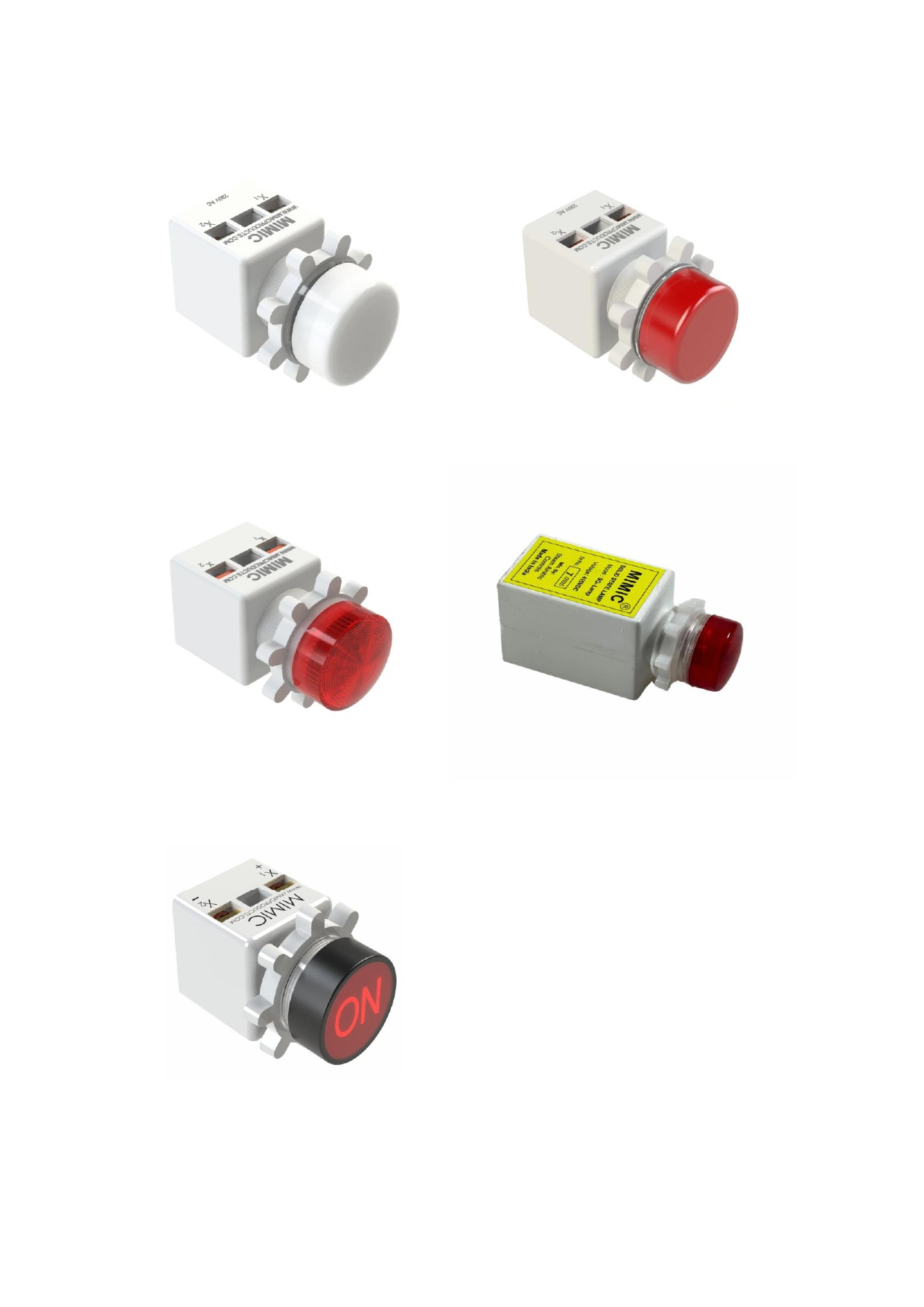
The Importance of LED Indicating Lamps in Industrial Automation, Machinery Monitoring and Electrical Safety

Introduction
Industrial automation has changed the way factories, production units, and processing facilities manage their daily operations. Modern equipment performs multiple functions through electrical control circuits, sensors, relays, programmable controllers, and automated systems.
Although digital displays and advanced monitoring software are increasingly common, simple visual signalling remains valuable in industrial environments.
An LED Indicating Lamp provides a direct way to display selected electrical and machine conditions. It allows operators to recognize specific signals from a control panel without depending entirely on a computer screen or monitoring interface.
These components support equipment monitoring, operator awareness, and organized troubleshooting across a wide range of industrial applications.
How Visual Indication Supports Automation
Automation systems receive information from different sensors and control devices. Based on programmed instructions, the system activates particular outputs to manage equipment operation.
Some of these outputs can operate indicator lamps.
For example, when a machine reaches its operating condition, a corresponding control signal may illuminate a green indicator. If a programmed fault condition occurs, another signal may activate a red warning light.
The indicator therefore serves as a visible representation of a selected control-system signal.
It is important to understand that the lamp itself does not diagnose every machine fault. It only displays the condition represented by the circuit to which it is connected.
1. Supporting Machine Status Monitoring
Industrial machines operate through different stages, including starting, running, stopping, and fault handling.
Visual indication helps operators distinguish between these conditions.
A typical machine control arrangement may include:
-
Power supply indication.
-
Machine-ready indication.
-
Motor-running indication.
-
Warning indication.
-
Trip or fault indication.
When each signal is properly connected and labelled, operators can understand the machine's basic status more easily.
2. Improving Operator Awareness
In production facilities, operators may supervise several machines at the same time.
They cannot always examine every individual component continuously. Visual indicators help communicate important conditions from a distance, provided they are positioned and illuminated appropriately.
This can support:
-
Faster recognition of selected machine states.
-
Easier identification of warning conditions.
-
Better communication between operators and maintenance staff.
-
More organized equipment supervision.
3. Supporting Electrical Maintenance
Maintenance teams frequently investigate problems involving motors, control circuits, distribution equipment, and automated machinery.
An indicator can provide useful preliminary information during inspection.
For example, if a motor-running lamp remains off, technicians may begin checking the associated control signal, supply, protective device, and wiring arrangement.
Similarly, a trip indicator can direct attention towards a particular protective or control circuit.
However, illuminated indicators should never replace electrical testing or proper fault diagnosis.
4. Applications in Motor Control Centres
Motor control centres contain several motor feeders and associated electrical control components.
Each feeder may have its own operating and fault conditions. A suitable visual signalling arrangement helps operators identify the status of individual motor circuits.
Typical indication requirements include:
Supply status: Displays the presence of a designated control or supply voltage.
Running status: Communicates a motor-running condition when the corresponding feedback signal is available.
Trip status: Indicates a selected protective-device or fault condition.
Standby status: Shows that equipment is available but not currently operating, if configured accordingly.
This arrangement can make a complex motor control panel easier to operate.
5. Use in Electrical Distribution Systems
Electrical distribution panels require clear information about their circuits and operating conditions.
Indicators may be connected to suitable sensing or auxiliary circuits to display selected supply conditions.
In three-phase installations, phase indication is one common application. Separate lamps can be assigned to different phases so that electrical personnel can recognize the designated supply status.
The wiring arrangement must be designed correctly. A simple indicator should not be treated as a substitute for an approved voltage-testing instrument.
6. Applications in Process Industries
Several industries depend on continuous equipment monitoring.
Pharmaceutical Manufacturing
Production and utility panels use visual indicators to communicate selected equipment and process conditions.
Cement Plants
Motors, conveyors, fans, and other industrial equipment may use panel-mounted indication for operational monitoring.
Food Processing
Processing machinery uses visual signals to display operating modes and selected machine conditions.
Water Treatment
Pumping and filtration systems can use indicators to communicate equipment status.
Data Centres
Electrical infrastructure panels use status indications to support equipment supervision and maintenance activities.
The suitability of each indicator depends on the installation's technical and environmental requirements.
7. How Different Indicator Functions Help
Industrial applications may require different illumination behaviours.
|
Indicator function |
Typical application |
|---|---|
|
Steady light |
Continuous status indication |
|
Flashing light |
Attention or warning signal |
|
Bi-colour light |
Two designated operating states |
|
Legend indication |
Displaying written status information |
|
High-brightness light |
Applications requiring stronger visibility |
The selected function should correspond to the intended control logic and the manufacturer's product specifications.
8. Combining Indicators with Other Panel Components
Visual indicators work best as part of a properly designed electrical control system.
They may be used alongside:
-
Push buttons.
-
Selector switches.
-
Circuit breakers.
-
Contactors.
-
Protective relays.
-
Electrical meters.
-
Programmable logic controllers.
-
Annunciation systems.
For example, a push button may initiate a machine operation, while a corresponding lamp displays the running condition using an appropriate feedback signal.
This creates a more understandable relationship between operator commands and equipment responses.
9. Electrical Safety Considerations
Although indicator lamps support operator awareness, their installation must follow proper electrical safety practices.
Important precautions include:
-
Match the indicator voltage with the actual circuit.
-
Use suitable protection and wiring arrangements.
-
Ensure proper terminal connections.
-
Follow the manufacturer's installation instructions.
-
Clearly label each indication.
-
Inspect damaged components and connections.
-
Isolate electrical supplies before maintenance.
-
Never rely on an indicator alone to establish that equipment is electrically safe.
An illuminated or non-illuminated lamp may not accurately represent every possible electrical condition, particularly if the indicator circuit itself develops a fault.
10. Exploring Industrial Indication Solutions from Mimic Products
Mimic Products offers LED indicating lamp for electrical switchgear, automation control panels, and industrial applications.
The available range includes different body types, mounting configurations, colours, voltage ratings, and indication functions depending on the selected model. Options include standard, high-brightness, bi-colour, and legend-based indicators.
For businesses involved in electrical panel manufacturing, automation, and industrial maintenance, reviewing the product specifications can help identify a suitable indication solution.
Conclusion
Industrial automation requires reliable communication between machinery, electrical control systems, and operators. Visual indicators provide an uncomplicated method of presenting selected operating conditions directly on equipment panels.
When correctly selected, wired, and maintained, LED-based indication can support machine monitoring, troubleshooting, and operator awareness.
As industries continue adopting advanced automation technologies, clearly designed visual signalling systems remain an important part of effective electrical panel operation.

