

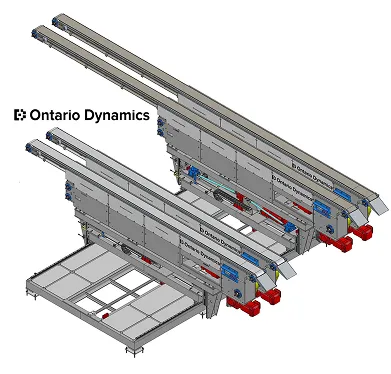
The Role of Special Purpose Machine Manufacturers in Modern Industrial Automation

nufacturers establish more controlled production processes. By combining mechanical systems, electrical components, sensors, and automation technologies, businesses can improve operational performance.
1. Improving Production Efficiency and Output
Production efficiency is a major priority for modern manufacturing businesses. Manual operations can create bottlenecks, increase processing time, and lead to inconsistent production results.
Special Purpose Machine Manufacturers develop customized equipment that performs repetitive operations with improved speed and consistency. Automated systems can complete multiple tasks with limited manual intervention, allowing production teams to focus on supervision and process management.
For example, an automated assembly machine can position, align, and fasten components according to predefined operating requirements. This reduces unnecessary handling and supports a smoother production workflow.
Custom machinery also allows businesses to optimize production cycles according to specific output targets. As a result, manufacturers can improve productivity while making better use of available resources.
2. Supporting Consistent Product Quality
Product quality depends on accuracy, repeatability, and reliable manufacturing processes. Manual production activities may introduce variations because of differences in operator techniques, positioning, and handling.
Automated special purpose machines help reduce these variations by performing operations according to programmed parameters and controlled mechanical movements.
Precision fixtures, sensors, automated inspection systems, and positioning mechanisms help maintain consistency during manufacturing.
For example, a customized inspection machine can measure product dimensions and identify defects according to predefined specifications. This allows manufacturers to detect quality issues earlier and reduce the risk of defective products reaching later production stages.
Consistent processes also support better quality control and more predictable manufacturing outcomes.
3. Reducing Manual Labor and Operational Costs
Many manufacturing operations involve repetitive activities that require considerable time and human effort. Repeated manual handling can also increase the possibility of operational errors and workplace fatigue.
Specialized automation equipment helps reduce dependence on repetitive manual tasks by transferring selected operations to mechanical and automated systems.
Benefits may include:
-
Reduced repetitive manual activities
-
Better utilization of production workers
-
Lower material handling requirements
-
Reduced process inconsistencies
-
Improved production cycle times
-
More efficient resource allocation
Although custom machinery requires an initial investment, a properly designed system can deliver long-term operational value through improved productivity and reduced process inefficiencies.
4. Developing Customized Solutions for Industry-Specific Needs
Every manufacturing facility has different production requirements. Standard machinery may not provide the flexibility or functionality needed for specialized operations.
This is why custom engineering is important in modern industrial automation.
Special Purpose Machine Manufacturers evaluate the specific requirements of a manufacturing process before developing suitable equipment. Engineers consider available floor space, component dimensions, production volume, safety requirements, and integration with existing machinery.
For businesses exploring a special purpose machine Ontario solution, customized equipment can address unique production challenges across different industrial applications.
A machine designed for automotive component assembly, for example, may require specialized fixtures, pneumatic clamping, sensors, and automated positioning. Another manufacturing application may require dedicated testing equipment or material transfer mechanisms.
Customized engineering ensures that machine functionality aligns with actual production requirements.
5. Improving Workplace Safety and Process Control
Workplace safety is another important consideration in industrial automation. Certain manufacturing operations involve heavy materials, repetitive movements, high temperatures, or potentially hazardous machinery.
Automated equipment can reduce direct worker involvement in selected high-risk or repetitive operations.
Modern special purpose machines may incorporate:
-
Emergency stop systems
-
Safety guards and protective enclosures
-
Interlocking mechanisms
-
Sensors and detection systems
-
Controlled operating sequences
-
Safety-focused machine layouts
These features help improve operational control and support safer working environments.
Proper machine design must also consider accessibility, maintenance requirements, operator interaction, and applicable industrial safety standards.
6. Integrating Advanced Automation Technologies
Industrial automation continues to evolve through developments in sensors, programmable logic controllers (PLCs), robotics, and machine monitoring systems.
Special purpose machines can incorporate these technologies to improve coordination between different manufacturing operations.
For example, PLC-based control systems can manage machine sequences, while sensors monitor component positioning and operating conditions. Robotic systems can support automated loading, unloading, and material transfer.
These technologies allow manufacturers to develop more connected and efficient production environments.
Integration with existing equipment is equally important. Engineers must consider communication requirements, production layouts, electrical systems, and mechanical compatibility when developing automated machinery.
7. Supporting Long-Term Manufacturing Growth
Manufacturing businesses often experience changing production demands as product designs, customer requirements, and output targets evolve.
Custom machinery can support long-term growth by providing equipment designed around specific operational needs. Modular designs and adaptable machine configurations may also allow selected systems to accommodate future production changes.
Experienced engineering partners evaluate current requirements alongside potential future improvements.
Ontario Dynamics provides mechanical engineering, equipment design and development, prototyping, testing, and industrial automation solutions. Through a practical engineering approach, businesses can develop specialized machinery that supports production requirements, operational reliability, and manufacturing efficiency.
How to Choose the Right Special Purpose Machine Manufacturer
Selecting the right engineering partner is essential for successful machine development. Businesses should evaluate technical capabilities, industry experience, design expertise, and understanding of manufacturing requirements.
Consider the following factors before making a decision:
-
Engineering experience: Evaluate experience in mechanical design and customized industrial equipment.
-
Design capabilities: Review CAD modeling, machine design, and engineering analysis capabilities.
-
Automation knowledge: Consider experience with sensors, PLCs, control systems, and automated operations.
-
Testing and validation: Confirm the ability to evaluate machine performance before implementation.
-
Manufacturing understanding: Select a partner that considers production efficiency, maintenance, and manufacturability.
-
Technical support: Evaluate communication, documentation, and support throughout the development process.
A suitable engineering partner should understand the complete machine development lifecycle, from initial concept and design to prototyping, testing, and production implementation.
Conclusion
Special Purpose Machine Manufacturers are essential to modern industrial automation because customized machinery helps businesses improve productivity, maintain consistent quality, reduce repetitive manual operations, and address specific manufacturing challenges.
As manufacturing technologies continue to advance, specialized equipment will remain important for businesses seeking efficient and reliable production processes. Through careful engineering, automation integration, and performance validation, manufacturers can develop machinery that supports both current operational needs and future growth.
Ontario Dynamics contributes to industrial development through custom equipment design, mechanical engineering, prototyping, and automation-focused solutions that help businesses move toward more efficient manufacturing operations.
Frequently Asked Questions (FAQs)
1. What do Special Purpose Machine Manufacturers do?
Special Purpose Machine Manufacturers design and develop customized industrial machines for specific manufacturing operations. Equipment may support assembly, inspection, material handling, machining, testing, and automated production processes.
2. What are the main benefits of special purpose machines?
Special purpose machines help improve production efficiency, maintain consistent product quality, reduce repetitive manual tasks, optimize workflows, and support specialized manufacturing requirements.
3. How are special purpose machines different from standard machines?
Standard machines are designed for general applications, while special purpose machines are customized to perform specific industrial tasks. Custom equipment can provide functionality that better matches individual production requirements.
4. Which industries use special purpose machines?
Automotive, aerospace, electronics, metalworking, packaging, and general manufacturing industries commonly use special purpose machines for specialized production and inspection operations.
5. Why should businesses consider a special purpose machine Ontario solution?
A special purpose machine Ontario solution can help manufacturers address specific production challenges through customized equipment designed around operational requirements, available space, and manufacturing objectives.
6. How does Ontario Dynamics support industrial automation?
Ontario Dynamics supports industrial businesses through mechanical engineering, custom equipment design, product development, prototyping, testing, and automation-focused engineering solutions.
7. What should businesses consider before investing in custom machinery?
Businesses should evaluate production requirements, machine functionality, operating costs, safety features, maintenance needs, integration capabilities, and long-term manufacturing goals before investing in specialized equipment.

