

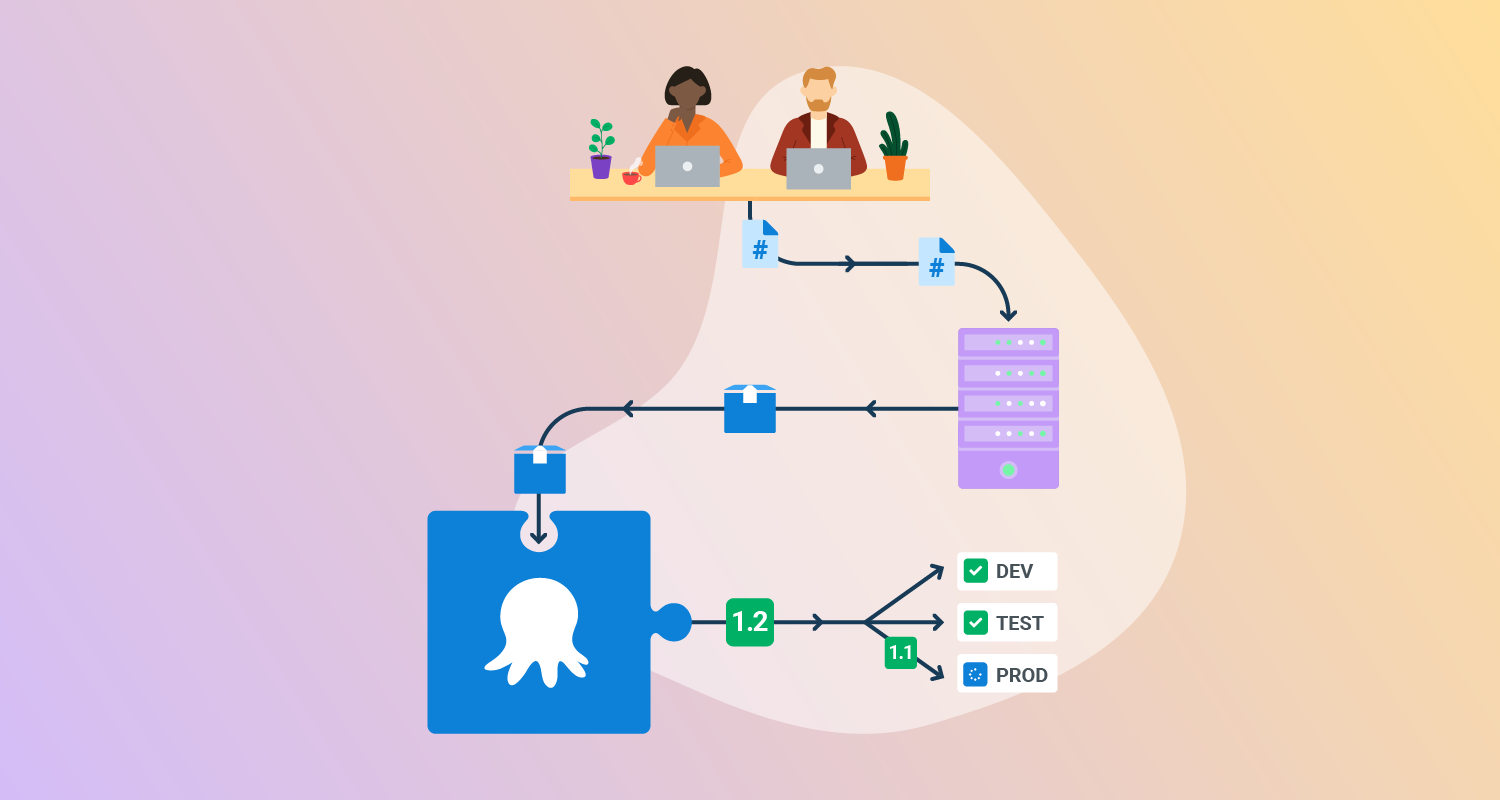

Blue-green deployment reduces release risks by maintaining two production environments and switching traffic to the updated version after testing. This approach helps minimize downtime, improve service availability, and simplify application rollbacks. DevOps Training in Chennai at FITA Academy helps learners understand deployment strategies, CI/CD pipelines, automation tools, and release management practices used to deliver software reliably.
What Blue Green Deployment Actually Means
The idea is simple. You maintain two identical production environments. One is live and serves all user traffic, and the other is idle. By convention they are called blue and green, though the names carry no meaning beyond telling them apart.
When a new version is ready, it is deployed to the idle environment. That environment receives the full release, runs its health checks and passes its smoke tests while real users are still being served by the old version. Only when the team is confident does traffic switch from the live environment to the freshly updated one. The old environment stays untouched and ready, which becomes important later.
Why Downtime Drops So Sharply
The main benefit comes from separating deployment from release. Deploying means putting new code onto servers. Releasing means exposing that code to users. In a traditional pipeline these happen at the same instant. In a blue green pipeline they are two distinct steps, and the risky one, the release, shrinks to a single routing change.
That routing change usually happens at a load balancer, a DNS record or a service mesh rule. It takes seconds, and because the new environment is already warm and verified, users see no restart, no cold caches and no half-updated servers. For teams practicing continuous delivery, where releases happen daily or even many times a day, this turns deployments from stressful events into routine ones.
Fast Rollback Is the Hidden Advantage
Many teams adopt blue green for zero downtime releases and stay for the rollback story. If the new version misbehaves after the switch, recovery does not require a rebuild, a redeploy or a late night debugging session. The team simply routes traffic back to the previous environment, which is still running the last known good version.
Compare that with a conventional rollback, where engineers must redeploy an older artifact, wait for services to stabilize and hope no database changes made the old code incompatible. Blue green compresses recovery from minutes or hours to seconds, which directly lowers the cost of a bad release. When failure is cheap, teams become more willing to ship small changes often, and that is the heart of continuous delivery.
Fitting Blue Green Into the Pipeline
A healthy blue green workflow follows a predictable sequence inside the delivery pipeline.
-
The pipeline builds and tests an artifact as usual.
-
The artifact is deployed to the idle environment.
-
Automated checks run against that environment, including health endpoints, integration tests and synthetic transactions.
-
If checks pass, the pipeline shifts traffic to the new environment, either all at once or gradually.
-
The previous environment is kept on standby for a defined period before being recycled for the next release.
Some teams combine this with canary techniques, sending a small slice of traffic to the new environment first and watching error rates and latency before completing the switch. This hybrid approach adds confidence without giving up the instant rollback that makes blue green attractive.
The Hard Part Is Data
Blue green looks effortless for stateless services and becomes harder when a database is involved. Both environments typically share the same data store, so schema changes must work with both the old and new versions of the application at once.
The usual answer is the expand and contract pattern. First, expand the schema in a backward compatible way, such as adding a new column without removing the old one. Then deploy the new application version, and only after the old version is retired, contract the schema by removing what is no longer needed. This discipline takes planning, but it also protects against a class of failures that no deployment strategy can fix on its own.
Sessions, caches and background jobs also deserve attention. If user sessions live in server memory, a traffic switch can log everyone out. Externalizing session state and draining in-flight jobs before the cutover keeps the experience seamless.
Costs and Trade-Offs
Running two production environments is not free. Infrastructure costs can rise, especially for large systems. Cloud platforms soften this because the idle environment can be provisioned just in time and torn down after the release, so teams pay for the duplicate capacity only during the deployment window.
There is also operational complexity. Configuration must stay identical between environments, and drift between them can produce the kind of surprise that blue green is supposed to prevent. Infrastructure as code and automated environment provisioning are the best defenses, because they make both environments reproducible by design.
When It Makes Sense
Blue green suits systems where downtime is expensive, releases are frequent and fast recovery matters, which describes most customer facing platforms. It is less compelling for small internal tools where a brief maintenance window is acceptable.
A successful deployment strategy should be small, visible, and reversible. By preparing the new version beside the old one and switching traffic only when everything checks out, teams cut downtime, shorten recovery, and gain the confidence to ship more often. For any continuous delivery pipeline aiming at reliability, it is one of the most practical patterns to adopt. AWS Training in Chennai helps learners understand deployment strategies, cloud infrastructure, and reliable application delivery using AWS services.

