

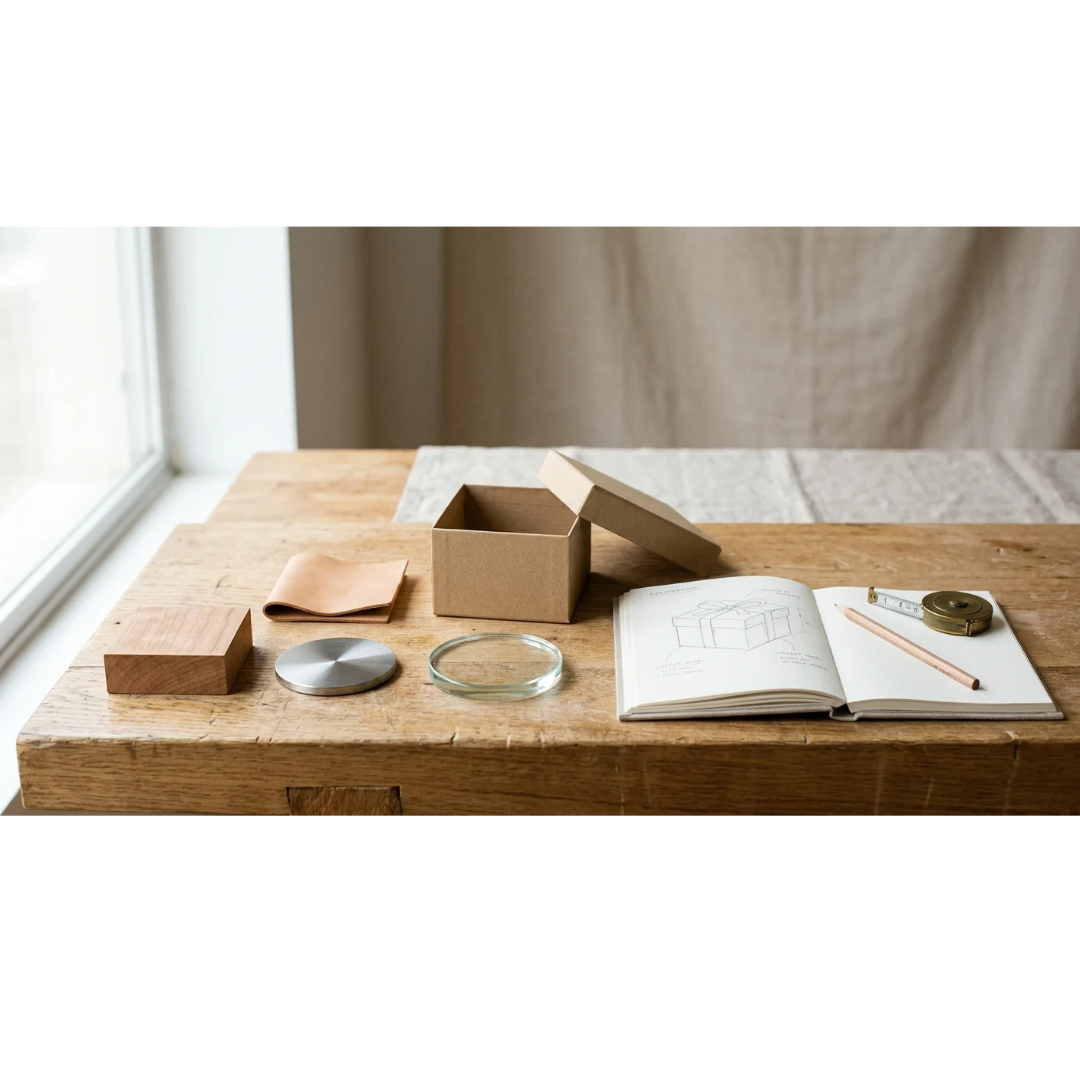

The main difference between bespoke custom gifts and standard personalised gifts is the level of involvement in their design and creation. Standard personalised gifts usually involve adding a name, logo, message, or photograph to an existing product. Bespoke gifts, on the other hand, are developed around a particular person, occasion, brand identity, or purpose. Their design, materials, presentation, and packaging can all be decided according to the requirements of the customer.
For businesses, this difference matters when a gift needs to represent more than a simple gesture. Corporate milestones, client appreciation events, government ceremonies, and employee recognition programmes often call for gifts that carry a particular meaning.
1. The Design Process Is Different
Standard personalised gifting generally starts with an existing catalogue. A customer selects an available product and chooses the personalisation required. This might include engraving a person's name on a pen, printing a company logo on a notebook, or adding a message to a gift box.
Bespoke gifting starts with an idea rather than a ready made product. The designer first understands the occasion, intended recipient, budget, and purpose. Based on these details, a concept is developed before production begins.
For example, a company celebrating its 25th anniversary might want a gift that represents its history. Instead of choosing an ordinary corporate gift, the design team could develop a commemorative object featuring the company's founding year, identity, and important milestones.
This approach gives the final product a stronger connection to the occasion.
2. Materials and Craftsmanship Offer More Choices
Material selection is another important difference between the two options.
Standard personalised products are generally available in fixed materials and finishes. Customers can choose from the available options, but their choices may be limited by the manufacturer's catalogue.
With bespoke custom gifts, material selection can form part of the design process itself. Depending on the concept and budget, designers may work with:
-
Wood for traditional and handcrafted gift pieces.
-
Metal for engraved keepsakes and corporate awards.
-
Glass and crystal for premium presentation items.
-
Acrylic for contemporary designs and display pieces.
-
Fabric and leather for customised accessories.
-
Special packaging materials for a distinctive presentation.
The choice depends on the intended use, appearance, durability, and production quantity.
For example, a gift for a senior business partner may require a different finish and presentation from a gift distributed to 300 employees during an annual company event.
3. Personalisation Goes Beyond Adding a Name or Logo
Personalisation is often limited to the surface of a product. Adding a company logo, recipient's name, or short message can make an existing item more relevant to the person receiving it.
Bespoke gifting takes a wider approach. The entire concept can reflect the recipient's interests, company history, cultural background, or the significance of an event.
Consider a company recognising employees who have completed 10 or 20 years of service. A standard personalised gift might be a branded diary or pen. A specially designed recognition piece could include the employee's service period, company values, and a design connected to the organisation's identity.
The difference is not simply the appearance of the gift. It is the thought and planning behind what the recipient receives.
4. Corporate Events Require Different Gifting Approaches
Businesses organise several occasions where gifts play an important role. These include annual meetings, product launches, client appreciation programmes, employee rewards, and company anniversaries.
Each occasion has a different requirement.
For instance, a product launch may call for gifts that reflect the product's design or industry. An employee recognition programme may require individual pieces based on achievement levels. A client appreciation event may need carefully selected items that reflect the business relationship.
This is where bespoke custom gifts become useful for organisations that want their gifting to match the purpose of an event.
The quantity also matters. A business ordering 20 gifts for senior clients may have different design and packaging requirements from an organisation preparing 500 gifts for a corporate gathering.
Planning these details before production helps businesses manage costs, timelines, and delivery expectations.
5. Packaging and Presentation Matter More Than Many Businesses Realise
A gift is not judged only by the item inside the box. Its packaging also affects how the recipient experiences it.
Standard personalised gifts usually come with available packaging options. These may include regular gift boxes, printed bags, or simple wrapping.
Bespoke gifting allows packaging to be planned alongside the product. The box size, material, colour, arrangement, and printed details can all be considered as part of the overall concept.
For example, a heritage themed corporate gift may use traditional patterns and materials that reflect its cultural background. A contemporary business gift may require minimal packaging with carefully selected finishes.
For large orders, packaging also needs practical planning. Items must be packed safely, labelled correctly, and prepared for transportation, particularly when gifts are being sent to different office locations.
6. Production Time, Budget and Quantity Need Proper Planning
One common misunderstanding is that every bespoke gift is automatically expensive. The actual cost depends on the materials, design complexity, quantity, production method, and packaging.
Standard personalised items are often easier to price because the product already exists. Bespoke projects may require additional time for concept development, sample approval, material selection, and manufacturing.
Businesses should discuss the following details before confirming an order:
-
Number of gifts required.
-
Expected budget per recipient.
-
Design and personalisation requirements.
-
Material and finishing preferences.
-
Sample approval and production timelines.
-
Packaging and delivery arrangements.
For example, an organisation planning a large annual gifting programme should finalise its recipient list and quantities early. This gives the production team sufficient time to prepare samples, confirm specifications, and arrange delivery.
7. Choosing the Right Gifting Partner
The quality of the final gift depends partly on the team handling the project. Businesses should look beyond product photographs and ask about the actual design and production process.
A suitable gifting partner should understand the occasion, provide clear design suggestions, explain material choices, and communicate realistic production timelines.
ABD Xclusiv offers gifting services for corporate milestones, government dignitaries, personal celebrations, weddings, and heritage occasions. Its approach includes concept development, curated gift collections, custom packaging, and delivery coordination.
For organisations planning gifts for multiple recipients or locations, having design and logistics managed together can make the process easier.
Conclusion
The choice between standard personalised gifting and bespoke gifting depends on what a business wants the recipient to experience. Standard options work well when the requirement is simple, quantities are fixed, and personalisation is limited to names or logos.
Bespoke custom gifts are more suitable when the occasion requires a specific concept, selected materials, individual design details, and coordinated presentation.
Before placing an order, businesses should consider the purpose of the gift, recipient expectations, quantity, budget, and delivery schedule. A well-planned gifting project is not just about selecting an attractive item. It is about choosing something that makes sense for the occasion and the people receiving it.
Frequently Asked Questions
Q.1 What is the main difference between bespoke and personalised gifts?
Ans. Personalised gifts usually involve adding names, logos, or messages to existing products. Bespoke gifts are designed according to specific requirements, including the product concept, materials, finish, and packaging.
Q.2 Are bespoke gifts suitable for corporate events?
Ans. Yes. They are suitable for employee recognition, client appreciation, company anniversaries, award ceremonies, and business celebrations.
Q.3 Can businesses order bespoke gifts in bulk?
Ans. Yes. Businesses can discuss bulk quantities, design specifications, packaging, production schedules, and delivery arrangements before confirming an order.
Q.4 What materials are commonly used for custom corporate gifts?
Ans. Common materials include wood, metal, glass, crystal, acrylic, leather, and fabric. The selection depends on the design, budget, intended use, and required finish.
Q.5 How long does it take to create a bespoke gift?
Ans. Production time depends on the design, materials, order quantity, and approval process. Businesses should discuss timelines with their gifting partner before confirming the project.

