

How Are Smart Technology and User Centred Design Changing Modern Home Appliances?

Smart technology and user centred design are changing modern home appliances by making everyday products more intuitive, connected, energy conscious, and suitable for different household needs. Appliances are no longer judged only by their ability to perform a task. Consumers also expect easy controls, practical features, simple maintenance, and technology that makes daily activities more convenient.
This shift is changing how manufacturers approach Home Appliances Design. Instead of adding digital features simply to make a product appear modern, designers are focusing on how people interact with appliances, where they use them, and what problems need to be addressed. The result is a more thoughtful approach to product development that connects consumer behaviour, industrial design, engineering, and manufacturing.
1. Smart Technology Is Changing How Appliances Work
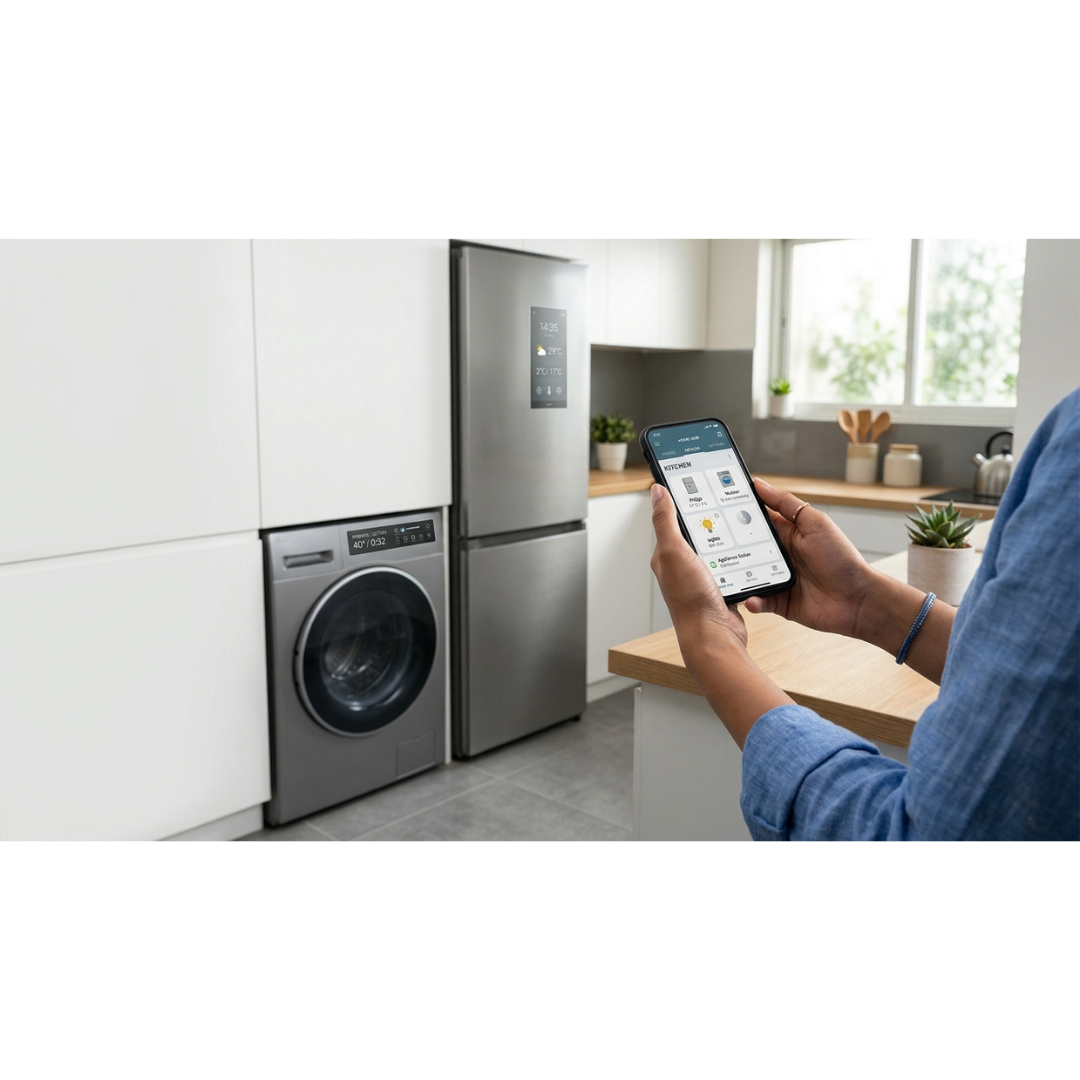
Connected technology has introduced new ways for people to operate and monitor household appliances. Sensors, mobile applications, digital displays, and Internet of Things (IoT) connectivity are becoming part of modern product development.
For example, a smart washing machine can offer different washing programmes based on fabric type and load requirements. A connected air conditioner can allow users to adjust temperature settings through a mobile application. Similarly, a smart refrigerator may provide temperature monitoring and alerts.
However, adding connectivity alone does not make an appliance useful. Designers must consider whether these features solve an actual household problem.
Important considerations include:
-
Simple pairing between the appliance and mobile application.
-
Clear notifications and operating instructions.
-
Easy access to frequently used settings.
-
Appropriate placement of sensors and digital displays.
-
Manual controls when internet connectivity is unavailable.
These details help technology become a practical part of everyday appliance use.
2. User Centred Design Makes Everyday Interactions Easier
User centred design starts with understanding the people who will use a product. Designers study household routines, physical requirements, common difficulties, and differences in user behaviour before developing the appliance.
A kitchen appliance, for instance, may be used by several family members with different levels of technical familiarity. If its buttons are confusing or its controls require repeated instructions, the product can become inconvenient despite having useful features.
Designers address these issues through:
-
Clearly labelled and logically arranged controls.
-
Comfortable handles and accessible buttons.
-
Displays that communicate information clearly.
-
Appropriate product height and operating angles.
-
Simple cleaning and maintenance access.
-
Visual and tactile feedback during operation.
This approach is particularly important in Indian households, where appliances may be shared by multiple generations.
For manufacturers, better usability can also reduce customer complaints, product returns, and the need for repeated customer support.
3. Connected Interfaces Are Becoming Part of Product Design
Modern appliances often combine physical controls with digital interfaces. This means designers must plan how users interact with both the product and its connected software.
A touchscreen may provide several operating options, but it should not make basic functions difficult to access. Frequently used settings should remain easy to locate, while less common functions can be placed within secondary menus.
For example, a smart cooking appliance should make temperature adjustment, cooking time, and operating status easy to understand. Users should not have to move through several screens to complete a routine task.
Designers also need to consider:
-
Display visibility under different lighting conditions.
-
Button size and touch sensitivity.
-
Language accessibility.
-
Feedback when a command is accepted.
-
Privacy and security of connected information.
-
Consistent interaction across physical and digital controls.
The objective is to make the interface understandable without requiring users to spend unnecessary time reading instructions.
4. Energy Efficiency and Practical Functionality Go Together
Energy consumption is another important factor influencing modern appliance development. Consumers are increasingly interested in products that support responsible electricity and water use without making everyday tasks difficult.
Smart sensors can help appliances adjust their operation according to actual usage conditions. Washing machines can use load detection, while air conditioners can respond to temperature settings and room conditions.
However, energy efficiency depends on more than software. Product architecture, insulation, motors, airflow, component selection, and thermal management also influence performance.
Designers must therefore work closely with engineers to balance:
-
Energy consumption and operating performance.
-
Product size and internal component arrangement.
-
Heat management and ventilation.
-
Material selection and product durability.
-
Maintenance requirements and component accessibility.
These decisions need to be addressed during the early development stages rather than after the product has been designed.
5. Indian Household Requirements Are Influencing Appliance Development
Appliances designed for Indian consumers must respond to different household conditions. Space availability, regional cooking habits, frequent usage, humidity, dust, and varying infrastructure can all influence product requirements.
A large appliance designed around international household standards may not fit comfortably into a compact Indian kitchen. Similarly, a water purifier must account for local water conditions, available counter space, cleaning requirements, and regular filter replacement.
A useful example is the Pureit Marvella project developed by Studio ABD for Hindustan Unilever. Its design considered Indian kitchen dimensions, water conditions, everyday handling, and clear product interactions.
The Brita MyPure project also demonstrates how product interfaces can respond to different users. Its design focused on making operating states and important information understandable through clear visual communication.
These examples show why local consumer research matters when developing products for different markets.
6. Manufacturing Feasibility Still Matters in Smart Appliance Design
A product may have an attractive appearance and useful technology, but it must also be practical to manufacture at the required scale.
Connected appliances involve several components, including circuit boards, sensors, displays, wiring, motors, and mechanical assemblies. All these elements need appropriate space, protection, ventilation, and access for maintenance.
This makes early collaboration between industrial designers, engineers, electronics specialists, and manufacturers important.
Design for Manufacturing (DfM) helps address practical requirements such as:
-
Reducing unnecessary component complexity.
-
Planning assembly and fastening methods.
-
Selecting suitable materials and manufacturing processes.
-
Reviewing tooling requirements.
-
Managing component costs.
-
Providing access for repairs and maintenance.
For businesses, addressing these factors early can reduce costly design changes during production.
7. How Design Studios Help Businesses Develop Smarter Appliances
Developing a modern appliance requires more than product styling. Businesses need a development partner who understands consumer research, product architecture, ergonomics, technology integration, prototyping, and manufacturing requirements.
Studio ABD brings these areas together through its industrial design and product development services. Its approach covers product strategy, user research, concept development, interface design, engineering coordination, CMF strategy, prototyping, and production support.
With more than 15 years of professional design experience, the studio works with manufacturers, established consumer brands, OEMs, and emerging businesses.
This type of multidisciplinary involvement helps companies address practical product requirements before investing in tooling and large scale manufacturing.
Conclusion
Smart technology and user centred design are changing appliance development by placing greater importance on usability, connectivity, energy consumption, and real household requirements. A successful product needs to combine useful technology with clear controls, practical construction, comfortable interactions, and manufacturing feasibility.
For businesses developing new appliance categories or updating existing product ranges, these factors should be part of the initial design brief. Working with an experienced industrial design studio such as Studio ABD can help connect consumer expectations with engineering and production requirements.
The future of Home Appliances Design will depend not on how many features a product offers, but on how effectively those features serve the people using it.
Frequently Asked Questions
Q.1 What is the role of smart technology in modern home appliances?
Ans. Smart technology allows appliances to use sensors, connected applications, digital displays, and automated controls. These features can support better monitoring, operating convenience, and energy management.
Q.2 Why is user centred design important for home appliances?
Ans. It helps designers understand user requirements, physical comfort, household routines, and common operating difficulties. This leads to appliances that are easier to operate, clean, and maintain.
Q.3 How does IoT connectivity improve household appliances?
Ans. IoT connectivity allows compatible appliances to communicate with mobile applications and other connected systems. Users may monitor operating conditions, receive alerts, and adjust selected settings remotely.
Q.4 What challenges do designers face when developing smart appliances?
Ans. Common challenges include component integration, interface clarity, connectivity, electrical safety, thermal management, manufacturing costs, and long term maintenance.
Q.5 How does industrial design influence appliance manufacturing?
Ans. Industrial design influences product structure, materials, component placement, ergonomics, assembly, and visual identity. Early coordination with engineering teams can reduce production difficulties and unnecessary redesign.
Q.6 What should businesses look for in a home appliance design studio?
Ans. Businesses should assess the studio's experience in consumer research, industrial design, technology integration, prototyping, engineering coordination, and Design for Manufacturing. Experience with production focused projects is particularly valuable.

