

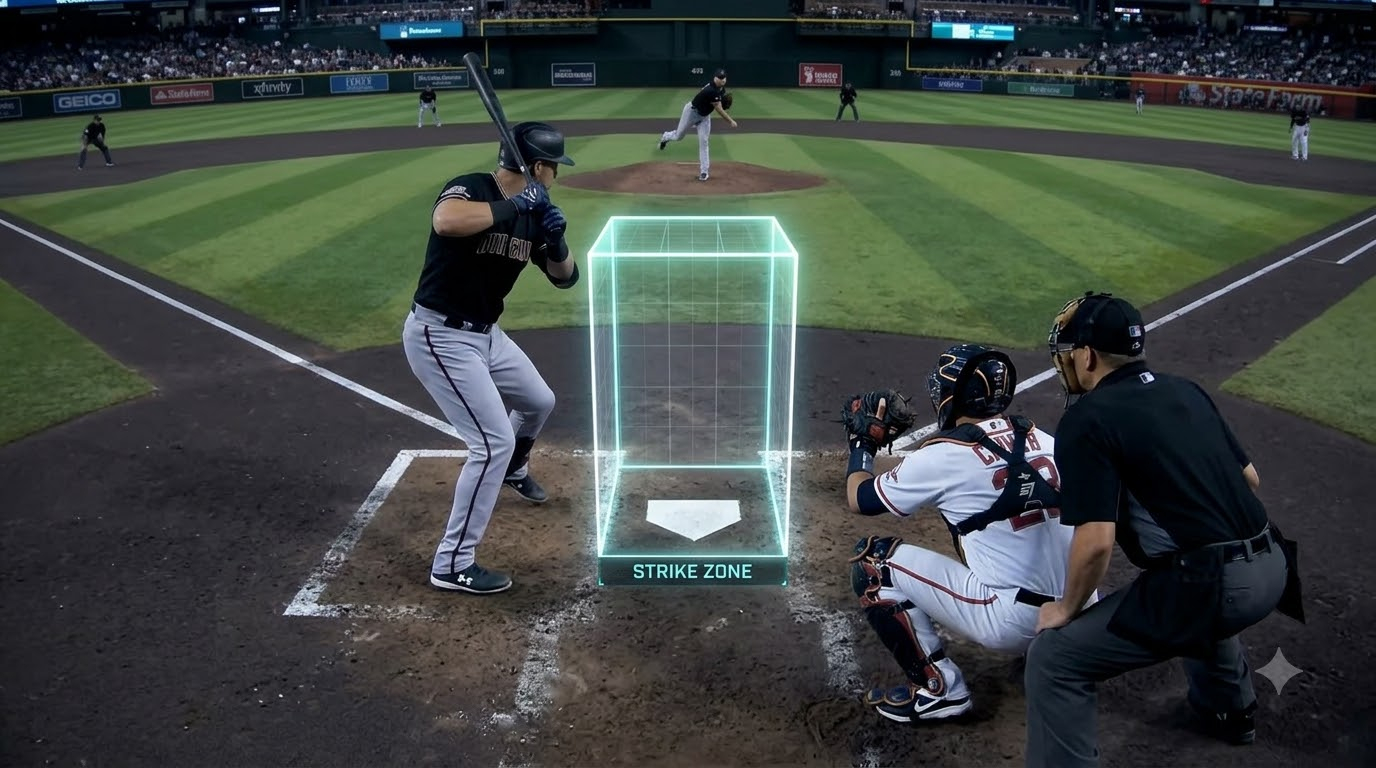
Strike Zone Home Plate: How to Make Pitching and Umpire Practice More Consistent

A useful strike-zone practice session should help players and officials recognise pitch location, discuss borderline calls, and repeat the same training situations. A strike zone home plate for structured pitching, hitting, and umpire drills can make those sessions easier to organise because it gives participants a visible reference instead of relying entirely on verbal descriptions. The key is to use the marked zones as a teaching aid, not as a substitute for the rules or the umpire's judgment.
Coaches often notice that players understand the idea of a strike zone but struggle to apply it consistently. A pitcher may know where a pitch was intended to go but have difficulty judging where it crossed the plate. A hitter may swing at pitches outside the preferred area, while a developing umpire may find it difficult to explain why two pitches that look similar receive different calls.
A visual training tool can help address these problems when it is combined with realistic repetitions, clear feedback, and an understanding of the rules used in the competition.
Why verbal strike-zone instruction is not always enough
Telling a pitcher to throw a strike or asking a hitter to recognise a borderline pitch does not always give the player enough information to improve. The instruction describes the desired result but may not explain the location that needs attention.
This becomes particularly challenging when several people are learning at the same time. A coach may describe a pitch as high, low, inside, or outside, but players can interpret those words differently depending on their stance, position, and viewing angle.
A marked training surface provides a shared visual reference. Participants can point to a zone, discuss a pitch location, and repeat the same exercise without having to recreate the explanation each time.
The TAG Zone Home Plate is made from heavy-duty molded rubber and features marked strike-zone lanes in green, yellow, and orange. TAG describes it as a teaching aid for proper strike zones, pitching and hitting skills, and umpire training. Those features make it useful for organising visual drills, although coaches should still apply the relevant competition rulebook when teaching official strike calls.
First, separate the training diagram from the official strike zone
One important coaching mistake is treating a coloured diagram as if it defines the official strike zone for every batter and every league.
In baseball, the strike zone is determined by the applicable playing rules and the batter's position when the batter is prepared to swing. The relevant boundaries can therefore depend on the individual batter and the governing rules of the competition.
A training plate provides a simplified visual aid. It can help a player understand pitch location, but it does not automatically account for every individual measurement, stance adjustment, or league-specific interpretation.
Use the marked lanes to start a conversation, then connect that visual reference to the rules your players will actually follow.
For example, a youth coach should not assume that every age group uses identical rules. Before a practice session, check the league's current regulations and explain how the training exercise relates to them.
Build a practice station that produces useful feedback
A good drill needs more than a marked plate and a bucket of baseballs. Players should know what they are practising, where the coach wants them to focus, and how their performance will be reviewed.
Set up a consistent station with the plate placed securely in the intended practice position. Make sure players can see the coloured lanes without having to move into an unsafe area. If several participants are involved, establish a clear throwing and retrieval routine.
A simple station can include:
-
The marked training plate.
-
A suitable pitching area and target.
-
Baseballs appropriate for the players.
-
A coach or trained instructor observing the drill.
-
A notebook or practice sheet for recording recurring patterns.
The aim is not to turn every pitch into a complicated analysis. It is to give players a consistent reference and one useful point of feedback at a time.
A four-stage drill for improving location awareness
Use the following process to connect visual understanding with actual pitching and hitting decisions.
Stage 1: Introduce the lanes before throwing
Begin with a short explanation of the marked areas. Ask players to identify the different lanes and describe where a pitch would appear relative to the plate.
Do not immediately ask players to throw at maximum effort. First, make sure they understand the purpose of the exercise.
For pitchers, explain the intended location of each throw. For hitters, discuss which locations they want to recognise and how pitch selection relates to the count and game situation. For umpires, explain that the diagram supports discussion but does not replace rule-based judgment.
Stage 2: Practise controlled location
Ask the pitcher to throw a manageable sequence toward a selected area. The first objective is to understand direction and location, not to chase speed.
After each small group of throws, pause and ask:
-
Where was the pitch intended to go?
-
Where did it actually travel?
-
Was the result consistent across repetitions?
-
What adjustment might improve the next attempt?
The coach should avoid changing several things at once. If the player is working on location, focus the feedback on location rather than simultaneously correcting mechanics, pace, and every part of the delivery.
Stage 3: Add hitter recognition
Once players understand the visual reference, introduce a hitter or a decision-making exercise. The hitter can observe pitches and describe the location before deciding whether to swing.
This develops a useful habit: recognising the pitch rather than reacting automatically.
The exercise can begin without a full competitive at-bat. The coach may call for a verbal description, a take, or a swing decision depending on the drill's purpose.
Stage 4: Review patterns rather than isolated mistakes
At the end of the session, identify one recurring pattern. Perhaps pitches intended for the lower area repeatedly finish higher, or a hitter frequently chases pitches outside the intended approach.
Record the observation and use it to plan the next practice. A single missed pitch is not necessarily a meaningful trend. Repeated observations provide a better basis for deciding what to work on.
How coaches can use the coloured lanes
The coloured sections can make a training discussion more concrete. Instead of giving a general instruction such as "keep it around the zone," a coach can refer to the visible lanes and ask the player to identify the target area.
The table below offers a way to organise teaching conversations. It is a coaching framework, not an official interpretation of the product's colours or a replacement for league rules.
|
Coaching focus |
Practice question |
Useful response |
|
Pitch location |
Where did the ball cross the plate? |
Identify the observed lane or area |
|
Pitching control |
Did the ball reach the intended target? |
Compare intention with actual location |
|
Hitter judgment |
Was the pitch in the batter's preferred area? |
Explain the decision to swing or take |
|
Umpire development |
What rule applies to this pitch? |
Refer to the competition's strike-zone definition |
|
Consistency |
Is the same location being recognised repeatedly? |
Review several repetitions rather than one pitch |
This approach makes the tool part of a coaching conversation instead of a passive object on the field.
Three common mistakes that weaken strike-zone drills
Mistake 1: Using the diagram as the only authority
A marked plate can help teach location, but it cannot account for every rule or batter-specific factor. Coaches should explain the difference between a training reference and the official strike-zone definition.
Mistake 2: Focusing only on whether a pitch was called a strike
A drill that only asks whether a pitch was a strike or a ball may miss the opportunity to teach location awareness. Players also need to understand where the pitch travelled and whether it matched the intended target.
Mistake 3: Giving too much feedback after every throw
Constant correction can interrupt the rhythm of practice and make it difficult for players to focus. Group feedback after a short sequence is often more useful than a long explanation after every pitch.
A coach should choose one clear adjustment, allow the player to practise it, and then review whether the change helped.
Example 1: A pitcher who repeatedly misses the intended area
A developing pitcher is asked to work on a lower target area. The player understands the instruction but repeatedly sends the ball higher than intended.
Instead of simply saying "throw lower," the coach uses the marked plate to discuss the difference between the intended location and the observed result. The pitcher completes a controlled series of throws, pauses for feedback, and repeats the exercise.
The coach records the recurring pattern and checks whether it continues in later sessions. The objective is to improve awareness and consistency, not to promise that a particular number of repetitions will automatically correct the delivery.
Example 2: A hitter who swings at pitches without recognising their location
A young hitter often swings quickly, even when a pitch is outside the area the coach wants the player to attack.
The coach introduces a recognition drill. Before making a swing decision, the hitter describes where the pitch travelled. The coach then discusses whether the decision matched the hitter's approach and the game situation.
Over time, the player gets more opportunities to think about location before reacting. The exercise encourages deliberate decision-making rather than simply asking the hitter to swing more or less often.
Illustrative Case Study: Helping new umpires explain borderline pitches
This hypothetical example is for illustration only and does not describe a verified TAG customer or documented result.
A local baseball programme is training new volunteer umpires. During practice games, trainees disagree about borderline pitches and struggle to explain their decisions to one another.
The instructor introduces a marked training plate as a shared visual aid. Trainees first identify the observed pitch location, then refer to the competition's rules to discuss the appropriate call. The instructor also uses the exercise to explain why the visual diagram is not a replacement for the official strike-zone definition.
After several sessions, the programme has a more organised way to discuss pitch locations. Trainees still need live practice and rule instruction, but the visual reference gives them a common starting point.
The transferable lesson is simple: a teaching aid is most useful when it supports a clear method and does not pretend to replace the judgment required in the game.
Choosing the right way to use the training plate
Different users can approach the same product with different objectives. A pitching coach may want to improve location awareness, while an umpire instructor may want to encourage more precise discussion.
TAG Sports Gear provides baseball and softball equipment alongside football and other sports products. Coaches can explore the TAG Sports Gear homepage to understand the wider product range and locate relevant training equipment.
Before adding a visual aid to a programme, decide who will use it, how often it will be used, and what the practice session is meant to teach. The equipment should support the lesson rather than determine the lesson by itself.
A practical checklist before the next session
Use this short checklist to keep the drill organised:
-
Confirm the rules that apply to the players or officials being trained.
-
Place the marked plate securely and make sure participants can see it.
-
Explain what the coloured lanes are intended to help demonstrate.
-
Set one clear objective for the session.
-
Use controlled repetitions before adding more demanding game situations.
-
Ask players to describe pitch location instead of relying only on ball-or-strike labels.
-
Review recurring patterns and choose one focus for the next session.
This process helps coaches connect the visual reference to practical skills without overstating what a training product can accomplish.
Conclusion
More consistent baseball practice begins with clear objectives, useful feedback, and a shared understanding of pitch location. A marked training surface can help pitchers, hitters, and developing umpires discuss the same visual reference, but it should always be used alongside the rules and judgment required in the game.
A strike zone home plate is most useful when it becomes part of a repeatable teaching process: explain the lanes, practise controlled situations, review actual pitch locations, and use the observations to plan the next session. That approach gives players a clearer reason for each drill and helps coaches make feedback more specific.
FAQs
1. What is a marked strike-zone training plate used for?
It provides a visual reference for teaching pitch location. Coaches can use it during pitching, hitting, and umpire-development sessions to help participants discuss where pitches travel.
2. Can a training plate determine whether every pitch is officially a strike?
No. The official call depends on the applicable rules and the circumstances of the pitch, including the batter's position. A marked training plate is an instructional aid, not an official decision-making device.
3. Who can benefit from strike-zone lane practice?
Pitchers can work on location awareness, hitters can practise recognising pitches, and developing umpires can use visual examples to support rule-based discussions.
4. Should young players use the same strike-zone reference as adults?
The visual aid can support instruction at different levels, but coaches must follow the rules and strike-zone definitions used by the relevant youth or adult competition.
5. How often should coaches include this drill?
That depends on the team's needs and practice schedule. It can be used as a short focused station when location awareness or pitch recognition is a current training priority.
6. Does a marked plate replace live pitching practice?
No. It supports instruction and discussion, but players still need appropriate live practice to develop their pitching, hitting, and decision-making skills.

