

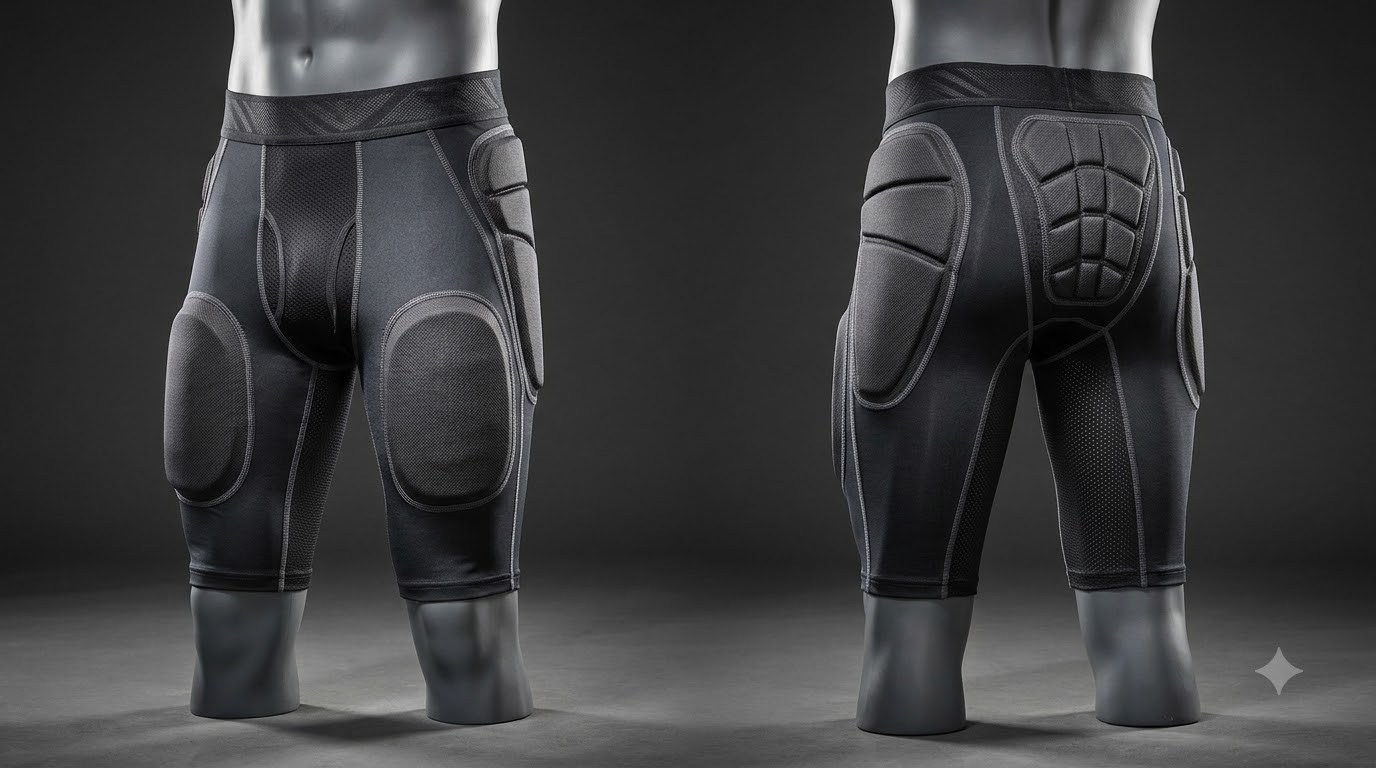
Integrated Football Girdle: How to Check Coverage, Fit and Equipment Compatibility

Football players need equipment that fits properly and works together. A pair of football pants, compression layers, and protective pads should not bunch up, shift unnecessarily, or restrict normal movement. When comparing an integrated football girdle with built-in football padding, it is important to look beyond the number of pads. Buyers should check the actual coverage, the fit around the waist and legs, and whether the garment works with the player's other equipment.
An integrated girdle combines a compression-style garment with selected protective pads. It can simplify the process of putting on separate padded components, but the coverage and construction vary by model. The right choice depends on the player's measurements, the product specifications, the position played, and the team's equipment requirements.
What makes an integrated girdle different?
A traditional football setup may involve separate padded components worn with compression shorts or football pants. An integrated girdle brings several of those padded elements together in one garment.
This can make equipment preparation more straightforward because the pads are attached to the garment rather than being handled individually. It can also help keep the pads positioned as the player moves, provided the garment fits as intended.
However, "integrated" does not mean that every area of the lower body is protected. Different products use different pad arrangements. Always check the product description to identify exactly which areas are covered.
The TAG seven-piece integrated girdle listing describes a configuration that includes knee pads, tailbone padding, thigh pads, and extended hip pads. It also lists extended-wrap thigh pads with integrated plastic cores. These details are more useful when comparing models than relying on a general product label.
Start with the pad coverage
Before selecting a size, review the pad arrangement. The number of pads alone does not tell you whether a garment is suitable for a particular player.
Check the following areas:
-
Thighs: Confirm the location and shape of the thigh pads.
-
Hips: Look at how much of the hip area the pads cover.
-
Tailbone: Check whether the garment includes a tailbone pad.
-
Knees: Confirm whether knee pads are included and how they are secured.
-
Waist and leg openings: Check how the garment stays in place during movement.
The TAG product description also lists Velcro-adjustable knee pads. That feature is worth checking because an adjustable component may help the player position the pads according to the product's instructions.
Do not assume that a seven-piece design has the same layout as another seven-piece model. Compare the actual construction and product photographs, and ask the retailer if any detail is unclear.
Why fit affects the entire equipment setup
A girdle can have useful features on paper but still be unsuitable if it does not fit the player correctly. A garment that is too loose may shift during movement. One that is too tight may cause discomfort or restrict normal movement.
An integrated football girdle should fit according to the manufacturer's sizing instructions. The waistband should sit as intended, the leg openings should not create uncomfortable pressure, and the pads should remain in their designated positions.
Fit should be assessed while wearing the equipment combination the player will actually use. A girdle worn on its own may feel different once football pants and other required equipment are added.
Use the waist chart rather than guessing
TAG lists the following adult waist measurements for its seven-piece integrated girdle:
|
Listed size |
Waist measurement |
|
S |
24–26 in |
|
M |
26–28 in |
|
L |
29–32 in |
|
XL |
33–36 in |
|
2XL |
37–40 in |
|
3XL |
40–42 in |
|
4XL |
43–46 in |
Measure the player's waist using the method recommended by the manufacturer. Do not rely only on the size of jeans or casual shorts, as clothing labels can vary between brands and garment types.
If the measurement sits close to a size boundary, check the product's sizing guidance or contact the retailer before ordering. Avoid automatically choosing a larger or smaller size without considering the intended compression fit.
Look at materials and construction
Comfort during practice depends on more than padding. The fabric, seams, waistband, and ventilation can all affect how the garment feels during use.
The TAG product listing describes its seven-piece girdle as using lightweight, breathable, moisture-wicking fabric, with a composition of 85% polyester and 15% spandex. It also describes a compression fit and a sewn-in cup pocket.
When reviewing a product, consider these features:
Stretch and compression: The fabric should fit according to the garment's design while allowing the player to move naturally.
Breathability: Check whether the product describes breathable fabric or ventilation features. These may support comfort, but they do not guarantee that the player will remain cool in every condition.
Seams and pad attachment: Inspect stitching around the pads and high-movement areas. Loose or damaged stitching should be addressed before use.
Cup pocket: If the product includes a cup pocket, check the manufacturer's instructions and confirm whether the required protective cup is supplied separately. TAG's listing describes a sewn-in pocket; the cup is not included.
Check compatibility with football pants and other gear
A padded girdle is part of a larger equipment setup. The player may wear it with football pants, a belt, socks, cleats, and other protective equipment.
Before the first practice, try the complete setup. Check that the pants fit correctly over the girdle and that the pads do not fold, overlap awkwardly, or move out of their intended positions.
Use this checklist:
-
Put on the girdle according to the manufacturer's instructions.
-
Position any adjustable pads as directed.
-
Put on the player's regular football pants.
-
Check the waistband and leg openings.
-
Walk, squat, bend, and perform normal warm-up movements.
-
Check for bunching or uncomfortable pressure.
-
Ask the coach or equipment manager to review the full setup if anything appears out of place.
For more football equipment options, TAG Sports Gear provides a range of products for players and teams.
A practical process for choosing the right model
A structured buying process can prevent common sizing and compatibility mistakes.
Step 1: Confirm the player's requirements. Check the team's equipment rules and identify which padded components the player needs.
Step 2: Review the coverage. Compare the product's pad locations with the player's requirements. Do not choose based on the pad count alone.
Step 3: Take accurate measurements. Use a flexible measuring tape and follow the manufacturer's instructions.
Step 4: Compare the size chart. Select a size based on the measurements and the product's intended fit.
Step 5: Check the construction. Review fabric composition, seams, pad attachment, and any adjustable features.
Step 6: Test the complete setup. Make sure the girdle works with the player's football pants and other equipment.
Step 7: Inspect it regularly. Check the garment for damage, loose stitching, and changes in fit throughout the season.
Two examples of making a more informed choice
Example 1: A player who needs to replace several separate components
A player has been using separate padded components and finds that preparing for practice takes time. The family considers an integrated model to simplify the equipment routine.
Rather than choosing the first garment described as integrated, they compare the listed pad locations, waist chart, and cup-pocket details. They then test the garment with the player's football pants. The decision is based on the actual configuration and fit, not just convenience.
Example 2: A player between two waist sizes
A player measures close to the boundary between two listed sizes. The parent is tempted to order the larger option without checking the manufacturer's guidance.
Instead, they review the product's measurement instructions and contact the retailer for clarification. When the garment arrives, they check its fit with the complete equipment setup. This reduces the risk of relying on a casual clothing size that does not match the product's sizing system.
Illustrative case study: Reviewing a complete equipment setup
This is a hypothetical example, not a reported customer result.
A school equipment manager is helping a player prepare for a new season. The player wants a single garment with several integrated pads, but the manager does not approve the purchase based on appearance alone.
They review the listed coverage, measure the player's waist, and compare it with the size chart. They also check whether the cup pocket meets the player's requirements and confirm that the cup itself must be supplied separately. During fitting, they inspect the garment under the player's football pants and ask the player to move through a normal warm-up routine.
The process shows why equipment selection should consider coverage, sizing, and compatibility together.
Care and inspection
Follow the washing and drying instructions supplied with the specific garment. Padding, fabric blends, and fastening components may have different care requirements.
After use, check for:
-
Torn fabric or damaged seams
-
Pads that have shifted or become loose
-
Worn or damaged Velcro
-
Changes in waistband or leg-opening fit
-
Persistent odour or dampness caused by inadequate drying
Do not cut, remove, or alter the padding unless the manufacturer specifically authorises the change. Modifying protective equipment can affect how it fits and functions.
Common mistakes to avoid
-
Choosing by pad count without checking pad placement
-
Selecting a size based on casual clothing labels
-
Assuming a cup is included because a cup pocket is listed
-
Ignoring how the garment fits under football pants
-
Overlooking damaged seams or fastening components
-
Treating integrated padding as a guarantee against injury
Conclusion
An integrated football girdle can make it easier to manage several padded components in one garment, but the best choice still depends on correct sizing, suitable coverage, and compatibility with the player's other equipment.
Review the actual pad arrangement, use the manufacturer's waist chart, and test the full setup before practice. Check the garment regularly and follow its care instructions. No padded garment can eliminate the risks of playing football, so equipment should always be used as directed and alongside the team's complete safety procedures.
Frequently asked questions
1. What does an integrated football girdle include?
The components vary by model. TAG's seven-piece listing describes knee, thigh, hip, and tailbone padding, including extended-wrap thigh pads with integrated plastic cores.
2. Does the TAG seven-piece girdle include a protective cup?
The product listing describes a sewn-in cup pocket, but the cup is not included. Check the current product details before ordering.
3. How do I choose the correct size?
Measure the player's waist according to the manufacturer's instructions and compare it with the current size chart. Do not rely only on casual clothing sizes.
4. Can an integrated girdle be worn under football pants?
It is designed as football apparel, but the complete setup should be checked. Follow the product instructions and make sure the pants and girdle fit together correctly.
5. Does integrated padding prevent football injuries?
No. Padding is not a guarantee against injury. Players should use properly fitted equipment, follow coaching and safety instructions, and understand the risks of football.

