

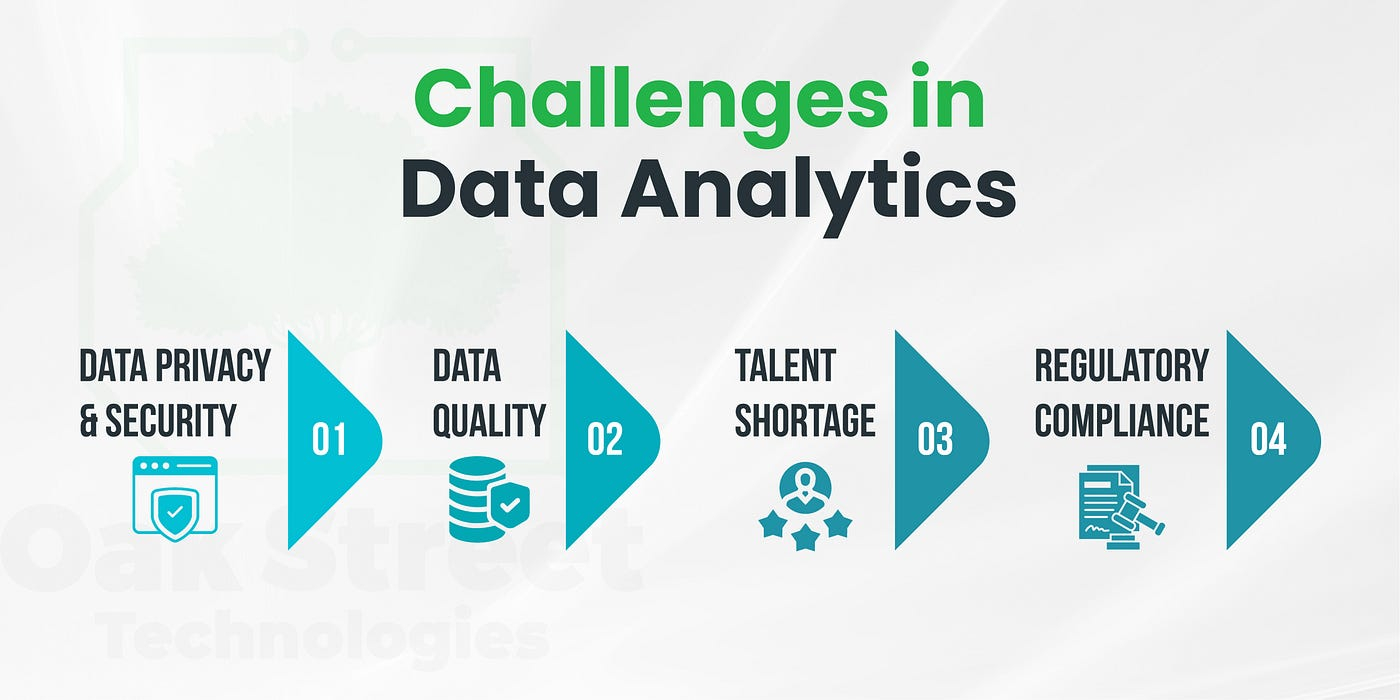

Data analytics has become an important part of modern business operations. Companies use data to understand customer behavior, improve performance, identify market trends, and make better business decisions. However, collecting and analyzing data is not always easy. Many organizations face challenges that prevent them from getting accurate and useful insights.
From poor data quality to a lack of skilled professionals, these problems can affect the success of analytics projects. Businesses need the right strategies, tools, and processes to overcome these obstacles and make better use of their information.
In this guide, we will explore the most common data analytics challenges and practical ways businesses can overcome them.
What Are Data Analytics Challenges?
Data analytics challenges are problems businesses experience when collecting, organizing, processing, analyzing, and interpreting data. These issues can affect the accuracy of reports, slow down decision-making, and make it difficult to identify valuable insights.
For example, a company may collect customer information from its website, social media platforms, and sales systems. If this information is incomplete, outdated, or stored in separate systems, analyzing it becomes difficult.
Understanding these challenges is the first step toward building a reliable data analytics process.
1. Poor Data Quality
Poor data quality is one of the most common challenges in data analytics. Businesses often work with information that contains missing values, duplicate records, incorrect entries, or outdated details.
When companies use unreliable data, their reports and business decisions may also become inaccurate.
How to Overcome It
Businesses should establish regular data quality management practices, including:
-
Remove duplicate and unnecessary records.
-
Identify and correct inaccurate information.
-
Fill in missing values when reliable information is available.
-
Create standard data entry rules.
-
Regularly review and update business records.
Using automated data validation tools can also help identify errors before they affect analysis.
2. Data Integration Problems
Many organizations collect information from different sources, including CRM platforms, websites, marketing tools, databases, and financial systems.
Combining this information into one consistent view can be difficult because different platforms may use different formats and structures.
For example, a sales team may store customer information in a CRM system, while the marketing department manages campaign data separately. Without proper integration, understanding the complete customer journey becomes challenging.
How to Overcome It
Businesses can improve data integration by:
-
Identifying all important data sources.
-
Using suitable data integration tools.
-
Creating standardized data formats.
-
Automating data transfers between systems.
-
Regularly checking integrated data for errors.
A centralized data environment can help departments access consistent and organized information.
3. Managing Large Volumes of Data
Modern businesses generate huge amounts of information every day. Website visits, customer transactions, social media activity, and application usage all contribute to growing data volumes.
Traditional systems may struggle to process this information efficiently. As a result, analytics operations can become slow and expensive.
How to Overcome It
Organizations should consider scalable technologies that can handle increasing data volumes.
Useful strategies include:
-
Using cloud-based data storage solutions.
-
Applying data compression where appropriate.
-
Removing unnecessary or outdated information.
-
Using distributed processing technologies.
-
Monitoring storage and processing performance.
Scalable infrastructure allows businesses to manage growing datasets without constantly rebuilding their systems.
4. Data Security and Privacy Risks
Businesses often collect sensitive information, such as customer details, financial records, and employee information. Protecting this data is essential.
Unauthorized access, data breaches, and weak security practices can expose confidential information and damage customer trust.
How to Overcome It
Companies should develop strong data security and privacy practices, including:
-
Apply role-based access controls.
-
Use encryption to protect sensitive information.
-
Create regular data backups.
-
Monitor systems for suspicious activity.
-
Follow relevant data protection regulations.
-
Train employees on safe data handling.
A clear security policy helps organizations protect information throughout the analytics process.
5. Lack of Skilled Data Analytics Professionals
Data analytics requires knowledge of data management, statistics, visualization, and analytical tools. However, some organizations do not have enough trained professionals to manage these responsibilities.
Without the right expertise, businesses may struggle to interpret reports or turn raw information into useful insights.
How to Overcome It
Businesses can address this challenge by:
-
Providing training to existing employees.
-
Hiring experienced data analysts when needed.
-
Encouraging collaboration between technical and business teams.
-
Using user-friendly analytics platforms.
-
Working with experienced data analytics service providers.
Investing in employee development can improve the quality of analysis and support better decision-making.
6. Choosing the Wrong Analytics Tools
There are many analytics platforms available, each offering different features and capabilities. Selecting a tool without understanding business requirements can create unnecessary expenses and operational difficulties.
Some tools may be too complicated for employees, while others may not support the company's data volume or reporting needs.
How to Overcome It
Before selecting an analytics platform, businesses should:
-
Identify their main analytics goals.
-
Evaluate the size and complexity of their data.
-
Compare available tools and features.
-
Consider integration with existing systems.
-
Review pricing and scalability.
-
Test platforms before making long-term commitments.
The right tool should support current requirements while allowing the business to grow.
7. Difficulty in Understanding Data
Collecting information is only one part of analytics. Businesses must also understand what the information means.
Complex reports, technical terminology, and poorly designed dashboards can make it difficult for employees to identify important patterns.
How to Overcome It
Organizations should focus on making analytics results easier to understand.
They can:
-
Use clear charts and visual dashboards.
-
Present important performance indicators.
-
Avoid unnecessary technical language.
-
Provide explanations alongside reports.
-
Focus on business questions rather than displaying every available metric.
Effective data visualization helps decision-makers understand trends and identify areas that need attention.
8. Slow Data Processing and Reporting
Some businesses depend on manual reporting processes or outdated systems. These methods can take hours or even days to prepare reports.
Delayed information makes it difficult for organizations to respond quickly to changing customer needs and market conditions.
How to Overcome It
Businesses can improve processing speed by:
-
Automating repetitive data tasks.
-
Optimizing database queries.
-
Improving data pipeline performance.
-
Using appropriate cloud computing resources.
-
Scheduling regular automated reports.
-
Monitoring processing delays.
Faster data processing helps businesses access timely information and make decisions more efficiently.
9. Lack of Clear Business Goals
Some companies start analytics projects without defining what they want to achieve. They collect large amounts of information but do not know which questions they need to answer.
Without clear objectives, analytics efforts can waste time and resources.
How to Overcome It
Businesses should establish specific goals before beginning an analytics project.
For example, a company may want to:
-
Increase customer retention.
-
Improve sales performance.
-
Reduce marketing expenses.
-
Understand customer purchasing behavior.
-
Improve operational efficiency.
Each analytics project should have measurable objectives and relevant key performance indicators (KPIs). This makes it easier to evaluate whether the project is delivering value.
10. Difficulty Scaling Analytics Operations
An analytics process that works for a small business may not work as the organization grows. More customers, transactions, employees, and data sources can increase system complexity.
Without proper planning, businesses may experience higher costs, slower processing, and inconsistent reporting.
How to Overcome It
Companies should build analytics systems with future growth in mind.
Important steps include:
-
Choose scalable data infrastructure.
-
Standardize data management processes.
-
Automate repetitive workflows.
-
Review system performance regularly.
-
Improve integration between business platforms.
-
Plan infrastructure capacity as data requirements grow.
A scalable analytics environment helps organizations manage increasing workloads while maintaining performance.
Best Practices for Improving Data Analytics
Overcoming individual challenges is important, but businesses should also develop a consistent approach to managing analytics operations.
Here are some useful best practices:
1. Establish Data Governance
Create clear policies for data ownership, quality, security, and access. This helps maintain reliable information across the organization.
2. Invest in Data Infrastructure
Use suitable databases, cloud platforms, and processing technologies to support business requirements.
3. Automate Repetitive Tasks
Automation can reduce manual errors, save time, and improve the consistency of reporting.
4. Monitor Performance Regularly
Review analytics processes, dashboards, and KPIs to identify problems and opportunities for improvement.
5. Encourage a Data-Driven Culture
Help employees understand how data can support everyday decisions. Make useful reports accessible to the teams that need them.
6. Work with Experienced Professionals
Specialists can help businesses select suitable tools, improve data workflows, and develop effective analytics strategies.
The Role of Data Analytics Services in Solving Business Challenges
Managing data analytics internally can be difficult, especially for organizations with limited technical resources. Professional support can help businesses improve their analytics processes and get more value from their information.
Working with an experienced provider can support data integration, reporting, data visualization, analytics infrastructure, and process optimization.
Explore Data Analytics Services to learn how professional support can help your business turn information into meaningful insights.
Businesses should also maintain reliable data management practices. Strong Data Governance helps establish policies for data quality, security, ownership, and responsible data usage.
Conclusion
Data analytics offers valuable opportunities for businesses, but challenges such as poor data quality, integration problems, security risks, limited expertise, and slow processing can reduce its effectiveness.
The good news is that these challenges can be addressed with the right tools, clear business goals, skilled professionals, and effective data management practices.
By improving data quality, investing in scalable infrastructure, automating workflows, and making information easier to understand, organizations can build a stronger analytics environment.
Businesses that take a strategic approach to data analytics can make more informed decisions, improve operational efficiency, and discover opportunities for long-term growth.
Frequently Asked Questions (FAQs)
1. What are the most common data analytics challenges?
Common challenges include poor data quality, data integration problems, security risks, large data volumes, lack of skilled professionals, and difficulty interpreting results.
2. Why is data quality important in analytics?
Data quality is important because accurate and complete information supports reliable reports, meaningful insights, and better business decisions.
3. How can businesses improve data analytics?
Businesses can improve analytics by using reliable tools, maintaining data quality, automating workflows, training employees, and establishing clear business objectives.
4. What is the role of data governance in analytics?
Data governance establishes policies and responsibilities for managing data quality, security, access, and consistency throughout an organization.
5. Can small businesses benefit from data analytics?
Yes. Small businesses can use analytics to understand customer behavior, monitor sales, evaluate marketing performance, manage expenses, and identify growth opportunities.

