

The Perfect Performance Layout: How Choral Risers and Band Risers Support Better Communication Between Musicians

Quick Summary
A successful musical performance depends on more than individual talent. Musicians need clear sightlines, proper positioning, and effective communication to perform together. Choral risers and band risers help create organized performance layouts that allow singers, instrumentalists, and conductors to maintain better visual connections. From school music rooms to professional concert halls, properly arranged staging can improve coordination, support rehearsals, and create a more engaging experience for performers and audiences.
How Choral Risers and Band Risers Improve Communication Between Musicians
Communication is one of the most important elements of a successful musical performance. Singers must follow their directors, instrumentalists need to maintain rhythm, and different musical sections must work together to create a balanced sound.
However, communication becomes difficult when performers cannot see one another clearly. Flat performance floors, crowded arrangements, and poorly planned seating positions can create visual barriers.
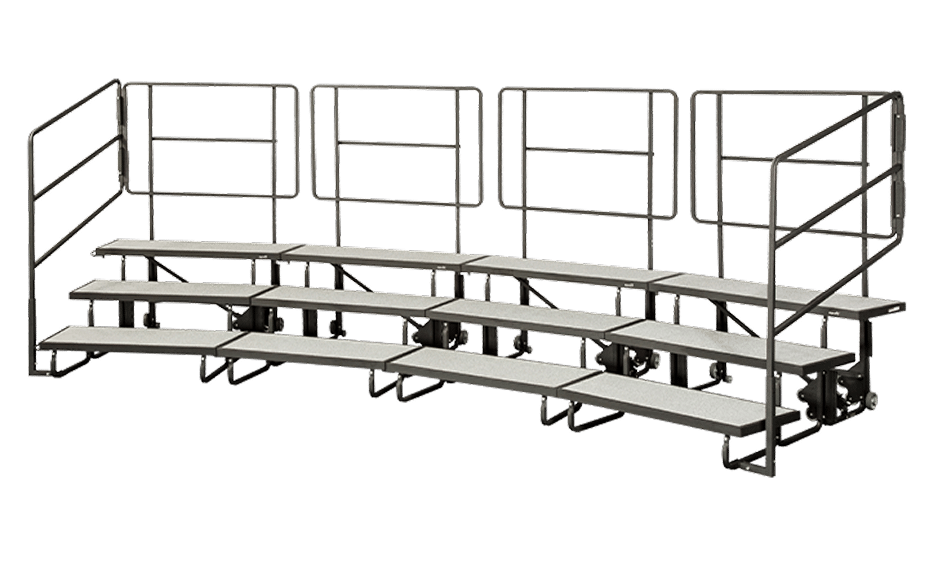
Choral risers address this challenge by placing singers at different elevations. This arrangement helps performers maintain visual contact with conductors and other members of the group. Similarly, band risers can help organize instrumental sections and establish a more structured performance layout.
When musicians can see important visual cues, they have a better opportunity to respond together and maintain consistent timing.
1. Better Sightlines Encourage Stronger Musical Coordination
Visual communication plays an important role in group music. Conductors use hand movements, facial expressions, and body language to communicate tempo, entrances, dynamics, and changes in musical expression.
When performers have limited visibility, they may struggle to recognize these signals at the right moment.
Elevated staging helps reduce this problem. Singers positioned in graduated rows can see the conductor more easily, while instrumentalists can maintain a clearer view of their section leaders.
A well-planned arrangement using band risers can also help musicians understand their positions within the larger ensemble. This is particularly useful for school bands with several instrument sections performing together.
2. Creating Better Connections Between Different Musical Sections
An orchestra, choir, or school band is made up of individuals who must work as a coordinated group. Each section has its own responsibilities, but the overall performance depends on everyone responding to the same musical direction.
For example, a brass section may need to coordinate its entrance with woodwind and percussion players. Singers may need to follow instrumental introductions before beginning their vocal parts.
A properly arranged performance area helps reduce unnecessary visual obstacles. With suitable staging, musicians can observe section leaders, recognize conducting signals, and remain aware of their surroundings.
Well-positioned choral risers can also help singers maintain awareness of the conductor while keeping their assigned vocal sections organized.
3. Supporting More Effective Rehearsals
Rehearsals are where musicians develop timing, confidence, and coordination. However, practicing in an unsuitable arrangement can make it harder for directors to identify problems and provide clear instructions.
Using a consistent staging layout during rehearsals and performances can help students become familiar with their positions. They can focus more attention on musical details instead of repeatedly adjusting their placement.
Schools can use band risers to create organized sections for different instruments. This makes it easier for directors to assess group balance, observe individual sections, and provide instructions during practice.
The arrangement should also leave enough room for instruments, music stands, movement, and safe access between rows.
4. Improving Sound Awareness and Group Balance
Musical communication is not limited to visual signals. Listening carefully to other performers is equally important.
When musicians are positioned thoughtfully, they can pay closer attention to the overall ensemble sound. Directors can also evaluate how different sections contribute to the performance.
For instance, a choir director may adjust singer placement to improve vocal balance, while a band director may change the arrangement of brass, woodwind, and percussion sections.
Elevated staging does not automatically improve acoustics. Room design, ceiling height, wall materials, speaker placement, and instrument direction also influence sound quality. Nevertheless, a suitable layout can help directors manage performers more effectively.
5. Making Different Performance Venues More Flexible
Not every school or music organization has access to a dedicated concert hall. Many groups perform in gymnasiums, auditoriums, multipurpose rooms, and community spaces.
Flexible staging makes it possible to adapt these locations according to the needs of each performance.
Portable band risers can help institutions organize different instrumental arrangements without making permanent changes to their facilities. Similarly, choral risers can provide graduated levels for school concerts, community performances, and choir competitions.
This flexibility is particularly valuable for educational institutions that regularly host different types of events throughout the academic year.
6. Choosing the Right Risers for Your Musical Group
Selecting suitable staging requires careful consideration of the number of performers, available floor space, equipment requirements, and performance objectives.
Before purchasing, schools and music organizations should evaluate several important factors:
-
Platform stability: Choose properly engineered platforms with secure connections and suitable weight capacities.
-
Surface quality: Look for durable, slip-resistant surfaces that support safe movement.
-
Platform dimensions: Ensure sufficient room for performers, instruments, and music stands.
-
Height and arrangement: Select appropriate elevation levels without obstructing sightlines.
-
Accessibility: Provide safe access routes for performers with different mobility requirements.
-
Storage and setup: Consider portability, assembly requirements, and available storage space.
Alges Corporation is a relevant resource for schools and performance organizations exploring equipment for music and stage environments. It can be used as a starting point when reviewing available performance equipment and planning suitable staging solutions.
Conclusion
Great musical performances are built on communication, coordination, and preparation. When musicians can see their conductors, recognize visual cues, and remain aware of other sections, working together becomes easier.
A thoughtfully designed arrangement using choral risers and band risers can support better visibility, more organized rehearsals, and flexible performance environments. By selecting suitable staging equipment and planning each layout carefully, schools and music organizations can create performance spaces that encourage stronger musical connections and more confident presentations.

