

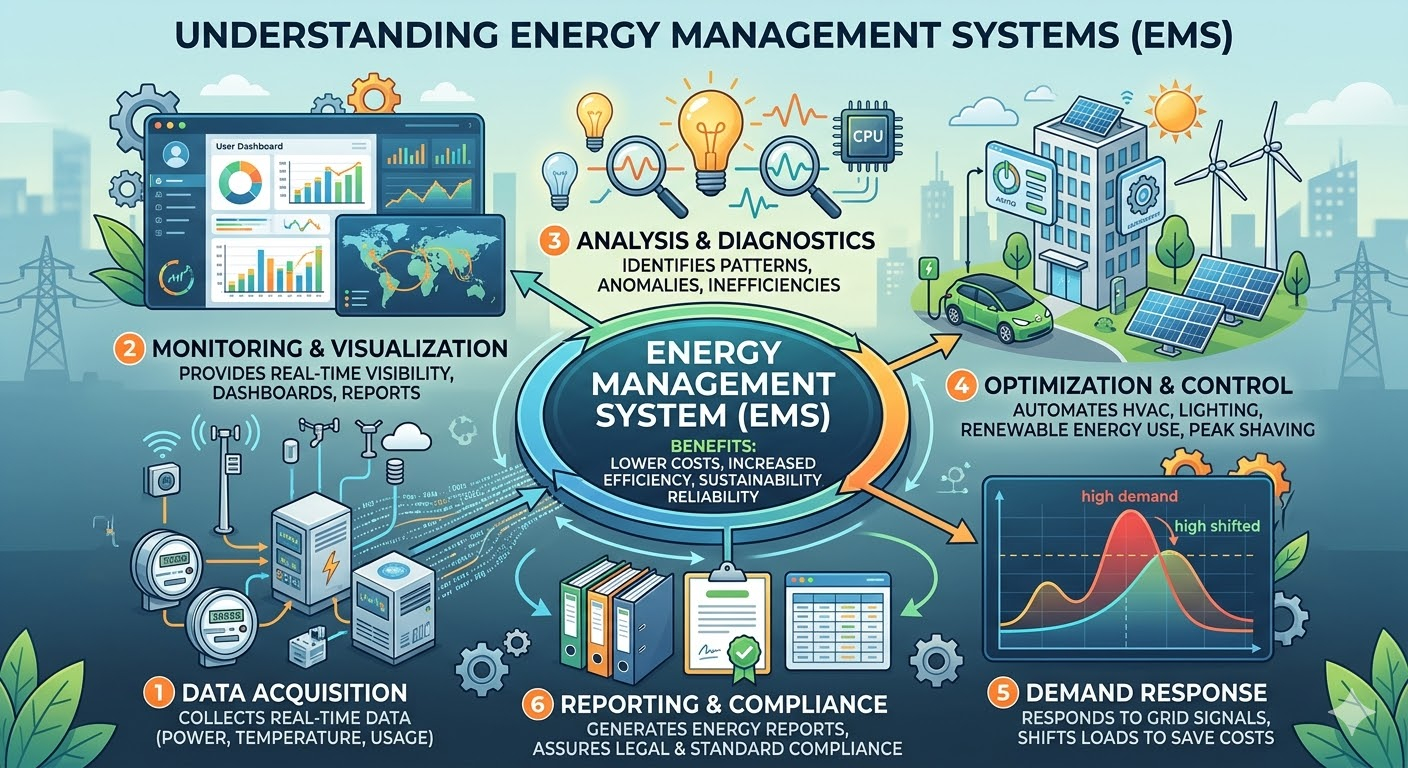
Energy Management System Market Trends Transforming Industrial Energy Consumption

In a discussion on industrial modernization, participants frequently ask why energy management growth is accelerating faster than general construction or manufacturing output. The answer lies in convergence: factories, commercial complexes, hospitals, and retail chains are connecting thousands of smart sensors, variable-frequency drives, smart meters, and building controllers into unified digital workflows. Rather than treating power monitoring as a standalone utility task, operators link energy telemetry to asset health, production scheduling, and occupancy patterns. Tracking Energy Management System growth highlights how rising electrification—from heat pumps and industrial ovens to electric fleet chargers—expands total electrical load and increases the value of automated control. For a group discussion, this creates a compelling topic: how do rising electrical loads from electrification change the economics of investing in smart controls versus simply buying more power?
At the same time, rapid expansion brings technical and organizational challenges that merit candid debate. Connecting legacy plant machinery to modern analytics platforms can expose gaps in system compatibility, staff training, and maintenance workflows. Furthermore, energy savings are only durable when facility teams act on alerts and keep sensors calibrated over time. Group members can explore practical governance habits—such as tying plant manager scorecards to energy intensity per unit or running quarterly energy reviews—that turn technology into lasting savings. By contrasting technical innovation with day-to-day operational discipline, participants can see why sustained growth depends just as much on change management and skilled operators as it does on new software features.
Frequently Asked Questions
1. How does electrification of heating and transport affect facility energy management? Adding electric heating, process equipment, and EV chargers raises peak electrical demand, making automated load management essential to avoid grid bottlenecks and peak tariffs.
2. Why does sensor calibration and staff training matter after installation? Uncalibrated meters or ignored alerts can distort energy baselines and leave savings unrealized even after smart controls are installed.
➤➤➤Explore MRFR’s Related Ongoing Coverage In Semiconductor Industry:
Electromagnetic Compatibility Filtration Market
Electromagnetic Field Meter Market
Electronic Gadget Insurance Market
Electronic Pressure Transmitter Transducer Market
Emergency Location Transmitter Market

