

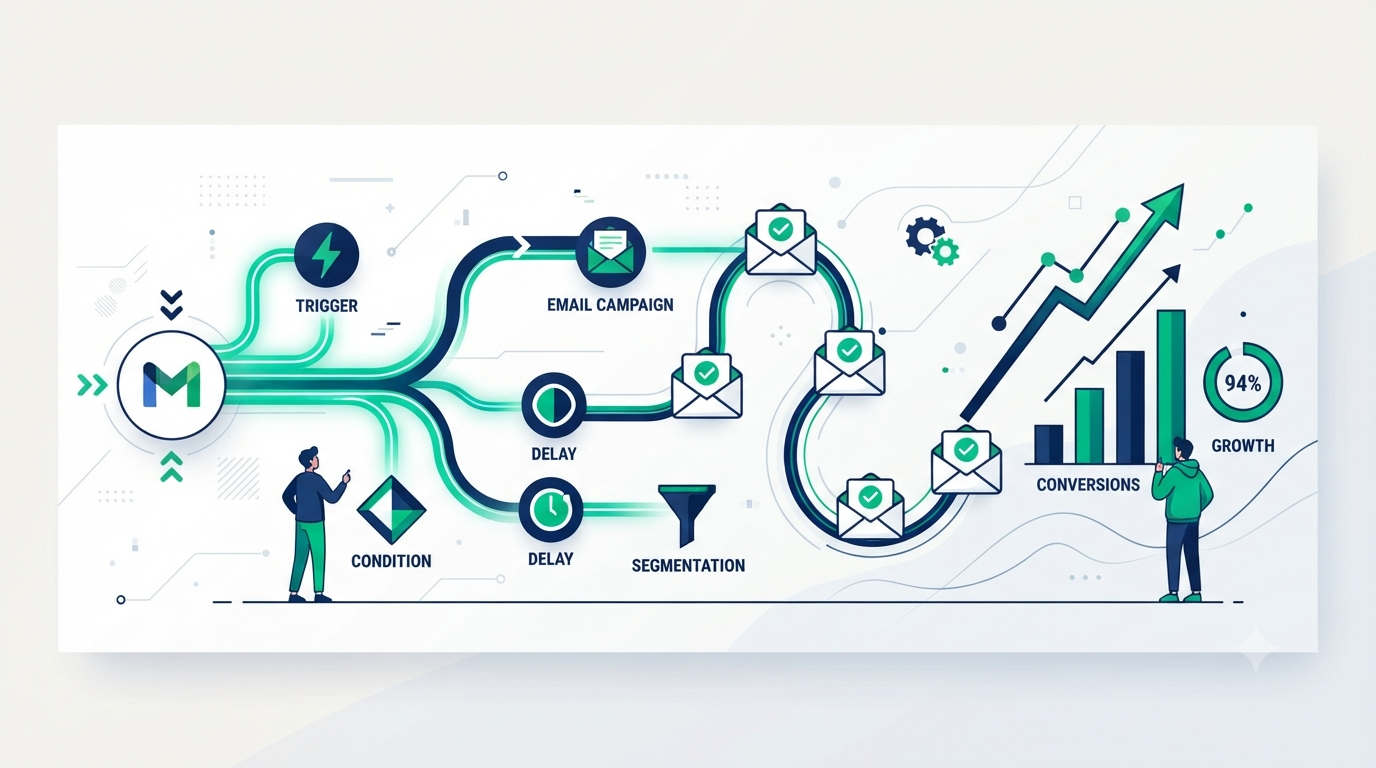

Digital marketing moves fast, and teams relying on manual spreadsheets and one-off email blasts quickly hit a growth ceiling. When marketers spend hours copying contact lists, scheduling individual follow-ups, and manually logging interactions, very little bandwidth remains for creative strategy or campaign optimization.
Modern businesses solve this bottleneck by adopting marketing automation. Rather than treating outreach as a series of disconnected manual tasks, an automated platform allows teams to plan, execute, track, and refine entire customer journeys from one centralized hub.
Turning Repetitive Tasks Into Revenue-Generating Workflows
The primary value of email automation lies in its ability to handle routine execution with precision while leaving strategic direction to human marketers. When properly configured, workflow automation improves operations across three core areas:
-
Eliminating Human Error: Manual list segmentation and scheduled sends inevitably lead to missed follow-ups or duplicate messages. Automated triggers ensure every prospect receives the exact right message based on real-time behavior—such as downloading a whitepaper, visiting a pricing page, or abandoning a form.
-
Planning Campaigns Weeks in Advance: Instead of scrambling to assemble weekly newsletters, teams can map out multi-week engagement sequences ahead of time. Once launched, the system runs continuously in the background, maintaining consistent brand visibility without daily intervention.
-
Persona-Based Personalization: Generic mass emails rarely convert. Automation platforms organize contacts into distinct buyer personas, dynamically tailoring subject lines, educational resources, and calls to action to match each segment's specific pain points.
Connecting Outbound Execution With Strategic Growth
Automation does not replace the human element of marketing—it amplifies it. When routine follow-ups and list hygiene happen automatically, marketing teams regain hours every week to test new messaging, refine offers, and analyze audience behavior.
For organizations looking to modernize their outreach without overwhelming internal staff, partnering with specialists who handle email marketing automation services ensures the underlying workflows, triggers, and CRM integrations are built cleanly from day one. Systems like SharpSpring allow businesses to map intricate drip campaigns that keep prospects engaged while alerting sales representatives the moment a buyer is ready to talk.
Key Steps Before Launching Your First Automated Workflow
Before turning on automated sequences, businesses should establish a clear operational foundation:
-
Define Specific Conversion Goals: Clarify whether a workflow is designed to onboard new subscribers, re-engage dormant leads, or upsell existing clients.
-
Audit Your Contact Data: Clean lists and accurate tags prevent irrelevant messaging and protect sender reputation.
-
Map Behavioral Triggers: Identify the specific actions—such as link clicks or webinar registrations—that should move a contact from one stage of a sequence to the next.
By replacing repetitive manual outreach with structured, data-driven workflows, companies create a scalable engine that pays for itself through higher conversion rates and reclaimed team productivity.

