

Connected Workplace Market Outlook Points Toward Smarter And More Adaptive Workplaces

Connected Workplace Market Outlook suggests a future in which workplaces become more responsive to employee needs and organizational goals. The connected workplace brings together digital tools, physical environments, and data insights to create adaptive, efficient spaces. This outlook considers future direction, technology evolution, user expectations, and ecosystem collaboration. It avoids narrow claims and focuses on the conditions that support durable value. Readers gain a professional view of how connected workplaces may evolve across industries and organizational sizes. The discussion covers hybrid work support, space optimization, employee experience, and operational resilience. It also addresses responsible data practices and change management. The goal is to help stakeholders prepare for a more connected and adaptive workplace future.
Future Direction Of Workplace Connectivity
The future direction of workplace connectivity is likely to move beyond basic integration toward adaptive, intelligent environments. Systems will increasingly anticipate employee needs and adjust conditions automatically. For example, meeting rooms could automatically configure lighting, temperature, and communication tools based on booking details and attendee preferences. Desk booking systems could recommend locations based on team proximity and task requirements. Environmental sensors could work with building systems to optimize air quality and energy use. These capabilities depend on reliable data and thoughtful design. Organizations should prepare by establishing strong data governance and integration foundations. They should also maintain a user-centered focus, ensuring that automation serves people rather than overwhelming them. The most credible outlook is one in which connectivity feels natural and supportive.
Blending Physical And Digital Experiences
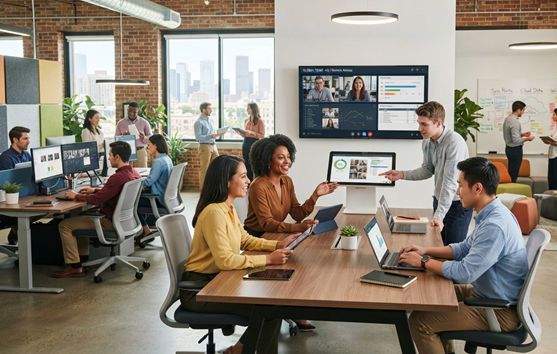
The connected workplace blends physical and digital experiences to create cohesive work environments. Employees can move seamlessly between office and remote locations without losing access to tools or information. Physical spaces are designed to support different work modes, from focused individual tasks to collaborative team activities. Digital platforms help employees find available spaces, connect with colleagues, and access services. This blending requires careful design to avoid friction. Organizations should prioritize consistency across tools and locations. They should also ensure that physical environments are comfortable, accessible, and supportive of well-being. Feedback from employees is essential for identifying pain points and refining experiences. When physical and digital elements work together, employees feel more supported and productive.
Ecosystem Collaboration And Standards
Ecosystem collaboration can strengthen the future of connected workplaces. Technology providers, building operators, furniture manufacturers, and workplace strategists all influence outcomes. Shared standards can support interoperability and reduce fragmentation. Open application programming interfaces enable integration between diverse systems. Collaboration can also support responsible data practices and consistent user experiences. However, coordination takes effort. Stakeholders must agree on priorities and maintain open communication. Organizations should begin with clear internal standards and engage partners who share their commitment to quality. They should document integration points and review performance regularly. Over time, shared practices can reduce complexity and build trust. Collaboration is a key enabler of durable connected workplace solutions.
Preparing For A More Adaptive Workplace Future
Preparation begins with a clear sense of purpose. Organizations should define what they want connected workplaces to achieve, whether improved collaboration, space efficiency, employee well-being, or operational resilience. They should involve stakeholders early and plan a phased approach. Privacy, security, accessibility, and usability deserve attention from the start. Communication should help employees understand changes and benefits. Training and support ease adoption. Maintenance planning ensures that sensors, software, and integrations remain reliable. Leaders should review feedback and adjust strategies as needs evolve. Success should be judged by whether employees feel supported and operations become more responsive. The future of connected workplaces is not only about new technology; it is about building dependable, adaptive environments that help people work effectively. Organizations that prepare thoughtfully will be well positioned to benefit.
➤ Latest Market Intelligence from Market Research Future:
France Artificial Intelligence Market

