The Intelligent and Automated Foundation of the Global Smart Greenhouse Industry

The global Smart Greenhouse industry represents a pivotal evolution in modern agriculture, merging traditional protected cultivation with the transformative power of the Internet of Things (IoT), artificial intelligence (AI), and automation. At its core, a smart greenhouse is a highly controlled environment where technology is used to monitor, manage, and optimize all the critical variables that affect plant growth, including climate, irrigation, and nutrition. This industry provides a complete ecosystem of hardware—such as sensors, actuators, and LED lighting—and sophisticated software platforms that work in concert to create the perfect growing conditions, 24/7, with minimal human intervention. By doing so, it enables higher yields, superior crop quality, and year-round production, irrespective of external weather conditions. As the world grapples with challenges like climate change, water scarcity, and a rising global population, this industry offers a powerful solution for creating a more resilient, sustainable, and productive food system, moving agriculture into the digital age.
The Core Technological Components: A Symphony of Sensors and Actuators
The foundation of any smart greenhouse is its sophisticated network of hardware, which acts as the system's eyes, ears, and hands. The sensory layer is comprised of a multitude of IoT sensors that continuously gather real-time data from the growing environment. These include climate sensors that monitor temperature, humidity, and CO2 levels; light sensors that measure photosynthetically active radiation (PAR); and soil or substrate sensors that track moisture content, pH, and electrical conductivity (EC) to gauge nutrient levels. This constant stream of data provides a highly granular, real-time picture of the conditions inside the greenhouse. This data is then used to control the second key hardware component: the actuators. Actuators are the devices that actively manage the environment based on the sensor readings and pre-set parameters. This includes automated ventilation systems (fans and vents), heating and cooling systems, irrigation systems (drip lines and misters), fertigation systems that inject precise amounts of nutrients, and advanced, tunable LED lighting systems that can provide specific light spectrums to optimize different stages of plant growth. This closed-loop system of sensing and responding is what gives a smart greenhouse its power.
The Brain of the Operation: Software, Cloud, and AI Integration
If the sensors and actuators are the body of the smart greenhouse, the software platform is its brain. This is typically a cloud-based control system that aggregates all the data from the distributed sensors into a centralized dashboard. This platform allows a grower to remotely monitor the conditions of their greenhouse from a computer or smartphone, view historical trends, and set the desired parameters for climate and irrigation. The real intelligence, however, comes from the integration of data analytics and Artificial Intelligence (AI). The software can analyze the vast amounts of collected data to identify patterns and optimize growing "recipes" for specific crops. More advanced systems use AI and machine learning (ML) models to move beyond simple, rules-based automation to predictive control. For example, an AI model can analyze weather forecast data and proactively adjust the greenhouse's heating and lighting to anticipate a cloudy day, ensuring optimal conditions while minimizing energy costs. These AI-powered platforms can also predict crop yields, detect the early signs of disease or pest infestation from sensor data, and provide growers with prescriptive recommendations to maximize their output and profitability.
Beyond Agriculture: An Ecosystem of Technology and Service Providers
The smart greenhouse industry is a diverse and collaborative ecosystem that extends far beyond just growers and farmers. It includes a wide range of technology and service providers, each specializing in a different part of the solution stack. One major category is the hardware manufacturers, which includes companies that produce the specialized sensors, climate control systems, and, crucially, the advanced LED grow lights that are essential for many indoor and vertical farming applications. Another key group is the automation and control system providers, who develop the core software platforms and control logic that orchestrate the entire system. There are also specialized data analytics and AI firms that provide the machine learning models and predictive insights. A growing service sector includes consultants who help design smart greenhouse facilities, systems integrators who manage the complex task of installing and connecting all the different technologies, and even companies that offer "Farming-as-a-Service," where they manage the entire growing operation on behalf of an investor or landowner. This multi-layered ecosystem of specialists is what enables the creation of these highly sophisticated and productive agricultural facilities.
Top Trending Reports:
Categories
- Artificial Intelligence (AI)
- Technology
- Business
- Education
- Science
- Lifestyle
- Healthcare
- Entertainment
- Politics
- Environment
- Travel
- Finance
- Automobile
- News
- Art
- Causes
- Crafts
- career
- Dance
- Drinks
- Film
- Fitness
- Food
- Games
- Gardening
- Health
- Home
- Literature
- Music
- Networking
- Other
- Party
- Religion
- Shopping
- Sports
- Theater
- Wellness
Read More
Behind every consumer product containing palm oil lies a complex logistics network that connects remote plantations to refineries, ports, and end‑user factories. Managing this network effectively is now a top priority for the entire sector, as inefficiencies, quality deterioration, and transparency gaps can erode profit margins and damage sustainability credentials. As per Market Research...

The AR & VR In Training Market intelligence report offers hard to find data derived from attractiveness analysis that narrates a lot about the products, regions and applications expected to generate more revenue. The research study sheds light on the key growth opportunities and market trends along with other vital market dynamics, including the drivers and restraints on the industry...

According to the latest report published by Data Bridge Market Research, the Upstream Electrification Market As per Data Bridge Market Research Analysis the Upstream Electrification Market was valued at USD 8.20 billion in 2025 and is projected to reach USD 20.44 billion by 2033, growing at a CAGR of 12.10% from 2026 to 2033. An excellent Upstream Electrification...
The Forklift Truck Market research report has been crafted with the most advanced and best tools to collect, record, estimate, and analyze market data. The report also sheds light on the market overview in its entirety touching diverse aspects like product definition, prevailing vendor landscape, and market segmentation. Through the comprehensive and systematic market research study, the report...
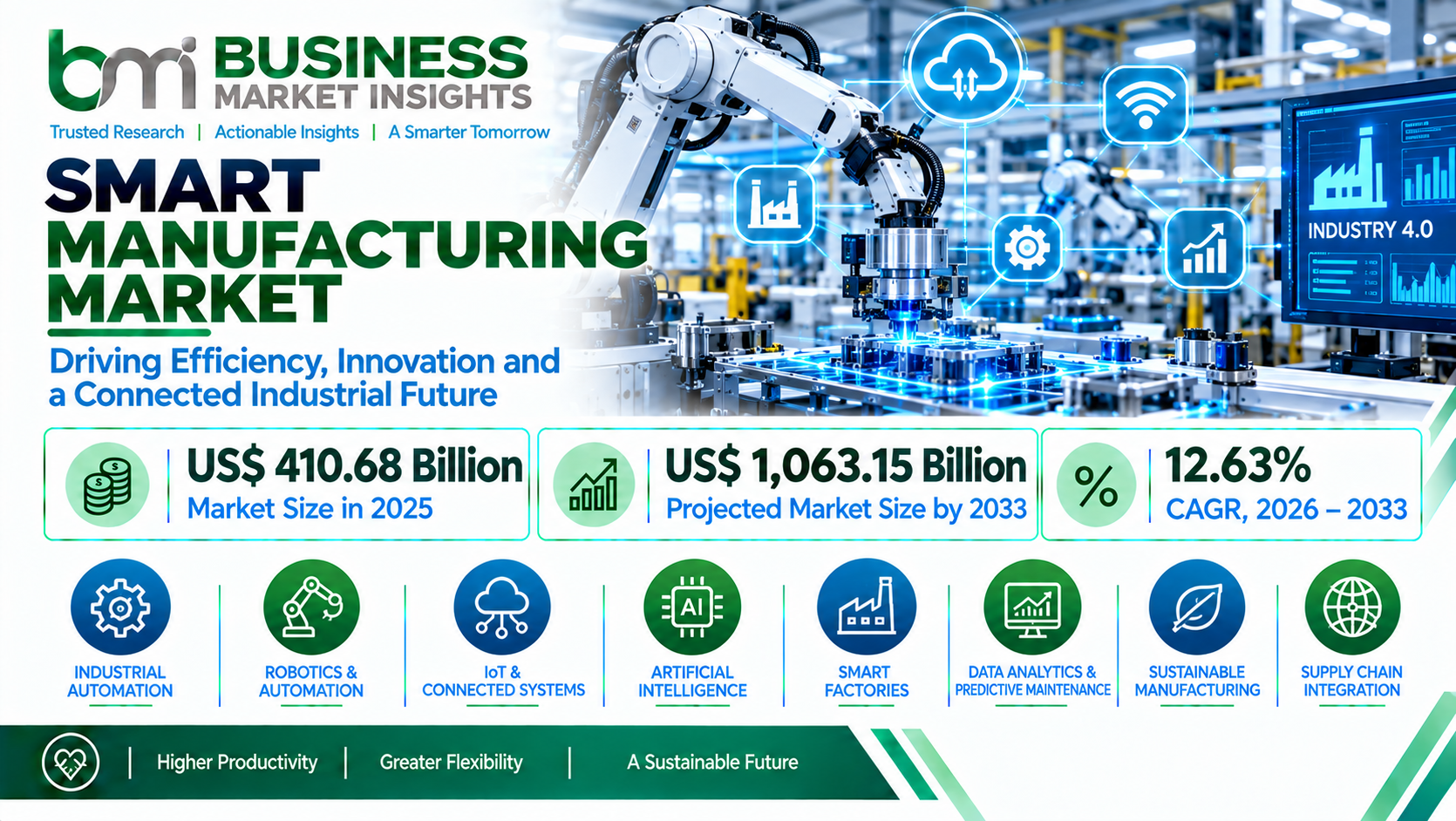
The Smart Manufacturing Market was valued at US$ 410.68 Billion in 2025 and is projected to reach US$ 1,063.15 Billion by 2033, registering a CAGR of 12.63% during 2026–2033. The outlook is supported by industrial automation and real-time monitoring, IoT, AI, robotics, and digital twins, and predictive maintenance and cloud analytics. However, legacy-system integration and cybersecurity...