


How AI Is Revolutionizing Website Development in 2026
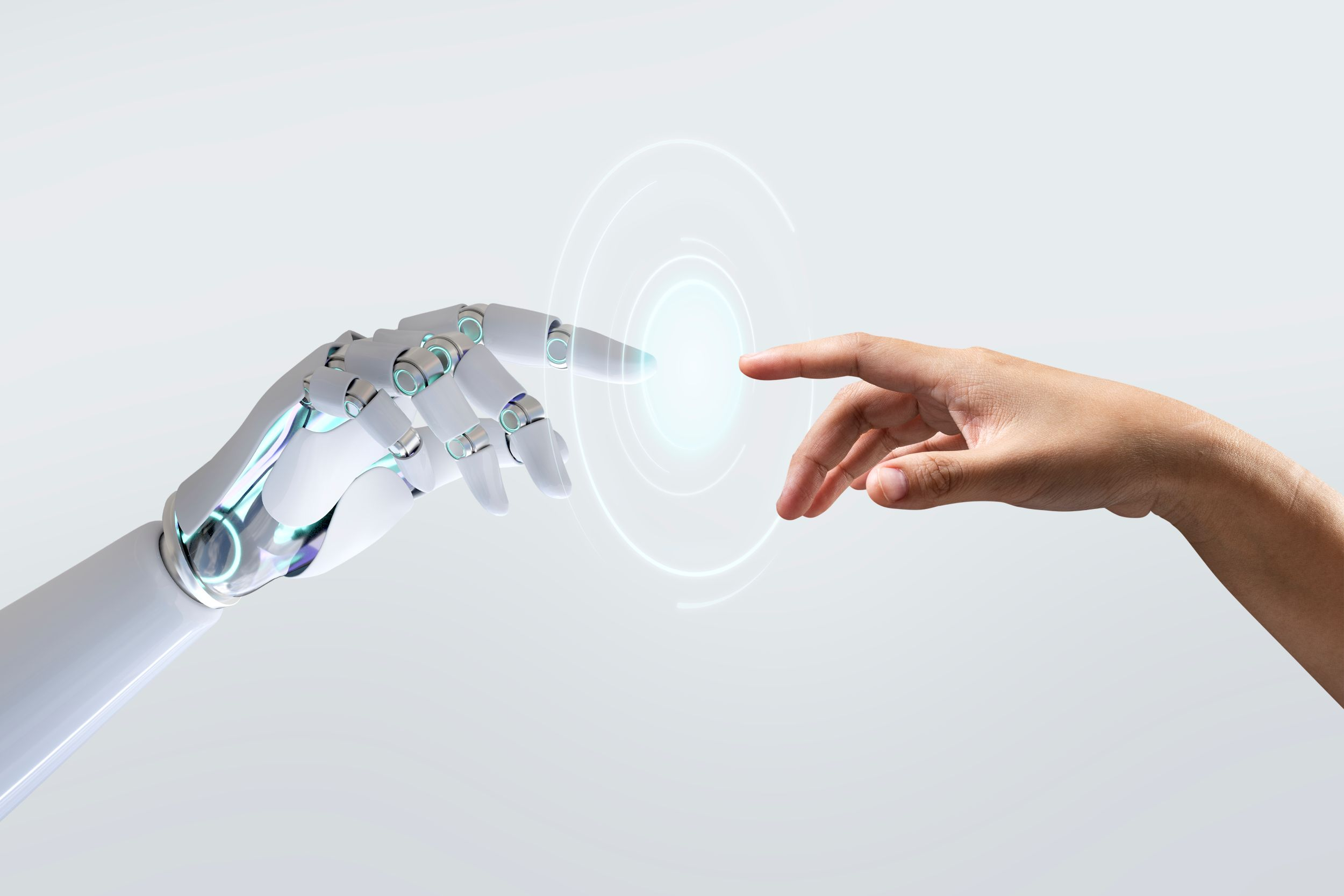
Artificial intelligence is transforming website development by automating repetitive coding tasks, accelerating design, improving testing accuracy, and enabling personalized user experiences. According to McKinsey's 2025 State of AI report, 57% of software engineering companies have already seen revenue gains from AI adoption—and the shift is only accelerating.
A quiet revolution is underway in software engineering. The tools developers rely on have evolved so rapidly that many of the tasks that once consumed hours can now be completed in minutes. Code suggestions appear before a developer finishes typing. Wireframes generate themselves from plain-English prompts. Bugs surface before they ever reach production. This isn't a distant future—it's happening now, across studios, agencies, and product teams worldwide.
The global scope of this shift extends to every corner of the technology sector. From Silicon Valley to Southeast Asia, AI is reshaping how digital products are conceived and delivered. Even in growing tech markets—like web development Qatar, where demand for high-quality digital experiences is surging—AI-powered tools are giving teams the ability to produce more, faster, and at a higher standard than traditional workflows ever allowed.
For developers and businesses alike, the central question is no longer whether AI will change web development. It already has. The real question is: what exactly is changing, and what does it mean for the people building the web?
This post breaks it all down—from code generation and design to testing, personalization, and the evolving role of human developers. By the end, you'll have a clear picture of where the industry stands and where it's heading.
How Does AI Speed Up the Coding Process for Developers?
Speed is where AI's impact is most immediate and measurable. According to a McKinsey study, software developers can complete tasks up to twice as fast when using generative AI. That's not a marginal improvement—it's a fundamental shift in output capacity.
Tools like GitHub Copilot function as an intelligent pair programmer, generating contextually relevant code suggestions in real time. Rather than writing boilerplate from scratch, developers can accept, modify, or reject suggestions on the fly, cutting down the cognitive load of repetitive work. As Peter McKee, VP of developer relations at Sonar, put it: "AI can complete tedious work in a matter of seconds that would otherwise take valuable time out of a developer's day."
The numbers back this up. Research from Index.dev shows that AI coding assistants increase individual developer output by 20–40%. Meanwhile, data from Itransition reports that 85% of developers now regularly use AI tools for writing code, with 62% relying on at least one AI coding assistant as part of their standard workflow.
The productivity gains aren't limited to speed, either. AI tools also help developers navigate unfamiliar frameworks and libraries more confidently, reducing the ramp-up time on new projects. For teams working with complex JavaScript environments like React or Node.js, that kind of support can make a meaningful difference to delivery timelines.
What Is AI Doing to UX and Web Design?
Beyond code, AI is changing how websites look and feel. Machine learning algorithms can now analyze vast amounts of user behavior data to surface design insights that would take traditional analytics weeks to identify.
Phil Strazzulla, founder of Select Software Reviews, shared a compelling example with CMSWire: his team built an AI system that analyzes user activity trends and recommends layout changes. "Using AI data, we discovered that reordering key components on a landing page enhanced conversion rates by 15%," Strazzulla explained. That's the kind of result that typically requires months of A/B testing—delivered through automated analysis.
Tools like Uizard take this a step further, allowing teams to transform hand-drawn sketches directly into digital UI prototypes. For designers and product managers who don't write code, that removes one of the biggest bottlenecks in the product development cycle.
AI also powers adaptive interfaces—web experiences that dynamically respond to a user's preferences and behaviors in real time. Rather than serving every visitor the same static page, AI-driven systems can adjust content, layout, and navigation based on what a specific user is most likely to engage with. This isn't just good for the user; it directly supports retention and conversion metrics.
How Are Low-Code and No-Code Platforms Changing Who Can Build Websites?
One of the most significant downstream effects of AI in web development is the democratization of building. Low-code and no-code platforms—supercharged by AI—are making it possible for entrepreneurs, marketers, and business professionals to create functional websites and applications without writing a single line of code.
These platforms offer drag-and-drop interfaces, pre-built templates, and increasingly, AI chat interfaces where users can describe what they want in plain language and receive a working prototype in return. The result is that web development is no longer a discipline exclusively for trained engineers.
"Many developers have embraced low- and no-code development tools," noted McKee. "Low-code development tools allow developers to create software applications quickly and easily by providing an intuitive drag-and-drop interface, and this helps streamline the development process."
That said, there are limits. Fabricio Inocencio, head of education and AI at Digibee, is clear-eyed about where these platforms fall short: "Current low-code and AI solutions are insufficient for developing highly customizable and intricate applications, necessitating traditional coding expertise." For complex builds—custom backend logic, intricate data architecture, heavily personalized experiences—human developers with deep technical knowledge remain essential.
The realistic picture is a spectrum. Low-code and no-code tools handle the straightforward end. Skilled developers handle everything else—and AI assists both.
How Does AI Improve Website Testing and Quality Assurance?
Testing has historically been one of the most time-consuming phases of web development. AI is changing that substantially.
Strazzulla described how his team deployed an AI tool for real-time error detection and code quality recommendations. "This method not only cut our debugging time by 40%, but it also helped junior devs learn faster by demonstrating typical mistakes and how to fix them."
Automated testing tools powered by AI can run comprehensive regression tests, identify performance bottlenecks, and flag accessibility issues—all at a pace no human QA team can match. This is particularly valuable for development teams working under tight release schedules, where thorough manual testing often gets squeezed.
AI also plays a role in accessibility compliance. As web accessibility standards (like WCAG) become more widely enforced, AI-powered tools can scan sites and flag issues before they reach users—reducing legal risk and improving the experience for all visitors.
That said, AI-generated code isn't immune to quality issues. McKee cautioned: "AI pulls from what it's taught—past data, natural language processing, machine learning—but this data might not have been reviewed for quality and therefore could introduce defects or poor patterns of code." Human review remains non-negotiable, especially in production environments.
What Are the Risks and Challenges of AI in Web Development?
For all its benefits, AI integration in web development comes with genuine challenges that development teams and businesses need to plan for.
Skill shifts and continuous learning: As AI handles more routine tasks, developers are being asked to evolve their role—from writing code to managing, auditing, and optimizing AI tools. Ian Sells, CEO of Million Dollar Sellers, described the challenge of keeping his team current: "We created frequent training sessions and workshops to maintain our team proficient in both traditional and AI-driven methodologies."
Inocencio highlighted a related problem: the pace of new AI tools is so fast that it creates decision paralysis. "New AI tools, frameworks, and solutions are introduced weekly, creating complexity in determining what is worth studying. This accelerated pace can cause hesitation among professionals, who may wait for stability before deciding what to focus on."
Code quality concerns: Relying too heavily on AI-generated code without proper review can introduce technical debt. McKee warned that AI tools can generate low-quality code if trained on poor data—making it costly and difficult to maintain down the line.
Creative and strategic limitations: AI is effective at pattern recognition and execution, but struggles with the kind of nuanced, context-aware thinking that defines genuinely great web experiences. Sara Faatz, director of technology community relations at Progress, made the point clearly: "While some of the mundane and repetitive development tasks can be automated through the help of AI, there will always be a need for human intervention—this is the art."
Strategic vision, empathy-driven design, and creative problem-solving remain firmly in the human domain.
What Does the Future of Web Development Look Like?
The trajectory is clear: AI will take on a larger share of execution, freeing human developers to focus on higher-order work. But this isn't a story of replacement—it's one of augmentation.
Traditional web development skills aren't becoming obsolete. As McKee put it, AI "will become simpler to build applications—but it will not remove the need to understand web development all at once." Developers who understand both the technical fundamentals and the AI tools layered on top of them will be among the most valuable professionals in the field.
What's emerging is a new kind of developer role—one that blends technical expertise with the ability to direct, evaluate, and improve AI outputs. Think less about writing every line of code, and more about setting the standard for what good looks like, then using AI to get there faster.
For businesses, the strategic imperative is similar: invest in AI tools, but also invest in the human expertise needed to use them well. According to McKinsey's 2025 State of AI report, 57% of software engineering companies have already seen revenue gains from AI adoption. The question isn't whether to engage with these tools—it's how quickly and how thoughtfully you can integrate them.
The Developer's Role Isn't Shrinking—It's Shifting
The integration of AI into web development isn't erasing the discipline. It's raising the ceiling on what's possible. Developers who adapt—who learn to work alongside AI tools rather than resist them—will find themselves more productive, more creative, and better equipped to deliver sophisticated digital products than any previous generation.
The organizations that thrive will be those that treat AI as a collaborator, not a replacement. That means ongoing training, thoughtful tool selection, clear quality standards, and a commitment to keeping human judgment at the center of the process.
Start by identifying which parts of your current workflow could benefit most from AI assistance—whether that's code generation, testing, design prototyping, or content optimization. Explore tools like GitHub Copilot, Uizard, and AI-enhanced platforms suited to your stack. And build a culture where continuous learning is the norm, not the exception.
Frequently Asked Questions
Will AI replace web developers?
No. AI automates repetitive and routine coding tasks, but it cannot replicate the creative thinking, strategic judgment, and user empathy that skilled developers bring to complex projects. The more likely outcome is that AI handles execution-level work while developers focus on architecture, design decisions, and quality oversight.
What AI tools are most commonly used in web development?
GitHub Copilot is one of the most widely adopted AI coding assistants, providing real-time code suggestions directly within the development environment. Uizard converts sketches into UI prototypes, while Hugging Face enables teams to integrate natural language processing capabilities. Low-code and no-code platforms with built-in AI are also growing rapidly in use.
How much faster does AI make web development?
According to McKinsey research, developers using generative AI can complete tasks up to twice as fast as those using traditional methods alone. Data from Index.dev shows AI coding assistants increase individual output by 20–40%, though company-wide delivery improvements also require changes to team processes and workflows.
Is AI-generated code reliable enough for production use?
AI-generated code can be high quality, but it requires human review. Tools trained on low-quality data can introduce defects or poor coding patterns that become costly to maintain. Most experts recommend treating AI-generated code as a draft that needs verification and refinement, not a finished product.
Do you need to know how to code to use AI web development tools?
For low-code and no-code platforms, prior coding experience is not required. These tools allow non-technical users to build basic websites and applications. However, for complex, customized, or high-performance applications, traditional coding knowledge remains necessary—especially when AI tools fall short of the project's requirements.
How should businesses start integrating AI into their web development process?
Start small. Identify one or two high-friction areas in your current workflow—such as manual testing or repetitive frontend tasks—and pilot an AI tool in that context. Measure the impact, refine your approach, and expand from there. Pair tool adoption with training to ensure your team can evaluate and improve AI outputs effectively.
Categories
- Artificial Intelligence (AI)
- Technology
- Business
- Education
- Science
- Lifestyle
- Healthcare
- Entertainment
- Politics
- Environment
- Travel
- Finance
- Automobile
- News
- Art
- Causes
- Crafts
- career
- Dance
- Drinks
- Film
- Fitness
- Food
- Games
- Gardening
- Health
- Home
- Literature
- Music
- Networking
- Other
- Party
- Religion
- Shopping
- Sports
- Theater
- Wellness
Read More
According to a new report from Intel Market Research, the global Contract Logistics Market was valued at USD 1.12 trillion in 2025 and is projected to reach USD 1.55 trillion by 2034, growing at a CAGR of 3.5% during the forecast period (2025–2034). Market expansion is being supported by increasing e-commerce fulfillment volumes, growing pressure on businesses to improve cost efficiency,...

Global Gen Z Beauty Market size was valued at USD 184 billion in 2025. The Southeast Asia segment was estimated at roughly USD 11 billion that year, representing about 6 percent of the worldwide total. The market is projected to grow from approximately USD 12 billion in 2026 to around USD 35 billion by 2034, exhibiting a CAGR of 13.2% during the forecast period. Gen Z beauty products are...
Hair loss treatments have evolved significantly over the years, moving from simple topical solutions and medications to advanced regenerative therapies. Traditional methods mainly focus on slowing hair loss or temporarily improving hair appearance, while newer approaches aim to repair the root cause at a cellular level. exosomes for hair is part of this modern shift, offering a regenerative...

According to the latest report published by Data Bridge Market Research, the Skincare Supplements Market Global skincare supplements market size was valued at USD 3.10 billion in 2024 and is projected to reach USD 4.79 billion by 2032, with a CAGR of 5.60% during the forecast period of 2025 to 2032. Skincare Supplements Marketing report makes available state-of-the-art information...
Discover the fascinating heritage of Scottish Royal Titles with Scotland Title. Scotland is famous for its heritage, traditions, stunning natural scenery, and distinct culture. Here at Scotland Title, we provide you with an opportunity to connect with your Scottish roots by giving you a chance to take part in Scottish traditions. If you are searching for a gift that will be unforgettable,...
