


The Nervous System of the Smart Factory: The Industrial Ethernet Industry

The Backbone of Modern Industrial Automation
In the era of Industry 4.0, where factories are becoming smarter and more connected, a robust and reliable communication network is paramount. This critical infrastructure is the domain of the global Industrial Ethernet industry, a specialized sector dedicated to applying Ethernet networking technology to the harsh and demanding environment of the factory floor. Unlike the standard office Ethernet used for IT networks, Industrial Ethernet is engineered for determinism, real-time performance, and extreme ruggedness. It is the high-speed nervous system that connects a wide array of industrial devices, including Programmable Logic Controllers (PLCs), robots, sensors, actuators, and Human-Machine Interfaces (HMIs). The primary goal is to enable seamless, high-bandwidth data exchange for control, monitoring, and data acquisition. This technology is the key enabler of the much-touted convergence of Information Technology (IT) and Operational Technology (OT), breaking down the traditional barriers between the factory floor and the enterprise network and paving the way for a new generation of data-driven manufacturing and automation.
The Evolution from Proprietary Fieldbuses
The rise of the Industrial Ethernet industry represents a fundamental shift away from the fragmented and proprietary communication standards of the past. For decades, industrial automation relied on a plethora of "fieldbus" technologies like Profibus, DeviceNet, and Modbus. While effective, these systems were often slow, had limited bandwidth, and were proprietary to specific vendors, creating "islands of automation" that were difficult to integrate with each other and with the broader enterprise network. Industrial Ethernet changed this paradigm by leveraging the globally accepted standards of IEEE 802.3 Ethernet and the TCP/IP protocol suite. This brought the benefits of higher speeds (from 100 Mbps to Gigabit and beyond), greater bandwidth, and a common, open communication standard to the factory floor. By using a familiar technology stack, it simplifies network management, reduces training costs, and allows for the seamless flow of data from a sensor on the factory floor all the way up to an ERP system in the cloud. This convergence allows manufacturers to gain unprecedented visibility into their operations, enabling real-time analytics, predictive maintenance, and more agile production processes.
Ruggedized Hardware for Harsh Environments
A key differentiator of the Industrial Ethernet industry is its focus on hardware specifically designed to withstand the rigors of an industrial setting. Standard office-grade networking equipment would quickly fail in an environment characterized by extreme temperatures, high humidity, constant vibration, and significant electromagnetic interference (EMI). Industrial Ethernet hardware is built to be exceptionally robust. Industrial switches and routers are often fanless, use DIN-rail mounting, and are housed in rugged metal enclosures. They are designed to operate reliably across a wide temperature range (e.g., -40°C to +85°C) and are shielded to resist electrical noise from motors and other machinery. The cabling and connectors are also specialized. Instead of the standard RJ45 connector, Industrial Ethernet often uses M12 or M8 circular connectors, which are locking, sealed against dust and water (often to an IP67 rating), and more resistant to vibration. These hardware components ensure the high level of reliability and uptime that is absolutely critical in a manufacturing environment, where even a few moments of network downtime can result in significant production losses and safety risks.
A Diverse Landscape of Industrial Protocols
It is a common misconception that "Industrial Ethernet" is a single, monolithic standard. In reality, it is a family of different protocols that all use standard Ethernet as their physical layer but implement a specialized application layer on top to achieve the real-time performance and determinism required for machine control. The industry is characterized by several major competing protocols, each backed by different industry consortia and automation vendors. EtherNet/IP, supported by ODVA and prominent in North America, is a leading protocol. PROFINET, championed by Siemens and PROFIBUS & PROFINET International (PI), is dominant in Europe. EtherCAT, known for its exceptional speed and unique "on-the-fly" processing architecture, is another major player, backed by Beckhoff and the EtherCAT Technology Group. Other significant protocols include Modbus TCP and POWERLINK. This diversity of protocols, while offering choice, also presents a significant challenge for interoperability. A major focus of the industry today is on finding ways to unify these different ecosystems, a challenge that is being addressed by emerging technologies like Time-Sensitive Networking (TSN).
Top Trending Reports:
Categories
- Artificial Intelligence (AI)
- Technology
- Business
- Education
- Science
- Lifestyle
- Healthcare
- Entertainment
- Politics
- Environment
- Travel
- Finance
- Automobile
- News
- Art
- Causes
- Crafts
- career
- Dance
- Drinks
- Film
- Fitness
- Food
- Games
- Gardening
- Health
- Home
- Literature
- Music
- Networking
- Other
- Party
- Religion
- Shopping
- Sports
- Theater
- Wellness
Read More
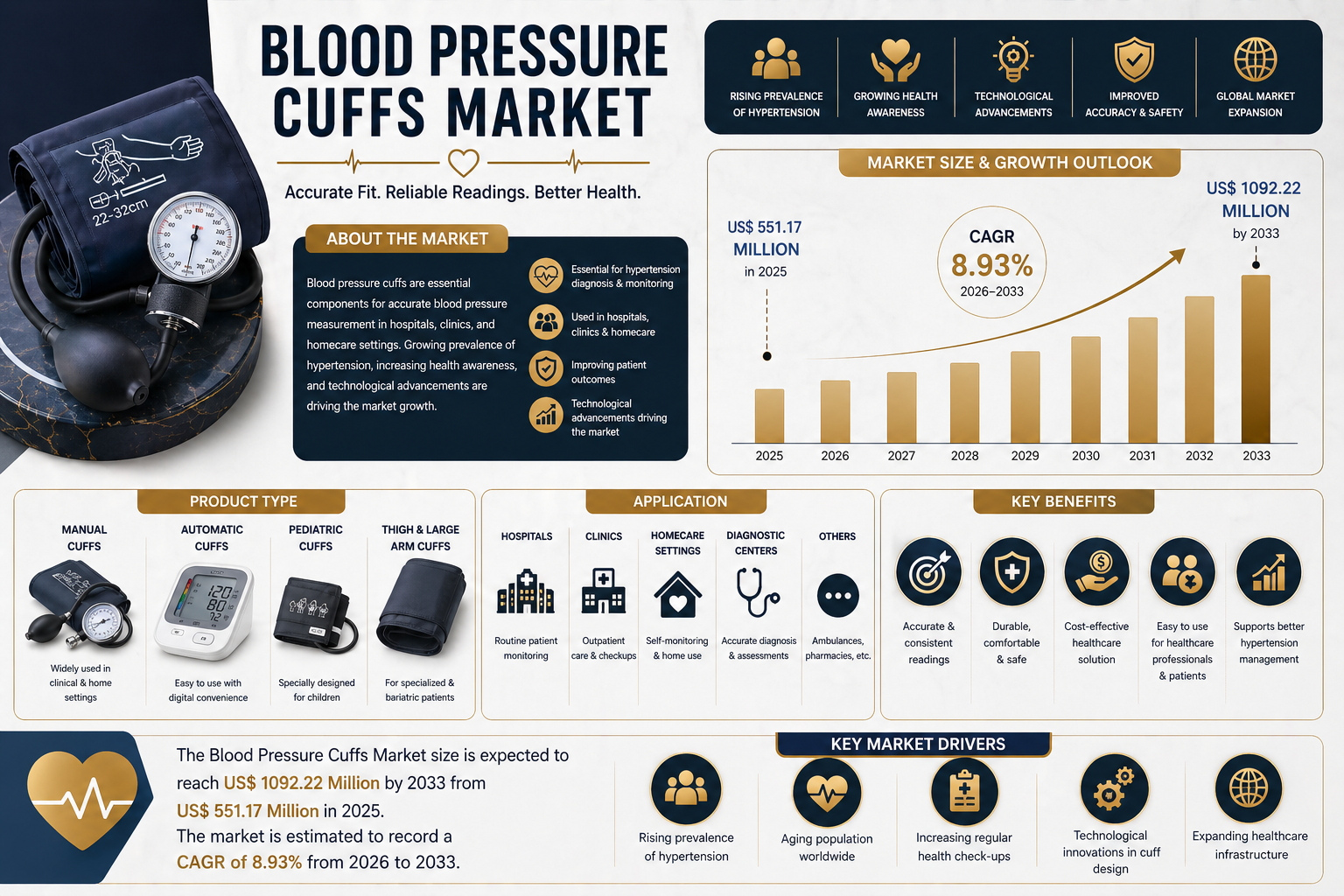
The global healthcare landscape is witnessing a transformative shift toward preventive care and chronic disease management, placing diagnostic tools like blood pressure monitoring at the forefront.As hypertension continues to be a leading global health concern, the demand for precise and accessible measurement devices is surging. The Blood Pressure Cuffs Market size is expected to...
The evolution of the Europe facial injectable market is marked by a remarkable growth trajectory, with projections indicating a market size of approximately USD 10,950 million by 2035. The market is currently valued at USD 2.84 billion in 2022, showcasing a compound annual growth rate (CAGR) of 7.80% over the forecast period. This upward trend is largely driven by changing consumer preferences,...

"According to the latest report published by Data Bridge Market Research, the Level and Flow Sensor Market Data Bridge Market Research analyses that the global level and flow sensor market is expected to grow at a CAGR of 5.8% in the forecast period of 2023 to 2030 and is expected to reach USD 24,175,765.05 thousand by 2030. The idea of this Level and Flow Sensor Market research...
"According to the latest report published by Data Bridge Market Research, the Asia-Pacific Commercial Sous Vide Machine Market Data Bridge Market Research analyses that the commercial sous vide machine market is expected to reach the value of USD 269.93 million by 2030, at a CAGR of 5.6% during the forecast period. The reliable Asia-Pacific Commercial Sous Vide Machine Market report...

The UK medical device market is poised for substantial growth, with projections indicating a market size of $74.45 billion by 2035. This trajectory reflects an impressive compound annual growth rate (CAGR) of 6.37%, showcasing a burgeoning sector driven by innovation and increasing healthcare demands. As hospitals prioritize advanced healthcare infrastructures, they account for nearly half of...
