The Central Nervous System of Fiber Networks: Inside the EPON OLT Industry

The Engine Room of Modern Fiber Broadband
In the global quest for faster and more reliable internet, fiber optic technology is the undisputed champion, and at the very heart of these networks lies a critical piece of hardware that orchestrates the entire flow of data. This is the realm of the global EPON OLT industry, a specialized sector dedicated to building the headend equipment for Ethernet Passive Optical Networks. An OLT, or Optical Line Terminal, is the central office device that acts as the command-and-control center for a fiber-to-the-home (FTTH) network. It connects the service provider's core network to the passive optical infrastructure that branches out to serve thousands of subscribers. Specifically, an EPON OLT utilizes the Ethernet standard (IEEE 802.3ah/av), making it a natural and cost-effective choice for delivering high-speed internet, voice, and video services. As the demand for gigabit-speed connectivity explodes worldwide, this industry has become a fundamental enabler of the digital age, providing the essential hardware that powers our increasingly connected lives, from streaming and gaming to remote work and telemedicine.
The Architecture of a Passive Optical Network
To understand the EPON OLT industry, one must first understand the elegant simplicity of a Passive Optical Network (PON). Unlike traditional active Ethernet networks that require powered switches at every branching point, a PON uses passive, unpowered optical splitters to distribute the signal from a single fiber to multiple end-users. This architecture has three main components. First is the OLT (Optical Line Terminal), located in the service provider's central office or a local exchange. It is the brain of the operation, converting electrical signals from the core network into optical signals and managing all the subscribers on the network. The second component is the Optical Distribution Network (ODN). This is the physical fiber optic cabling and, critically, the passive optical splitters that take the single fiber from the OLT and divide its signal to serve multiple locations, typically 32 or 64 subscribers per OLT port. The third component is the ONU (Optical Network Unit) or ONT (Optical Network Terminal), which is the device located at the subscriber's premises that receives the optical signal and converts it back into electrical signals for use by the customer's router, computer, and other devices. The OLT orchestrates this entire process, allocating specific time slots for each ONU to transmit data upstream to avoid collisions.
The Key Players: Telecom Giants and Specialists
The global EPON OLT industry is a highly concentrated and technologically advanced market dominated by a handful of major telecommunications equipment manufacturers. These companies have the immense R&D budgets, manufacturing scale, and deep relationships with service providers that are necessary to compete in this space. The market is led by Chinese giants Huawei and ZTE, who have achieved massive scale and a dominant market position due to their deep involvement in China's colossal national fiber-to-the-home rollouts, making them the largest producers of OLT equipment in the world. They are challenged by other global titans like Nokia, which gained a powerful position in the market through its acquisition of Alcatel-Lucent, a pioneer in PON technology. Other significant players include FiberHome, another major Chinese vendor, and companies like DASAN Zhone Solutions, which have a strong presence in various regional markets around the world. The ecosystem also includes the specialized companies that provide the critical optical and semiconductor components—such as the laser transceivers and MAC chips—that are the building blocks of the OLT hardware, creating a complex and high-tech supply chain.
Strategic Importance in the FTTx Revolution
The EPON OLT industry is not just about building a piece of networking hardware; it is a key strategic enabler of the global fiber-to-the-x (FTTx) revolution. For telecommunication companies and internet service providers, deploying a PON network with EPON OLTs represents a long-term, future-proof investment. A passive optical network has a significantly lower operational expenditure (OpEx) compared to older copper-based DSL or active Ethernet networks because there are no active electronics in the field that require power and maintenance. The fiber infrastructure itself has an incredibly long lifespan and almost limitless bandwidth potential. A service provider can deploy an EPON network today and then, years later, upgrade the OLT and ONU electronics at either end to deliver even higher speeds (e.g., from 1G to 10G EPON) without having to replace the expensive passive fiber plant in the ground. This scalability and cost-effectiveness have made EPON a cornerstone technology for bridging the digital divide, bringing high-speed broadband to underserved communities, and providing the foundational infrastructure for next-generation services like 5G, cloud gaming, and the Internet of Things.
Top Trending Reports:
Categories
- Artificial Intelligence (AI)
- Technology
- Business
- Education
- Science
- Lifestyle
- Healthcare
- Entertainment
- Politics
- Environment
- Travel
- Finance
- Automobile
- News
- Art
- Causes
- Crafts
- career
- Dance
- Drinks
- Film
- Fitness
- Food
- Games
- Gardening
- Health
- Home
- Literature
- Music
- Networking
- Other
- Party
- Religion
- Shopping
- Sports
- Theater
- Wellness
Read More
Heat, Chemical, and Radiation Modalities in Decontamination Operations Sterilization technologies in South Korea are broadly segmented by the underlying mechanism used to eradicate microbial contaminants. Choosing between thermal, chemical, or ionizing radiation methods depends on material compatibility, volume throughput requirements, and environmental safety regulations. Major technology...

Busbar For Battery Pack Market Report Overview The Busbar For Battery Pack Market report provides a comprehensive and analytically structured examination of the Busbar For Battery Pack market. Based on rigorous primary and secondary research methodologies, it evaluates competitive dynamics, technological advancements, regulatory environments, and evolving consumer expectations. The...
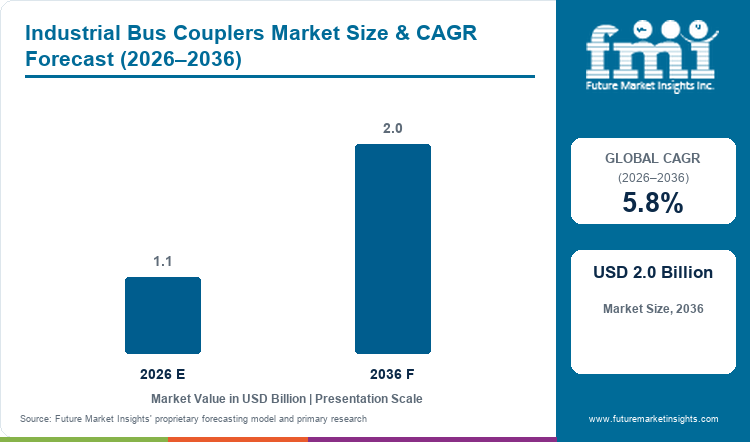
According to Future Market Insights (FMI), the global industrial bus couplers market is projected to reach USD 2.0 billion by 2036, rising from USD 1.1 billion in 2026 and expanding at a 5.8% CAGR during the forecast period. Growing requirements for controller-network compatibility, modular industrial I/O architectures, and flexible machine communication are supporting demand for industrial bus...
Pain, stiffness, injuries, and movement difficulties can affect your comfort and everyday activities. Choosing the right physiotherapy clinic in Dehradun can help you receive professional guidance and a personalized approach to improving mobility, strength, flexibility, and physical function. Professional Physiotherapy Care in Dehradun A physiotherapy clinic provides assessment and...
Metal fabrication is essential for creating durable, functional, and attractive metal structures for residential properties. Whether you need custom railings, gates, fences, staircases, or structural components, professional fabrication ensures every project is built with precision. Skilled fabricators use quality materials and advanced equipment to produce long-lasting results....