


The Transformative Power of the Global Software as a Service Industry
The Cloud Revolution and the Birth of SaaS
The modern business landscape has been irrevocably reshaped by a fundamental shift in how software is delivered and consumed, a revolution spearheaded by the formidable Software as a Service industry. For decades, the traditional on-premise model reigned supreme, requiring businesses to make massive upfront investments in software licenses, purchase and maintain complex server hardware, and employ large IT teams for installation and ongoing support. Software as a Service, or SaaS, completely upended this paradigm. In the SaaS model, software applications are hosted by a third-party provider on their own cloud infrastructure and are made available to customers over the internet, typically through a web browser. Instead of a one-time purchase, customers pay a recurring subscription fee, gaining access to powerful software without the burden of managing the underlying infrastructure. This shift has not only changed the economics of software but has also democratized access to enterprise-grade technology, acting as a great equalizer and enabling businesses of all sizes to compete on a more level playing field. It represents the maturation of cloud computing, moving beyond simple storage and computation to delivering sophisticated, end-to-end business solutions directly to users, wherever they may be.
Core Value Proposition for Businesses of All Sizes
The meteoric rise of the SaaS industry is rooted in its powerful and multifaceted value proposition for customers. The most significant benefit is the financial shift from a capital expenditure (CAPEX) model to an operational expenditure (OPEX) model. By eliminating the need for large upfront investments in licenses and hardware, SaaS makes powerful software financially accessible, particularly for small and medium-sized businesses (SMBs) that lack the capital of large enterprises. This subscription-based pricing provides predictable, manageable monthly or annual costs that align better with business cash flow. Scalability is another cornerstone of the SaaS value proposition. Businesses can easily scale their usage up or down as their needs change, adding or removing users with a few clicks, ensuring they only pay for what they use. Automatic updates are another major advantage. The SaaS vendor handles all updates, patches, and new feature rollouts seamlessly in the background, ensuring customers are always on the latest, most secure version of the software without any effort or downtime. Finally, the inherent cloud-based nature of SaaS provides unparalleled accessibility, allowing employees to access critical business applications from any device with an internet connection, a feature that has become indispensable in the era of remote and hybrid work.
The Vendor Perspective: Predictable Revenue and Direct Customer Relationships
While the benefits for customers are clear, the SaaS model is equally, if not more, transformative for the software vendors themselves. The primary advantage is the creation of a predictable, recurring revenue stream. Unlike the lumpy, unpredictable revenue from one-time license sales, the subscription model generates a steady flow of Monthly Recurring Revenue (MRR) and Annual Recurring Revenue (ARR). This predictability is highly prized by investors, leading to higher and more stable company valuations. It allows vendors to forecast revenue with greater accuracy and make more informed investments in growth and product development. The SaaS model also fosters a much closer and more continuous relationship with the customer. In the old model, the relationship often ended after the initial sale. In the SaaS world, the vendor must continually provide value to prevent the customer from "churning," or canceling their subscription. This creates a powerful incentive for continuous innovation, excellent customer support, and a deep focus on customer success. The direct, web-based delivery model also allows vendors to collect vast amounts of usage data, providing invaluable insights into how customers are using the product, which features are most popular, and where the user experience can be improved, creating a powerful feedback loop for rapid, data-driven product development.
A Ubiquitous Force Across All Business Functions and Verticals
The SaaS model has proven so successful that it has become a ubiquitous force, permeating every business function and industry vertical imaginable. It is no longer a niche category but the default delivery model for modern enterprise software. In sales and marketing departments, Customer Relationship Management (CRM) platforms like Salesforce have become the central nervous system, while marketing automation tools from HubSpot and Adobe enable sophisticated digital campaigns. In human resources, Human Capital Management (HCM) suites from vendors like Workday and SAP SuccessFactors manage the entire employee lifecycle, from recruitment to retirement. For finance and operations, cloud-based Enterprise Resource Planning (ERP) systems from NetSuite (Oracle) and others provide a unified view of the business. The digital workplace itself is powered by a suite of SaaS applications, with collaboration platforms like Slack and Microsoft Teams, project management tools such as Asana and Trello, and productivity suites like Microsoft 365 and Google Workspace becoming essential for daily operations. This widespread proliferation demonstrates the flexibility and power of the SaaS model, proving its ability to deliver specialized, high-value solutions for virtually any business need, solidifying its role as the foundational software architecture of the modern digital economy.
Top Trending Reports:
Categories
- Artificial Intelligence (AI)
- Technology
- Business
- Education
- Science
- Lifestyle
- Healthcare
- Entertainment
- Politics
- Environment
- Travel
- Finance
- Automobile
- News
- Art
- Causes
- Crafts
- career
- Dance
- Drinks
- Film
- Fitness
- Food
- Games
- Gardening
- Health
- Home
- Literature
- Music
- Networking
- Other
- Party
- Religion
- Shopping
- Sports
- Theater
- Wellness
Read More
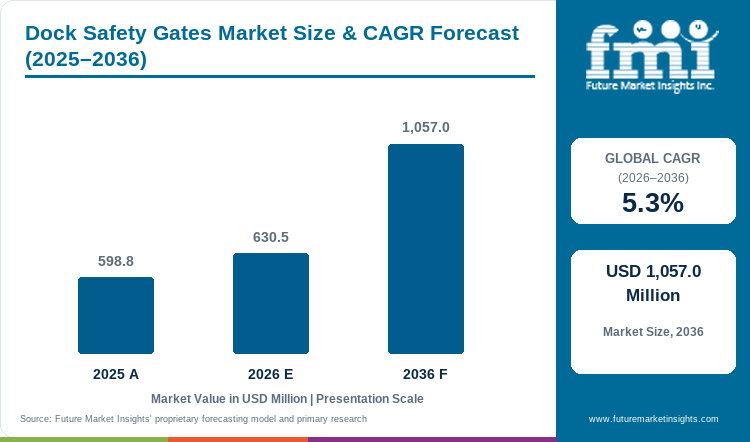
The global Dock Safety Gates Market is projected to grow from USD 630.5 million in 2026 to USD 1,057.0 million by 2036, expanding at a 5.3% CAGR during the 2026–2036 forecast period, according to Future Market Insights. The market was valued at USD 598.8 million in 2025. Demand is being supported by the need to protect open dock edges while maintaining access for pallet transfer and...
Addressing Infection Control: Single-Use vs. Reusable Endoscopy Cross-contamination risks and complex reprocessing protocols have long posed operational challenges for endoscopy departments. Multi-use flexible endoscopes feature intricate internal channels, working elevators, and bending mechanisms that are notoriously difficult to clean, sanitize, and sterilize between patients. Improper...

According to the latest report published by Data Bridge Market Research, the Hard Coffee Market The global hard coffee market size was valued at USD 127.45 million in 2024 and is expected to reach USD 769.46 million by 2032, at a CAGR of 25.20% during the forecast period This Hard Coffee Market research report is a resource, which offers...
Cancer radiation therapy, commonly referred to as radiotherapy, is a highly effective cancer treatment that uses controlled doses of high-energy radiation—including X-rays, gamma rays, proton beams, or other particle beams—to destroy cancer cells and reduce tumor size. The treatment damages the genetic material (DNA) of cancer cells, preventing them from growing and multiplying...
The Infection Control Market is on a trajectory of substantial growth, anticipating a market size of USD 81.05 billion by 2035, reflecting a compound annual growth rate (CAGR) of 6.90%. This surge can be largely attributed to increased global healthcare spending exceeding USD 9 trillion annually. The demand for infection control solutions is also fueled by stringent regulatory frameworks and...
