


A Deep Dive into the Event Stream Processing Market Platform
The technological architecture of a modern Event Stream Processing Market Platform is a multi-stage pipeline designed for the high-throughput, low-latency processing of data-in-motion. The first and most crucial stage of this pipeline is the event ingestion and messaging layer. This layer's job is to reliably capture and buffer the massive, continuous streams of event data coming from thousands or millions of sources, such as IoT devices, web servers, or mobile apps. The dominant technology in this space is the open-source platform Apache Kafka. Kafka acts as a distributed, fault-tolerant "commit log" or messaging queue. Producers (the data sources) publish streams of events to Kafka "topics," and consumers (the processing applications) subscribe to these topics to read the data. Kafka's ability to handle extremely high throughput, persist data for durability, and allow multiple applications to consume the same data stream independently has made it the de facto industry standard for the ingestion layer of almost every modern ESP architecture. The major cloud providers all offer managed Kafka services to simplify its deployment and management.
The second stage is the stream processing engine, which is the computational heart of the platform. This is where the continuous analysis of the event streams takes place. The processing engine consumes data from the ingestion layer (like Kafka) and allows developers to apply a series of transformations, aggregations, and analytical logic to the data as it flows through the system. This segment is also dominated by powerful open-source frameworks. Apache Flink has emerged as a leading engine for stateful stream processing, renowned for its low-latency, high-throughput, and sophisticated handling of event time and windowing operations. Apache Spark Streaming, part of the broader Spark ecosystem, is another widely used platform, particularly in organizations that also use Spark for batch processing, as it offers a unified programming model. These engines provide the powerful, distributed computing capabilities needed to perform complex calculations—like joining multiple streams, calculating moving averages, or applying machine learning models—on unbounded streams of data in real-time.
The third stage of the platform is the application and query layer. This is where developers define the specific business logic and continuous queries that will be executed by the processing engine. In many platforms, this is done using programming languages like Java, Scala, or Python, leveraging the APIs provided by frameworks like Flink or Spark. However, to make stream processing more accessible to a broader audience of data analysts, many platforms are now offering a high-level, SQL-like query language. This "Streaming SQL" allows analysts to express complex stream processing logic using familiar SQL syntax (e.g., SELECT, FROM, WHERE, GROUP BY) but applied to continuous data streams instead of static tables. For example, an analyst could write a Streaming SQL query to continuously calculate the top-selling products on an e-commerce site over a rolling 5-minute window. This abstraction layer is a key trend, democratizing the power of ESP beyond the realm of expert software engineers.
Finally, the processed results and insights must be sent to a serving or sink layer to be acted upon. The output of an ESP pipeline is often another event stream. This output stream could be used to trigger real-time alerts sent to a monitoring dashboard or a messaging system like Slack. It could be written to a low-latency NoSQL database or a key-value store (like Redis or Cassandra) to power a real-time application dashboard that shows the current state of the system. The results could also be used to send commands to other systems, for example, instructing a fraud detection system to block a user account or telling a factory machine to adjust its settings. The output can also be written to a traditional data warehouse or data lake for long-term storage and historical analysis. The flexibility to integrate with a wide variety of downstream "sink" systems is a critical feature of a comprehensive ESP platform, ensuring that the real-time insights it generates can be quickly and effectively operationalized.
Explore More Like This in Our Regional Reports:
India Optical Transport Network Market
Categories
- Artificial Intelligence (AI)
- Technology
- Business
- Education
- Science
- Lifestyle
- Healthcare
- Entertainment
- Politics
- Environment
- Travel
- Finance
- Automobile
- News
- Art
- Causes
- Crafts
- career
- Dance
- Drinks
- Film
- Fitness
- Food
- Games
- Gardening
- Health
- Home
- Literature
- Music
- Networking
- Other
- Party
- Religion
- Shopping
- Sports
- Theater
- Wellness
Read More
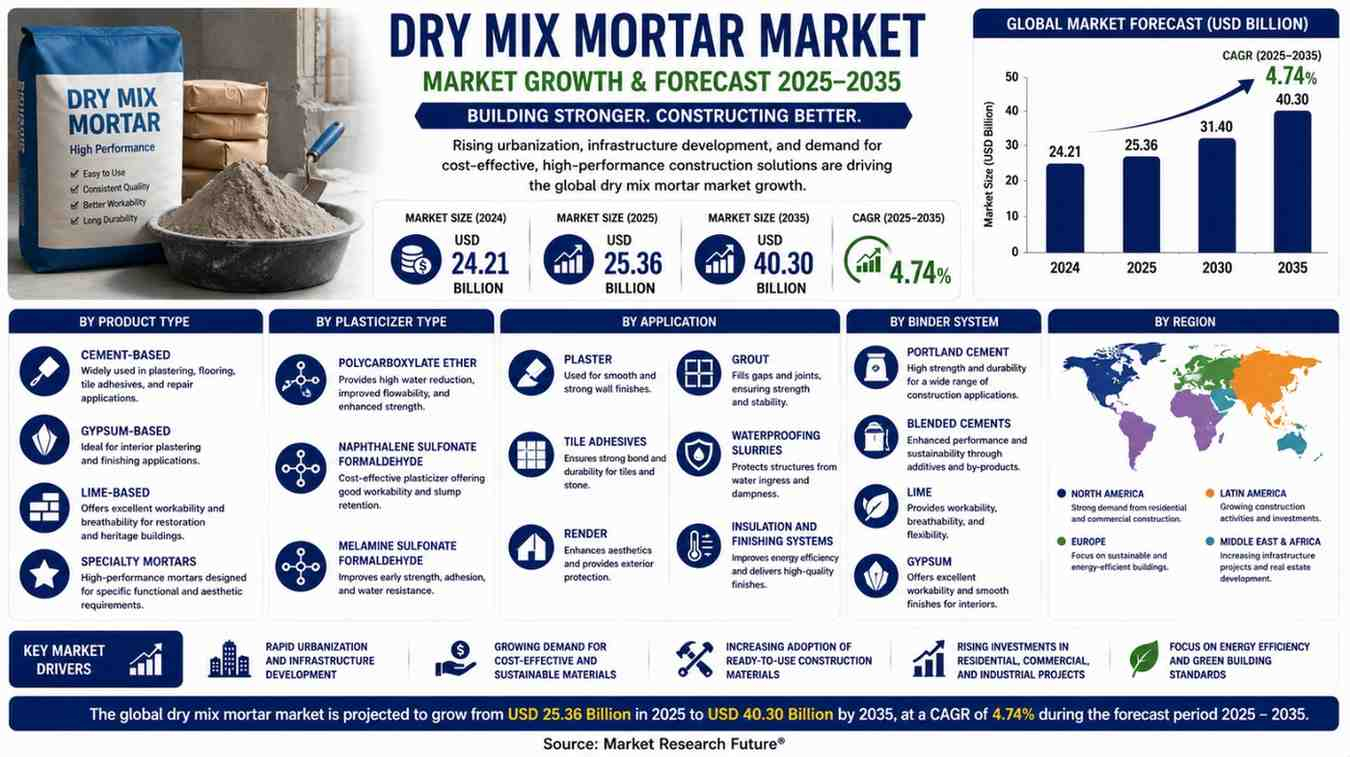
According to Market Research Future®, the Dry Mix Mortar Market was valued at USD 24.21 billion in 2024 and is projected to grow from USD 25.36 billion in 2025 to USD 40.3 billion by 2035, registering a compound annual growth rate (CAGR) of 4.74% during the forecast period (2025–2035). Rising investments in residential construction, commercial real estate, transportation...
The Digital Human (AI Avatars) Market estimation reveals strong growth potential as businesses increasingly adopt AI-driven solutions to enhance customer engagement and operational efficiency. Digital Human (AI Avatars) Market Size was estimated at 7.374 USD Billion in 2024 and is projected to reach 155.29 USD Billion by 2035, driven by rapid technological advancements and increasing...

The submersible pump market is expanding steadily as manufacturers introduce energy-efficient motors, smart monitoring systems, variable frequency drives (VFDs), corrosion-resistant materials, and IoT-enabled predictive maintenance capabilities to improve operational performance and reduce lifecycle costs. Advancements in hydraulic design, wear-resistant components, and digital monitoring...
The protein ingredients market is experiencing strong global growth as consumers increasingly prioritize health, wellness, and balanced nutrition. Protein has become a key dietary component not only for athletes but also for everyday consumers seeking improved metabolism, weight management, and muscle health. This shift in dietary habits is driving demand across food, beverage, and dietary...
Analyze the battery recycling market, which encompasses the sustainable management of all battery chemistries. Explore the drivers of growth, including regulatory pressure, resource scarcity, and corporate sustainability commitments. The battery recycling market represents a fundamental shift in how society views waste. Instead of discarding spent batteries, this market transforms them into a...

