


Building Automation System Market Growth Driven by IoT, AI, and Rising Demand for Energy Efficiency
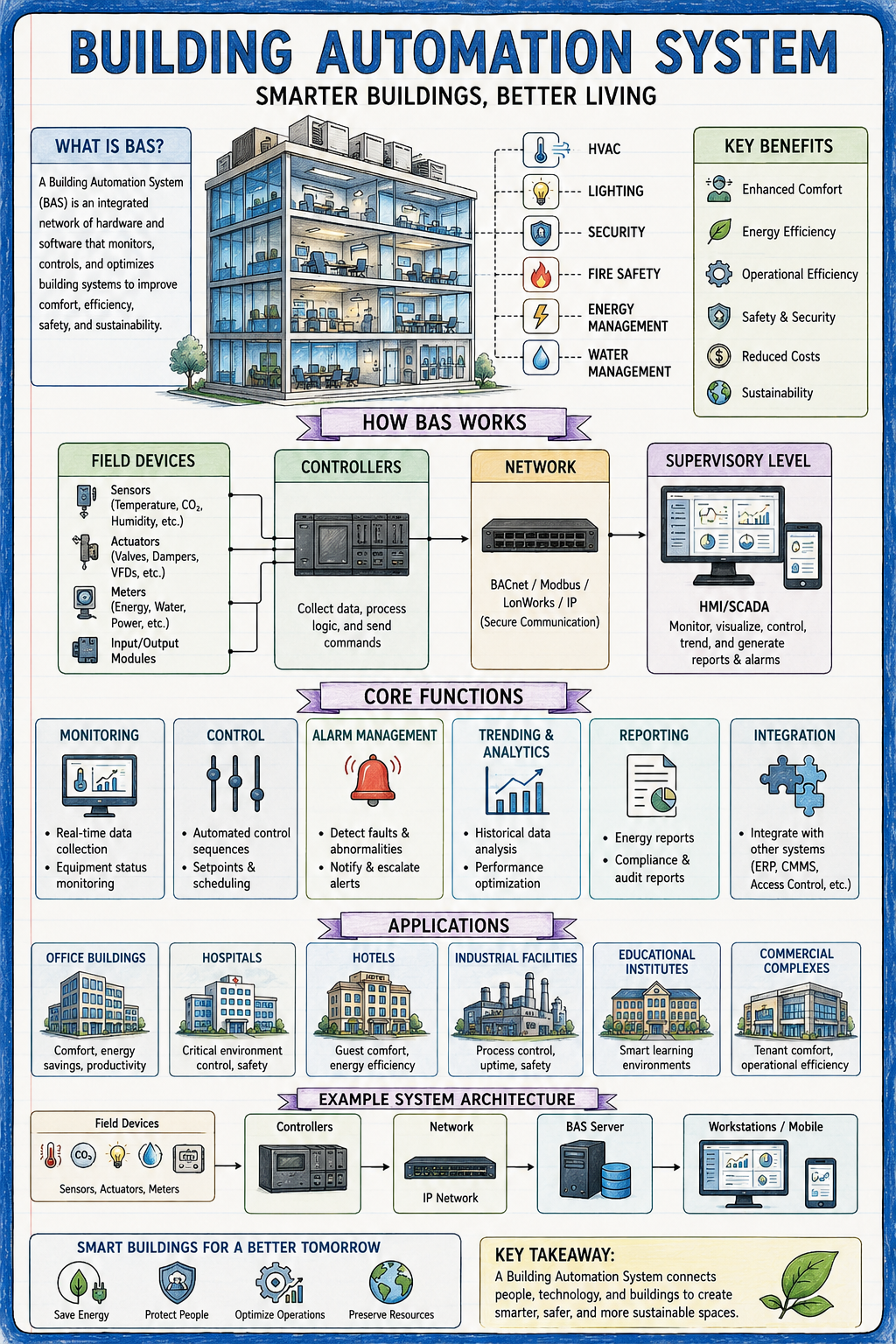
Artificial intelligence (AI) and machine learning (ML) algorithms are fundamentally transforming facility operations by converting static control rules into dynamic, learning systems. Traditional automation relied on fixed threshold programming, where systems adjusted settings only after environmental parameters breached predefined limits. In contrast, modern AI-enhanced solutions analyze vast historical datasets, weather forecasts, time-of-use energy rates, and facility occupancy patterns to anticipate environmental shifts proactively. This predictive capability allows systems to pre-cool or pre-heat spaces during off-peak rate hours, reducing energy costs while smoothing out grid demand spikes. Tracking current Building Automation System market trends reveals a widespread industry shift toward cloud-based AI engines that deliver automated diagnostics, fault detection, and real-time performance optimization across extensive property portfolios.
When discussing the role of artificial intelligence in property management, industry groups frequently examine the shift from reactive or preventive maintenance schedules to true predictive maintenance models. By continuously analyzing vibration signatures, electrical draw, and temperature metrics from heavy HVAC equipment, machine learning models detect micro-anomalies that signal impending mechanical failures weeks before actual breakdowns occur. This predictive capability prevents unexpected system downtime, extends physical equipment lifespans, and optimizes operational labor allocation. However, successfully adopting AI solutions requires clean data pipelines, strong data governance frameworks, and a workforce capable of interpreting complex predictive analytics to execute timely operational interventions.
Frequently Asked Questions
Q1: How does predictive maintenance differ from traditional preventive maintenance?
A1: Preventive maintenance follows fixed calendar schedules regardless of equipment condition, whereas predictive maintenance analyzes live sensor data to detect actual equipment wear and fix issues right before failure occurs.
Q2: What is peak-load shaving in intelligent energy management?
A2: Peak-load shaving is the strategy of reducing electrical consumption during peak grid demand times—often by pre-conditioning spaces or utilizing local storage—to avoid high utility demand charges.
➤➤➤Explore MRFR’s Related Ongoing Coverage In Semiconductor Industry:
Distributed Acoustic Sensing Market
Fiber Optic Test Equipment Market
Flexible Hybrid Electronics Market
Merchant Banking Services Market
Categories
- Artificial Intelligence (AI)
- Technology
- Business
- Education
- Science
- Lifestyle
- Healthcare
- Entertainment
- Politics
- Environment
- Travel
- Finance
- Automobile
- News
- Art
- Causes
- Crafts
- career
- Dance
- Drinks
- Film
- Fitness
- Food
- Games
- Gardening
- Health
- Home
- Literature
- Music
- Networking
- Other
- Party
- Religion
- Shopping
- Sports
- Theater
- Wellness
Read More
The electric coolant pump market is witnessing substantial growth due to the increasing adoption of electric and hybrid vehicles, growing vehicle production, and rising demand for eco-friendly transportation solutions. Electric coolant pumps play a critical role in automotive cooling systems by maintaining engine temperature, powertrain cooling, and cooling of batteries...

Satellite Internet Market According to the latest report published by Data Bridge Market Research, the Satellite Internet Market The Satellite Internet Market was valued at USD 13.16 billion in 2025 and is projected to reach USD 45.58 billion by 2033, growing at a CAGR of 16.80% from 2026 to 2033. The market is experiencing strong growth driven by increasing global...
The Intravenous General Anesthetics Market is becoming increasingly significant as hospitals and surgical centers adopt modern anesthesia approaches to improve procedural outcomes. Intravenous general anesthetics are widely utilized for achieving controlled unconsciousness during operations, ensuring patient comfort while enabling surgeons to perform complex procedures effectively. The rising...
The Sodium Acetate Ringer's Injection Market is witnessing steady growth as healthcare systems increasingly rely on balanced intravenous (IV) solutions for fluid resuscitation, electrolyte replacement, and acid-base management. Sodium Acetate Ringer's Injection is widely used in hospitals, emergency departments, intensive care units, and surgical settings to restore fluid balance in patients...
The China cosmetic surgery market is poised for significant expansion, with an impressive projected market size of approximately 8.02 billion USD by 2035. This robust growth, reflecting a compound annual growth rate (CAGR) of 7.87%, signals a transforming landscape in how beauty is perceived and pursued among Chinese consumers. Enhanced consumer awareness, coupled with rising disposable...
