How Often Can Sclerotherapy Be Done?
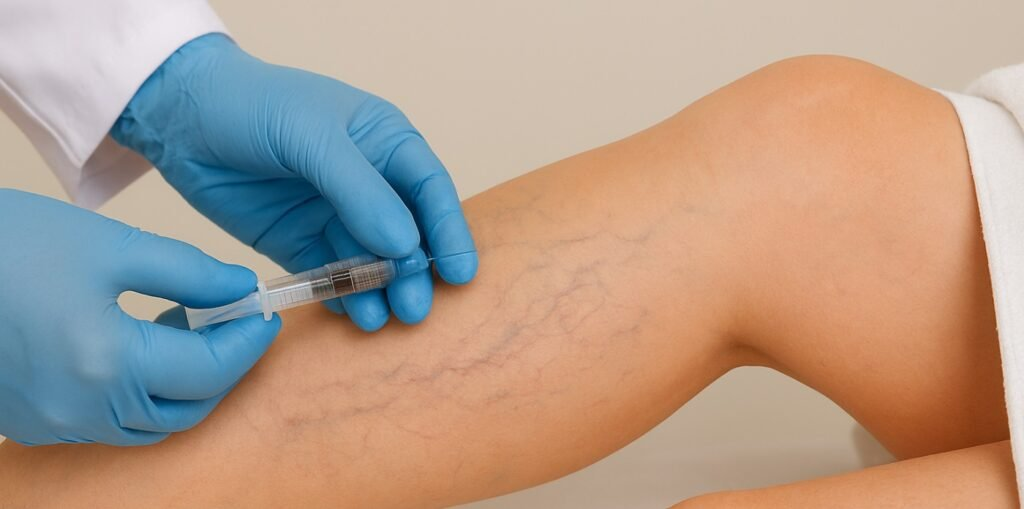
If you are considering Sclerotherapy in Dubai, one of the most common questions is how many sessions you may need and how far apart they should be. Although some spider veins and small varicose veins improve after one treatment, many people require multiple sessions for more complete results. The important point is that treatments should not usually be performed too close together because the veins need time to respond and the skin needs time to recover.
How Often Can Sclerotherapy Be Repeated?
There is no single schedule that applies to everyone. In general, another sclerotherapy session may be considered after approximately 4 to 8 weeks, depending on the veins treated, the treatment response, and the individual's recovery.
Mayo Clinic advises waiting about six weeks before another session in many cases. Cleveland Clinic notes that people receiving multiple treatments may have their next session around two or three months later, while some specialist services review patients at about six weeks before deciding whether additional injections are appropriate.
The interval is important because treated veins do not disappear immediately. Small spider veins may take around three to six weeks to show their response, while larger veins can take three to four months to improve significantly.
Therefore, repeating treatment too quickly may make it difficult to accurately judge the result of the previous session.
Why Do Some People Need Multiple Sclerotherapy Sessions?
Sclerotherapy works by injecting a sclerosing solution into the targeted vein. The solution irritates the inside of the vessel, causing the vein to close and eventually become less visible as the body gradually processes it.
One treatment may not address every visible vein. For example, a person with widespread spider veins may need several sessions to treat different areas safely and effectively.
The number of treatments can depend on:
- The number of veins being treated
- The size and location of the veins
- Whether the veins are spider veins, reticular veins, or larger varicose veins
- How the veins respond to the first session
- The presence of underlying venous problems
- Individual healing and skin response
- The treatment technique and concentration of the sclerosing agent
Cleveland Clinic specialists note that patients with extensive spider veins may sometimes require two, three, or even four treatments, with adequate time between sessions to allow the treatment to take effect.
This means needing another session does not necessarily indicate that the first treatment failed. It can simply be part of the planned treatment process.
What Happens Between Sclerotherapy Sessions?
The period between sessions allows the treated veins to gradually respond. Immediately after treatment, the veins can sometimes appear darker, bruised, red, or more noticeable before they begin to fade.
For spider veins, visible improvement commonly develops over several weeks. Larger veins can take considerably longer, so your provider may want to wait before deciding whether additional treatment is necessary.
Follow-up appointments are therefore an important part of the treatment plan. A clinician can assess whether the treated veins are closing as expected, whether residual veins remain, and whether another session is appropriate.
Some patients may also develop temporary side effects such as bruising, redness, small areas of hardness, or brown discoloration. These effects generally improve with time, although some can take several months to fade.
For this reason, the next treatment should be based on healing and clinical assessment rather than simply following a fixed calendar.
How Many Sclerotherapy Sessions Might You Need?
The number of sessions varies considerably from person to person. Someone with a small number of fine spider veins may achieve satisfactory improvement with one session, while someone with extensive veins may need several treatments.
For cosmetic spider veins, Cleveland Clinic experts explain that more than one treatment is common and that some patients with larger groups of veins may require multiple sessions.
For larger varicose veins, the treatment approach may also be different. A medical evaluation can determine whether sclerotherapy alone is suitable or whether another vein treatment should be considered.
A typical treatment plan may therefore look like this:
- Initial assessment: The veins and your medical history are evaluated.
- First treatment: Suitable veins are injected with the selected sclerosing solution.
- Healing period: The treated veins are allowed time to respond and fade.
- Follow-up: Results and any side effects are assessed.
- Additional session: If necessary, remaining veins may be treated after an appropriate interval.
This staged approach helps prevent unnecessary treatment and gives the clinician an opportunity to adjust the plan according to your response.
Does Waiting Longer Between Sessions Affect Results?
Waiting between sessions does not necessarily reduce the effectiveness of sclerotherapy. In fact, allowing sufficient time can help the provider determine which veins have responded and which ones remain visible.
The treated veins may continue changing for weeks or months. Mayo Clinic reports that small varicose and spider veins commonly show results within three to six weeks, while larger veins may require three to four months.
Consequently, treating too soon can make it harder to distinguish between veins that are still healing and veins that genuinely require another injection.
Your recovery can also influence the timing. If you have persistent inflammation, significant skin changes, or another concerning reaction, another session may need to be postponed until the issue has been evaluated.
Is It Safe to Have Sclerotherapy Repeated?
When appropriately planned and performed by a qualified healthcare professional, repeated sclerotherapy sessions can be part of normal vein treatment. However, each session still carries potential side effects and risks.
Possible effects include bruising, redness, temporary lumpiness or hardness, skin discoloration, and the appearance of small new blood vessels around the treated area. More serious complications, although uncommon, can include blood clots, inflammation, skin ulceration, or allergic reactions.
You should contact your healthcare provider if you experience unusual or worsening symptoms after treatment. Sudden leg swelling, significant pain, or other concerning symptoms require prompt medical assessment rather than simply waiting for the next scheduled session.
It is also important to tell your provider about medications, pregnancy or breastfeeding, previous vein problems, and relevant medical conditions before undergoing another session. Mayo Clinic specifically recommends postponing treatment during pregnancy or breastfeeding.
When Should You Schedule Your Next Sclerotherapy Treatment?
The best time for another treatment depends on how your veins and skin responded to the previous session. For many patients, a follow-up around six weeks provides enough time to assess early results, although the actual interval can be shorter or longer depending on the treatment plan.
If you are exploring Sclerotherapy in Dubai, avoid choosing a treatment schedule based solely on a standard number of days. A personalized assessment is more appropriate because the size, number, and type of veins can significantly affect how quickly another session should be performed.
Before scheduling another appointment, your provider may consider:
- Whether the treated veins have sufficiently faded
- Whether bruising or inflammation has resolved
- Whether skin discoloration is improving
- Whether additional veins remain untreated
- Whether an underlying vein problem needs evaluation
- Whether another treatment method would be more suitable
For ultrasound-guided or foam sclerotherapy used for certain larger veins, follow-up imaging may also be used to assess the treated vein and determine whether further treatment is needed. Some NHS vascular services schedule assessment around six to eight weeks after treatment.
Final Takeaway
There is no universal number of times Sclerotherapy can be performed because treatment frequency depends on the type and extent of veins, individual healing, and the results of previous sessions. In many cases, another treatment is considered after roughly four to eight weeks, with six weeks being a commonly cited interval, while larger or more complex veins may require a longer waiting period.
If you are considering Sclerotherapy in Dubai, patience between sessions can be just as important as the treatment itself. Allowing the veins enough time to respond helps your healthcare provider make a more accurate decision about whether another session is genuinely necessary.
Categories
- Artificial Intelligence (AI)
- Technology
- Business
- Education
- Science
- Lifestyle
- Healthcare
- Entertainment
- Politics
- Environment
- Travel
- Finance
- Automobile
- News
- Art
- Causes
- Crafts
- career
- Dance
- Drinks
- Film
- Fitness
- Food
- Games
- Gardening
- Health
- Home
- Literature
- Music
- Networking
- Other
- Party
- Religion
- Shopping
- Sports
- Theater
- Wellness
Read More
Global Multi‑Axis Force Load Cell market size was valued at USD 766 million in 2025 and is projected to reach USD 1,237 million by 2034, exhibiting a CAGR of 7.3 % during the forecast period. A Multi‑Axis Force Load Cell is a sensor that simultaneously measures forces along multiple axes-typically X, Y and Z-and often captures torque around one or more axes. Unlike conventional single‑axis load...

The Absorbable Fibrin Glue Market is developing as surgical teams increasingly seek effective topical hemostatic and tissue-sealing solutions. Fibrin glue is used to support bleeding control, tissue adhesion, and wound management across a range of surgical procedures. The product is particularly relevant in procedures where conventional suturing or mechanical hemostasis may be difficult. Its...
Reduce customs complexity with Importer of Record Andorra services from One Union Solutions. We help businesses import products efficiently and compliantly.

The Veterinary Medicine Market size is poised for remarkable expansion, with projections indicating a growth from $36.2 billion in 2024 to an impressive $66.05 billion by 2035. This rapid increase translates to a compound annual growth rate (CAGR) of 7.48%. Factors driving this acceleration include rising pet ownership across the globe, particularly in North America, and a notable shift toward...
A slot used to be judged by how fast it spun and how loudly it cheered a win. That’s changed. The real shift is happening under the hood, and the clearest read on online casino trends comes from Trybet Casino, where the newest releases show how much design, pacing, and player control now matter. Flashy graphics still get attention, sure, but the bigger move is toward shorter sessions,...