


Microbiome Test vs. 16S Sequencing: Key Differences Explained
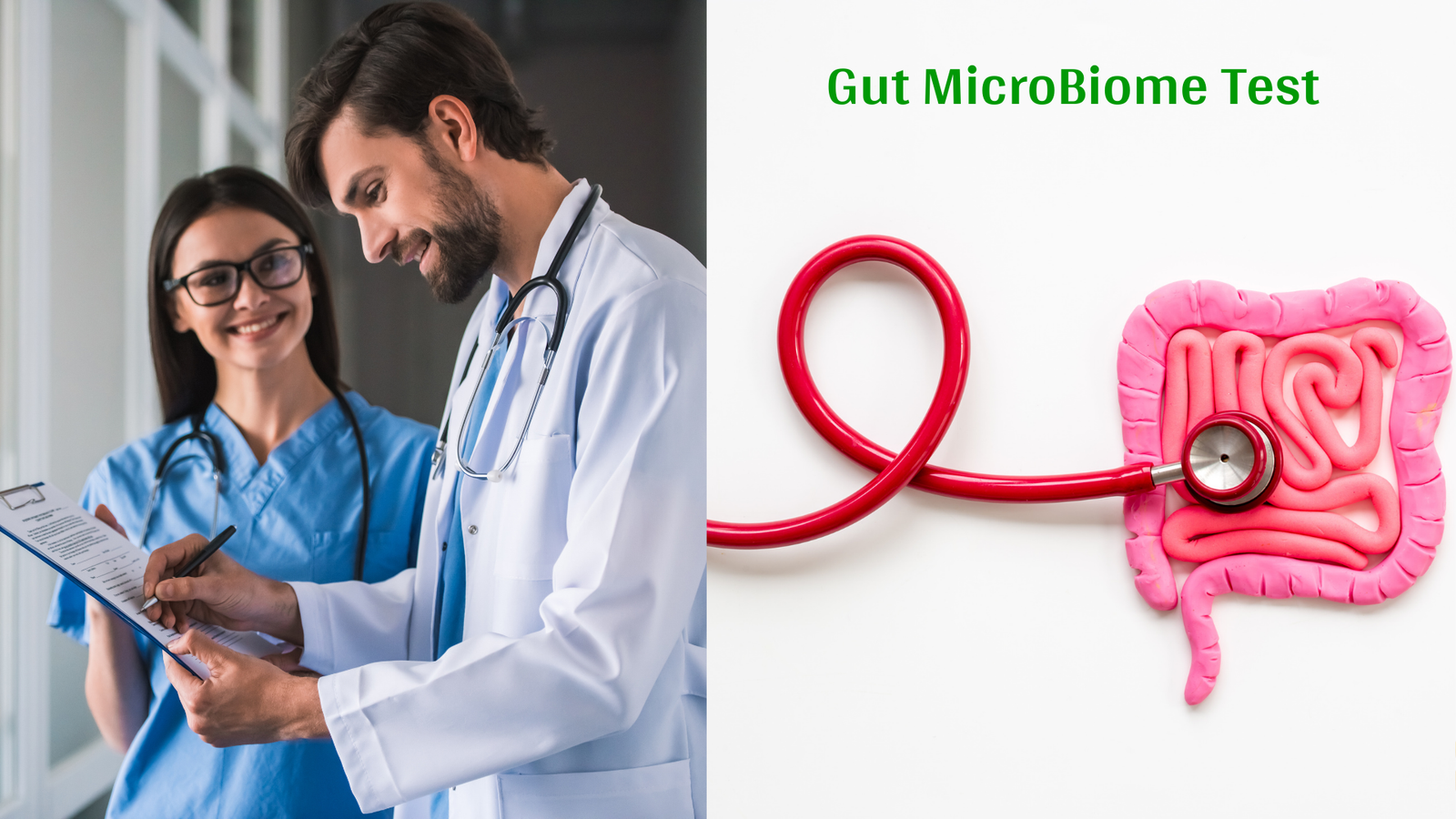
The terms microbiome test and 16S sequencing are often used interchangeably, but they do not mean the same thing.
A Gut Microbiome Test Dubai is the broader testing process used to examine microorganisms in a biological sample, while 16S sequencing is a specific DNA sequencing technique commonly used to identify and characterize bacterial communities.
Understanding this distinction matters when choosing a gut microbiome test, comparing laboratory reports, or deciding how much information a particular analysis can provide.
A 16S-based test can reveal valuable information about bacterial taxonomy and microbial community composition. However, it does not examine microbial DNA in exactly the same way as shotgun metagenomic sequencing, and the results should not automatically be interpreted as a complete assessment of digestive health.
The Difference in One Sentence:
The simplest way to understand the relationship is this:
A microbiome test is the overall analysis, while 16S sequencing is one method that can be used to perform that analysis.
A commercial gut microbiome test might use 16S rRNA sequencing, shotgun metagenomic sequencing, or another analytical approach.
Therefore, asking whether a microbiome test or 16S sequencing is “better” is not quite the right comparison. The more useful question is:
What type of information does the test need to provide, and which sequencing method is appropriate for that purpose?
What Is a Microbiome Test?
A microbiome test analyzes microorganisms or microbial genetic material in a sample, commonly a stool sample when studying the gut microbiome.
The process generally involves several stages:
-
Collecting a biological sample
-
Preserving and transporting the sample
-
Extracting microbial DNA
-
Sequencing or otherwise analyzing the genetic material
-
Using bioinformatics tools to classify microorganisms
-
Generating a microbial profile
-
Interpreting the findings
The final report may include information about bacterial species or groups, relative abundance, microbial diversity, and community composition.
Some more advanced analyses may also report functional genes or predicted microbial pathways.
The exact information depends on the technology and laboratory performing the analysis.
What Is 16S Sequencing?
16S sequencing is a molecular technique used primarily to characterize bacterial communities.
The method focuses on the 16S ribosomal RNA gene, which contains regions that can help distinguish bacterial groups.
Because the gene contains both conserved and variable regions, researchers can use selected portions of it to identify and classify bacteria.
This makes 16S rRNA sequencing especially useful for microbial community profiling.
It has been widely used in research because it can characterize many bacterial groups without requiring researchers to culture individual organisms in the laboratory.
However, it has limitations, particularly when trying to distinguish closely related organisms.
Where the Two Overlap?
A 16S sequencing analysis can be part of a microbiome test.
For example, a stool-based gut microbiome test might collect a sample, extract microbial DNA, perform 16S sequencing, analyze the resulting sequences, and produce a report showing bacterial composition.
In that situation:
Microbiome test = the complete testing process
16S sequencing = the sequencing technology used within that process
This distinction prevents a common misunderstanding. The sequencing method is only one component of microbiome analysis.
Sample collection, DNA extraction, sequencing depth, reference databases, bioinformatics, and quality control can all influence the final result.
What Information Can 16S Sequencing Provide?
The main strength of 16S sequencing is bacterial community characterization.
It can provide information about:
Bacterial Taxonomy:
The analysis can classify detected sequences into taxonomic groups such as phylum, family, genus, and, depending on the method, potentially species.
The level of classification depends on the genetic regions targeted and the analytical pipeline.
Community Composition:
A 16S analysis can show which bacterial groups are detected and how their representation differs within the microbial community.
Relative Abundance:
Reports commonly show the relative abundance of bacterial groups.
For example, one genus might account for a certain percentage of the sequences detected in a sample.
This describes its proportion of the measured community rather than necessarily its absolute number of cells.
Microbial Diversity:
Researchers can calculate measures such as alpha diversity and beta diversity from 16S sequencing data.
These measurements help describe microbial communities and compare samples.
They are useful scientific tools, but they should not automatically be treated as universal measures of gut health.
What 16S Sequencing Usually Does Not Tell You?
16S sequencing focuses primarily on bacterial genetic markers rather than providing a complete analysis of all microbial genetic material.
This means it generally offers less information about the full functional potential of the microbial community than shotgun metagenomic sequencing.
It may also have limited ability to distinguish closely related bacterial species.
Most importantly, the presence or abundance of a bacterial group does not automatically establish what that organism is doing in the body.
Detecting microbial DNA is not the same as measuring microbial activity.
How Shotgun Metagenomics Differs?
Shotgun metagenomic sequencing takes a broader approach.
Instead of targeting one particular genetic marker, it sequences a much wider collection of DNA fragments present in the sample.
This can allow researchers to examine a broader range of microorganisms and identify genes associated with potential microbial functions.
As a result, shotgun metagenomics may provide:
-
Greater taxonomic resolution
-
Broader microbial coverage
-
Functional gene information
-
Potential metabolic pathway information
However, more detailed sequencing does not automatically make the resulting health interpretation clinically proven.
A report can identify functional genes without proving that those functions are actively occurring in the person's digestive tract.
16S vs. Shotgun Metagenomics: A Practical Comparison
| Feature | 16S Sequencing | Shotgun Metagenomics |
|---|---|---|
| Main focus | Bacterial identification | Broad microbial DNA |
| Taxonomic information | Yes | Yes |
| Species-level resolution | Variable | Generally greater |
| Functional gene information | Limited | More extensive |
| Broader microbial coverage | More limited | Broader |
| Community profiling | Strong | Strong |
| Potential pathway analysis | Limited | More detailed |
| Interpretation | Requires context | Requires context |
The best method depends on the purpose of testing, not simply on which technology sounds more advanced.
Why the Same Stool Sample Can Produce Different Reports?
A microbiome test result is influenced by more than sequencing technology.
Two laboratories can analyze similar samples and produce different results because of differences in:
-
DNA extraction procedures
-
Sample handling
-
Sequencing platforms
-
Targeted genetic regions
-
Sequencing depth
-
Reference databases
-
Taxonomic classification
-
Bioinformatics pipelines
-
Quality control procedures
This is particularly important when comparing commercial microbiome tests.
A difference between two reports does not automatically mean that the gut microbiome changed dramatically. Some differences may arise from laboratory methodology.
Relative Abundance Is Not Absolute Abundance:
Another important limitation involves the way microbiome data are commonly presented.
Suppose a report states that a bacterial group represents 25 percent of the detected microbial community.
That percentage is a measure of relative abundance.
It does not necessarily tell you how many bacterial cells are actually present.
If another group becomes more abundant, the percentage assigned to the first group can decrease even if its absolute quantity remains relatively stable.
This is one reason microbiome reports should not be interpreted like standard blood tests with universally established normal ranges.
Can 16S Sequencing Diagnose an Imbalanced Gut?
Not by itself.
16S sequencing can identify microbial patterns, but identifying a microbial difference is not the same as diagnosing a condition.
The term dysbiosis is often used to describe changes in microbial community structure, but there is no universally accepted 16S-based definition of dysbiosis that can diagnose poor gut health in every individual.
Healthy people naturally have different microbial communities.
Therefore, finding that a person's microbiome differs from a reference group does not automatically mean the person has an unhealthy gut.
What About Digestive Symptoms?
People sometimes seek microbiome testing because of bloating, constipation, diarrhea, abdominal discomfort, or other gastrointestinal symptoms.
16S sequencing may reveal differences in microbial composition that are associated with certain health conditions in research.
But association does not prove causation.
A microbial change could contribute to symptoms, result from symptoms, or occur alongside another underlying factor.
For this reason, a microbiome test should not automatically be used to determine the cause of digestive symptoms or replace established medical evaluation.
Which Method Is More Accurate?
There is no universal answer.
“Accuracy” can mean different things.
A test might accurately detect bacterial DNA but still have limited clinical usefulness. Similarly, a sequencing method may identify microbial species with high technical precision without proving that a particular organism is responsible for a person's symptoms.
When evaluating accuracy, consider:
-
Analytical reliability
-
Reproducibility
-
Taxonomic resolution
-
Sample quality
-
Laboratory quality control
-
Reference database quality
-
Validation of the interpretation
-
Clinical evidence supporting the conclusions
The most sophisticated sequencing method cannot compensate for weak interpretation.
What Should You Look for in a Microbiome Test?
If you are considering testing, look beyond the number of microorganisms listed in the final report.
A transparent provider should explain the testing methodology and what the findings actually mean.
Useful questions include:
Which sequencing method is used?
Knowing whether the test relies on 16S sequencing or shotgun metagenomics helps you understand the scope of the data.
What does the report measure?
Look for clear definitions of abundance, diversity, taxonomy, and any functional measurements.
How are results interpreted?
Be cautious with proprietary health scores that are presented as definitive medical measurements without strong validation.
What evidence supports recommendations?
A microbial finding does not automatically prove that a particular supplement, probiotic, or dietary restriction will help.
Does a More Advanced Test Always Mean a Better Test?
Not necessarily.
Shotgun metagenomics can generate more extensive information than 16S sequencing, but the usefulness of that additional information depends on the question being asked.
If the goal is broad bacterial community profiling, 16S sequencing may provide valuable information.
If the goal is to investigate a wider range of microbial DNA and potential functional genes, shotgun metagenomics may be more informative.
The most important issue is not simply how much data a test produces, but whether the data are reliable and clinically meaningful.
When Is 16S Sequencing a Reasonable Choice?
16S sequencing remains an important tool for studying bacterial communities.
It can be particularly useful for:
-
Research studies
-
Microbial community profiling
-
Comparing bacterial populations
-
Exploring changes over time
-
Investigating ecological patterns
Its widespread use has contributed substantially to our understanding of the gut microbiome.
For personal health decisions, however, the interpretation should remain cautious because microbiome science is still developing.
The Role of Microbiome Testing in Gut Health:
Microbiome testing can help people understand the concept of microbial ecosystems and provide a snapshot of microorganisms detected in a sample.
But gut health involves much more than bacterial composition.
Digestive wellness also involves gastrointestinal function, diet, bowel habits, medication exposure, lifestyle, medical conditions, and many other biological factors.
A microbiome test should therefore complement broader health information rather than replace it.
Final Verdict: Microbiome Test or 16S Sequencing?
The two terms describe different levels of the testing process.
A microbiome Lab tests is the broader analysis used to characterize microorganisms in a sample. 16S sequencing is one specific molecular technique that can be used within that analysis, primarily to characterize bacterial communities.
16S sequencing can provide useful information about taxonomy, relative abundance, and microbial diversity. Shotgun metagenomics can offer broader information about microbial DNA and potential functional genes.
Neither approach automatically provides a complete diagnosis of digestive health.
The most meaningful microbiome results come from understanding what was measured, how it was measured, how reliable the analysis is, and what the scientific evidence actually supports.
As microbiome research develops, improved standardization and stronger clinical validation may make microbial testing increasingly useful. Until then, the technology is best viewed as a powerful research and analytical tool rather than a definitive answer to every gut health question.
Categories
- Artificial Intelligence (AI)
- Technology
- Business
- Education
- Science
- Lifestyle
- Healthcare
- Entertainment
- Politics
- Environment
- Travel
- Finance
- Automobile
- News
- Art
- Causes
- Crafts
- career
- Dance
- Drinks
- Film
- Fitness
- Food
- Games
- Gardening
- Health
- Home
- Literature
- Music
- Networking
- Other
- Party
- Religion
- Shopping
- Sports
- Theater
- Wellness
Read More
Business Management Top Up Degree in Europe If you already hold a foundation degree, HND, or equivalent qualification, taking the next step toward a bachelor's degree can significantly improve your career prospects. A Business Management Top Up Degree allows you to convert your existing qualifications into a full undergraduate degree while developing the practical and strategic skills employers...

The global Inertial Measurement Unit (IMU) Market is witnessing strong growth as industries increasingly adopt advanced motion sensing and navigation technologies across aerospace, automotive, consumer electronics, robotics, and healthcare applications. IMUs have become essential components for measuring orientation, acceleration, and angular velocity, enabling precise positioning and...
The automotive airbag and seatbelt market is a critical pillar of vehicle safety, designed to protect occupants during collisions and significantly reduce fatalities and serious injuries. As global vehicle production increases and road safety regulations become more stringent, demand for advanced passive safety systems continues to rise. Airbags and seatbelts have evolved from basic restraint...

The Artificial Tears Lubricants Market is witnessing steady growth as the prevalence of dry eye conditions increases worldwide. According to WiseGuyReports, the market was valued at approximately USD 3.4 billion in 2025 and is projected to reach USD 5.0 billion by 2035, expanding at a CAGR of 3.9% during the forecast period. Artificial tears and lubricants are widely used to relieve eye...
A tummy tuck, medically known as abdominoplasty, is a popular body contouring procedure for individuals who want to improve the appearance of their abdomen. It can help address loose abdominal skin, separated muscles, and stubborn tissue that may remain despite healthy lifestyle habits. For people considering this transformation, a Tummy Tuck offer in Riyadh can make the journey more...

