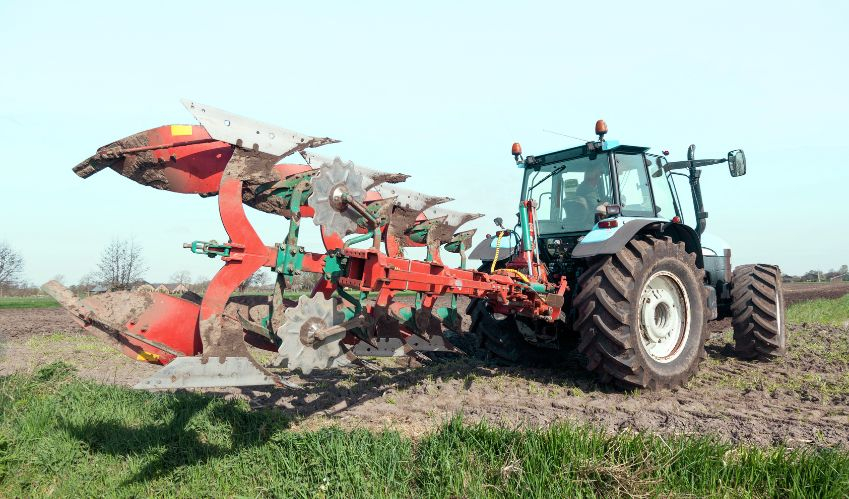
Agriculture is rapidly evolving as farmers and agricultural businesses adopt advanced technologies to improve productivity, manage resources, and respond to changing environmental conditions. Agricultural equipment, once primarily associated with mechanical operations such as ploughing, planting, harvesting, and irrigation, is becoming increasingly connected, automated, and data-driven. Automation, artificial intelligence (AI), sensors, and precision farming technologies are transforming how modern agricultural machinery is designed and operated.
The global agricultural equipment market reached USD 231.77 Billion in 2025 and is projected to grow at a CAGR of 8.90% during the forecast period 2026-2035, reaching USD 543.67 Billion by 2035, according to Expert Market Research. The expansion of the market reflects the growing need for efficient farming technologies, rising mechanisation, and increasing adoption of smart agricultural solutions.
The Shift Towards Smart Agricultural Equipment
Agricultural equipment is becoming an important part of the digital transformation taking place across the farming sector. Modern tractors, harvesters, planters, sprayers, and irrigation systems can now incorporate sensors, GPS, connectivity, and automated control systems.
These technologies allow machinery to collect and process information about soil conditions, crop health, field characteristics, and equipment performance. Farmers can use this information to make more informed decisions and optimise farming activities.
The transition towards smart equipment is particularly important as agricultural producers face pressure to increase output while managing land, water, fertiliser, fuel, and labour more efficiently. Connected machinery can help improve operational visibility and support more precise resource management.
Automation Transforming Farm Operations
Automation is becoming increasingly relevant across different stages of agricultural production. Automated tractors and machinery can perform certain field operations with limited direct intervention, helping farmers manage repetitive tasks more efficiently.
GPS and navigation technologies enable agricultural machinery to follow predetermined routes and maintain consistent movement across fields. Automated steering can reduce unnecessary overlaps during planting, spraying, and fertilisation, potentially improving the utilisation of agricultural inputs.
Automation can also help address labour-related challenges. In regions where agricultural labour availability is limited or costs are increasing, automated equipment can support farmers in completing essential operations within appropriate timeframes.
Artificial Intelligence in Agricultural Machinery
Artificial intelligence is expected to play an increasingly important role in the future of agricultural equipment. AI systems can process large volumes of data collected from cameras, sensors, satellites, drones, and connected machinery to support real-time agricultural decisions.
Computer vision is one area where AI is particularly relevant. Cameras mounted on agricultural equipment can capture images of crops and field conditions. AI-based systems can analyse these images to distinguish between crops, weeds, pests, and other objects.
This capability can support precision spraying and targeted weed management. Instead of applying agricultural inputs uniformly across an entire field, intelligent equipment can potentially identify specific areas requiring treatment. This can improve input efficiency and support more targeted farming practices.
Precision Agriculture and Data-Driven Farming
Precision agriculture is closely connected to the development of smart agricultural equipment. It involves using data and technology to manage fields according to variations in soil, crops, moisture, and other conditions.
Modern agricultural machinery can collect information through sensors and positioning systems while performing field operations. This information can then be analysed to create detailed maps and identify differences across agricultural areas.
Variable-rate technology is another important application. Equipment can adjust the amount of seed, fertiliser, or crop protection product applied to different areas according to predefined conditions or real-time data. Such approaches can help farmers optimise input use while supporting consistent crop management.
Connected Equipment and the Internet of Things
The Internet of Things (IoT) is enabling agricultural machinery to become increasingly connected. Equipment can communicate with farm management platforms and transmit information about operating conditions, fuel consumption, maintenance requirements, and field activities.
Connected equipment can provide farmers with greater visibility into machinery performance. Remote monitoring can help identify potential maintenance issues before they result in significant equipment downtime.
Predictive maintenance is another potential application. By analysing equipment data, manufacturers and farmers can identify patterns that may indicate component wear or potential failure. Maintenance can then be scheduled according to actual equipment conditions rather than relying solely on fixed service intervals.
Robotics and Autonomous Farming
Agricultural robotics is another area expected to influence the future of farming equipment. Autonomous machines can perform tasks such as weeding, crop monitoring, harvesting, and material transportation.
Small robotic systems can be particularly useful for specialised agricultural applications where precision is more important than operating at the scale of traditional heavy machinery. Robots equipped with cameras and AI can identify individual plants or weeds and perform targeted operations.
Autonomous tractors and harvesting machines are also being developed to perform more complex tasks. As navigation, sensing, and safety technologies improve, autonomous equipment could become increasingly integrated into large-scale agricultural operations.
Electrification and Sustainable Equipment
The development of more sustainable agricultural machinery is also influencing the market. Manufacturers are exploring electric and alternative power systems for selected equipment and applications.
Electric machinery can offer potential benefits such as reduced direct emissions, lower noise levels, and simplified maintenance for certain applications. Battery technology improvements are expected to influence how widely electric agricultural equipment can be used, particularly for smaller machinery and tasks with lower power requirements.
At the same time, manufacturers are working to improve the fuel efficiency of conventional agricultural machinery. Engine optimisation, lightweight components, improved transmission systems, and intelligent power management can contribute to more efficient equipment operation.