


Why AI-Powered Continuous Testing Tools in DevOps Matter Today
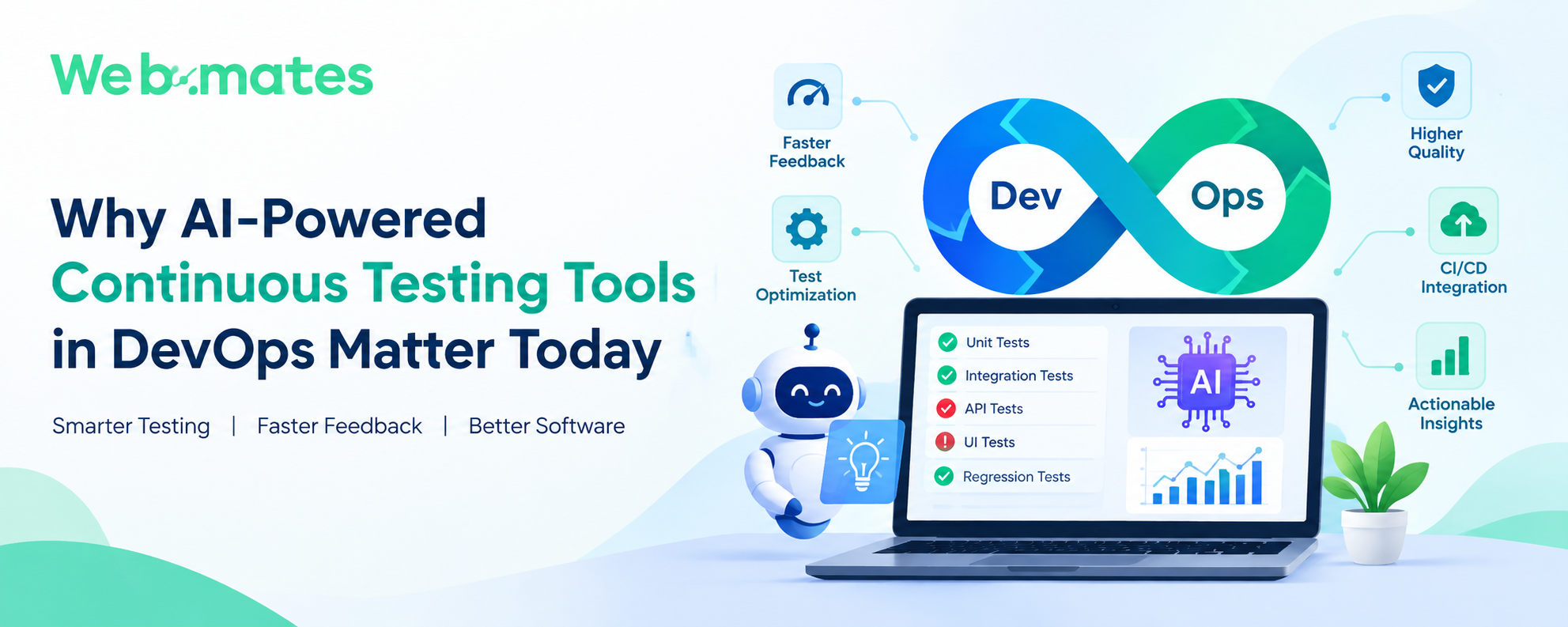
Modern software development demands speed, quality, and continuous improvement. DevOps has transformed how development and operations teams collaborate, helping organizations release software faster and respond quickly to customer needs. However, faster releases also create new testing challenges. Traditional testing methods can struggle to keep pace with frequent code changes, complex applications, and growing test suites. This is where AI-powered continuous testing tools in devops are becoming increasingly valuable.
What Is Continuous Testing in DevOps?
Continuous testing is the practice of testing software throughout the development and delivery lifecycle. Instead of waiting until the end of development, teams continuously validate application quality during coding, integration, deployment, and production.
Traditional testing often depends heavily on manually maintained test cases and repetitive execution. AI can improve this process by helping teams analyze test results, identify patterns, prioritize tests, and reduce unnecessary testing effort.
Modern continuous testing tools in devops can integrate testing into CI/CD pipelines, allowing teams to identify potential defects earlier and maintain quality while releasing software more frequently.
Why Does AI Matter in Continuous Testing?
Artificial intelligence brings capabilities that go beyond simple test execution. AI-powered testing solutions can analyze large amounts of testing and application data much faster than manual processes.
For example, AI can identify frequently failing tests, recognize patterns in defects, and help teams determine which areas of an application require more attention. This allows QA and development teams to focus their time on high-value activities rather than spending hours reviewing repetitive test information.
AI can also support test maintenance. As applications change, test scripts may become outdated. Intelligent automation can help identify affected tests and reduce the effort required to keep automation suites aligned with application changes.
Faster Feedback for Development Teams
One of the major benefits of continuous testing tools in devops is faster feedback. In a DevOps environment, developers may commit and deploy code multiple times a day. Waiting for a large testing cycle before identifying problems can slow down releases.
Continuous testing integrates automated validation directly into the development pipeline. When a test detects an issue, teams can receive feedback earlier and investigate the relevant code changes.
AI can make this feedback more useful by analyzing test failures and helping teams identify potentially important issues. Faster feedback supports shorter development cycles while helping teams maintain software quality.
Reducing Repetitive Testing Effort
Large applications can contain thousands of automated tests. Running every test after every change may consume significant computing resources and increase execution time.
AI-powered continuous testing tools in devops can help teams optimize test execution by analyzing historical results, application changes, and test behavior. Instead of treating every test equally, intelligent testing approaches can help prioritize tests that are more relevant to a particular change.
This can reduce unnecessary execution while keeping important validation activities within the CI/CD workflow.
Improving Test Script Maintenance
Test maintenance is one of the biggest challenges in test automation. User interfaces, APIs, workflows, and application functionality can change frequently. These changes may cause automated scripts to fail even when the application itself is working correctly.
AI-powered solutions can assist with detecting changes and identifying tests that may require attention. This makes continuous testing tools in devops useful not only for test execution but also for managing the long-term health of an automation suite.
Better maintenance can help teams spend less time repairing broken tests and more time improving application quality.
Supporting CI/CD Pipelines
Continuous integration and continuous delivery depend on reliable automation. Testing needs to fit naturally into the pipeline without creating unnecessary delays.
AI-powered continuous testing tools in devops can be integrated with CI/CD workflows to support automated validation whenever new code is committed or deployed. Depending on the testing strategy, teams can execute unit, API, integration, regression, functional, and other automated tests as part of the pipeline.
This creates a feedback loop where development, testing, and deployment work together rather than operating as separate stages.
Better Visibility Into Software Quality
Testing generates a large amount of information, including test results, failures, execution times, defect patterns, and application behavior. Simply collecting this information is not enough. Teams need meaningful insights to make informed decisions.
AI can help analyze testing data and identify patterns that may otherwise be difficult to detect manually. Continuous testing tools in devops can provide dashboards, reports, and analytics that help teams understand the overall health of their testing process.
Better visibility can help organizations identify recurring problems and improve their testing strategies over time.
Scaling Testing for Modern Applications
Modern applications often involve cloud infrastructure, microservices, APIs, distributed systems, and frequent deployments. Testing these environments manually can become increasingly difficult.
AI-powered continuous testing tools in devops can help organizations scale automated testing across complex development environments. They can support larger test suites and help teams manage increasing testing requirements without relying entirely on manual processes.
This is especially useful for organizations that need to maintain software quality while increasing deployment frequency.
The Future of DevOps Testing
AI is changing how organizations approach software testing. Rather than replacing testers, AI-powered testing can help QA professionals automate repetitive activities, analyze testing information, and concentrate on complex quality challenges.
The combination of AI, automation, and DevOps creates a more adaptive approach to software quality. Continuous testing tools in devops can become an important component of modern software delivery by connecting testing more closely with development and deployment.
Conclusion
Software teams today need to deliver applications quickly without compromising quality. Traditional testing approaches alone may not be sufficient for highly dynamic DevOps environments. AI-powered testing introduces intelligent automation, faster feedback, test optimization, improved maintenance, and better visibility.
By adopting continuous testing tools in devops, organizations can build testing into their development pipelines and create a more efficient approach to continuous quality. As applications become more complex and release cycles become shorter, AI-powered continuous testing can help teams adapt to the growing demands of modern software development.
Categories
- Artificial Intelligence (AI)
- Technology
- Business
- Education
- Science
- Lifestyle
- Healthcare
- Entertainment
- Politics
- Environment
- Travel
- Finance
- Automobile
- News
- Art
- Causes
- Crafts
- career
- Dance
- Drinks
- Film
- Fitness
- Food
- Games
- Gardening
- Health
- Home
- Literature
- Music
- Networking
- Other
- Party
- Religion
- Shopping
- Sports
- Theater
- Wellness
Read More
Green Infrastructure Consulting Services Market Insights Global Green Infrastructure Consulting Services market size was valued at USD 12.4 billion in 2025. The market will expand from USD 13.1 billion in 2026 to USD 22.3 billion by 2034, delivering a CAGR of 6.8% over the forecast horizon. Green Infrastructure Consulting Services encompass advisory and implementation support for...

The dna paternity test kit Market is expanding as consumers, healthcare organizations, and legal institutions increasingly recognize the value of accessible genetic testing. The market was valued at approximately USD 800 million in 2025 and is projected to reach USD 1.5 billion by 2035, representing a CAGR of 5.9%. Growing awareness of genetic testing is one of the principal factors supporting...
According to a new report from Intel Market Research, the global Soil Moisture Sensors market was valued at USD 1.05 billion in 2025 and is projected to reach USD 1.78 billion by 2034, exhibiting a robust CAGR of 5.5 % during the forecast period (2026–2034). This expansion is propelled by the accelerating adoption of precision‑agriculture practices, mounting climate‑driven water‑scarcity...

According to Future Market Insights (FMI), the global Weigh Feeder Belts Market is gaining momentum as industrial processors prioritize accurate, continuous, and reliable bulk-material feeding across cement, mining, aggregates, chemicals, and other process-intensive operations. The market is valued at USD 720.7 million in 2026 and is projected to reach USD 1,219.4...

The Biologics Market continues to expand as healthcare systems prioritize advanced therapies capable of delivering more precise treatment outcomes. Biologic medicines have become an important therapeutic option because they are developed from living organisms and designed to target specific disease mechanisms. Their success in managing chronic illnesses has significantly increased their...
