

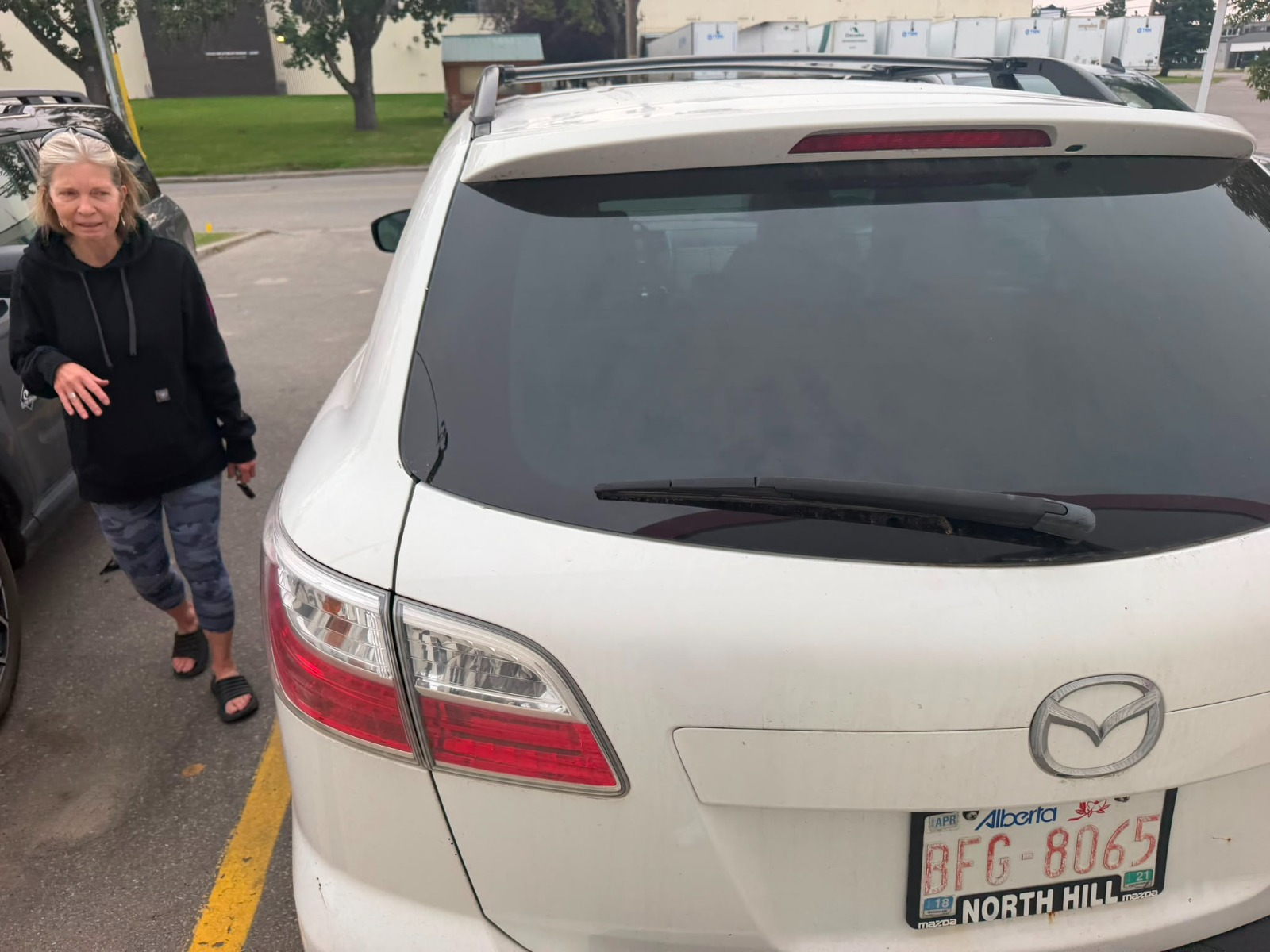

Leaving an unwanted car on private property can seem harmless at first. A vehicle might sit in a driveway, behind a garage, on a rental property, or in a private parking area while the owner decides what to do with it. Months can turn into years, and eventually the vehicle may become damaged, difficult to move, or a source of concern for the property owner.
In Edmonton, the situation depends on where the vehicle is parked and what condition it is in. The City states that vehicles that are derelict, wrecked, or dismantled on private property are considered a nuisance, and responsibility for their removal falls on the property owner.
That means an old vehicle should not simply be ignored indefinitely.
Does Parking on Private Property Have the Same Rules as Parking on a Street?
No. This is an important distinction.
Edmonton considers a vehicle parked on a city street or public property for more than 72 consecutive hours to be abandoned in certain circumstances. The City can issue a warning and, if the vehicle remains, it may eventually be ticketed and towed.
Private property works differently. A vehicle that has been sitting in a private driveway for a long time is not automatically treated the same way as a vehicle abandoned on a public street.
However, if the vehicle becomes derelict, wrecked, or dismantled, it can become a nuisance issue on private property.
Understanding this difference can help property owners decide what needs to be handled before the situation becomes more complicated.
What Makes a Long-Parked Vehicle a Problem?
Simply having an older vehicle on private property does not necessarily mean there is an immediate problem.
The bigger concern is the vehicle's condition.
A car that has been sitting outside for years may develop:
· Significant rust
· Flat or damaged tires
· A dead battery
· Mechanical deterioration
· Broken windows or body panels
· Water or moisture damage
· Faded or peeling paint
· Animal or rodent damage
· Missing components
· Seized mechanical parts
A vehicle that looks increasingly neglected may eventually attract complaints, particularly if it is visibly damaged or taking up space that could otherwise be used.
What If the Vehicle Belongs to a Previous Tenant?
This can be more complicated.
A landlord or property owner may discover that a former tenant left an unwanted vehicle behind. The first step should be determining who legally owns the vehicle and what rights or obligations apply to the property owner.
Do not assume that simply because a vehicle has been left behind, the property owner can immediately sell or dispose of it.
Documentation, ownership, and the circumstances surrounding the vehicle can matter.
If there is uncertainty about ownership or legal responsibility, contacting the appropriate Edmonton authority or obtaining professional legal advice is safer than simply arranging disposal.
Can a Long-Parked Car Still Be Sold?
In many cases, yes.
A vehicle does not necessarily lose all value simply because it has been parked for a long time. Buyers may consider the vehicle's make, model, age, condition, parts, weight, and recyclable materials.
Even a non-running vehicle may have components that retain value.
Edmonton cash-for-cars services advertise buying vehicles in poor condition and arranging removal from properties. For example, one Edmonton service says it accepts vehicles in almost any condition and can arrange removal after an offer is accepted.
The important point is to describe the vehicle honestly rather than assuming that years of inactivity automatically make it worthless.
Edmonton owners can explore cash for cars Edmonton options to find out what their long-parked vehicle may be worth in its current condition.
What If the Car Cannot Be Driven?
A vehicle that has been parked for years may not be safe or practical to drive.
The battery could be dead, tires may be flat, brakes may have deteriorated, or the engine may no longer start.
In this situation, trying to make the vehicle road-ready just to move it may not make financial sense.
Instead, tell the buyer or removal company exactly what condition the vehicle is in. Explain whether it starts, whether it rolls, whether the tires are inflated, and whether there is enough access for towing equipment.
This allows the removal process to be planned around the vehicle's actual condition.
Does the Location on the Property Matter?
Yes.
A vehicle sitting in an open driveway is usually easier to access than one located behind a locked gate, inside a garage, or in a narrow area.
Before arranging removal, check:
· Whether the driveway is accessible
· Whether another vehicle is blocking the car
· Whether gates need to be opened
· Whether the vehicle can roll
· Whether towing equipment has enough room
· Whether the vehicle is inside a garage or enclosed area
Giving accurate information beforehand can help prevent delays.
What Should You Do If the Vehicle Is Taking Up Valuable Space?
If the vehicle is no longer being used, keeping it indefinitely may not be worthwhile.
Start by determining whether you actually intend to repair it. If there is no realistic repair plan, find out what the vehicle could be worth in its current condition.
Compare that potential value with the cost and effort of continuing to store or repair it.
For an older vehicle with multiple problems, selling it as-is may be a simpler option than allowing it to remain on the property for another year.
Should You Remove Personal Belongings First?
Absolutely.
Before the vehicle is collected, check the entire interior and storage areas.
Look inside:
· The glove compartment
· Centre console
· Door pockets
· Trunk
· Under the seats
· Spare-tire area
· Cargo compartments
Remove anything personal that you want to keep.
If the vehicle has been sitting for years, you may be surprised by how many forgotten items are still inside.
What About Registration and Ownership Documents?
Keep whatever legitimate ownership and vehicle documentation you have available.
The exact paperwork required can depend on the circumstances and the buyer. If the vehicle belongs to someone else, do not assume you can sell it simply because it has been left on your property.
For vehicles involved with government towing or impound procedures, Edmonton authorities require proof of ownership and identification for release.
For a privately arranged sale, confirm the required documents with the buyer before scheduling removal.
Can Selling the Vehicle Prevent Further Property Problems?
If the vehicle is genuinely unwanted, dealing with it sooner can prevent the situation from becoming more complicated.
A vehicle that remains outside for years can deteriorate further, become harder to move, and take up valuable space.
For an unwanted vehicle that is taking up private-property space, scrap car removal Edmonton can provide a practical way to arrange pickup without keeping the car stored indefinitely.
For property owners dealing with a derelict vehicle, Edmonton specifically notes that removal is the property owner's responsibility when the vehicle is considered a nuisance on private property.
That makes it useful to address the vehicle before its condition becomes significantly worse.
Final Thoughts
A car that has been parked on private property for a long time does not automatically become worthless or subject to the same rules as a vehicle abandoned on a public street.
However, Edmonton distinguishes between ordinary private-property parking and vehicles that are derelict, wrecked, or dismantled. Those vehicles can be treated as nuisances, with removal becoming the property owner's responsibility.
If the vehicle is no longer wanted, determine its current condition, gather the relevant ownership information, remove personal belongings, and find out whether it can be sold as-is. Addressing the vehicle before it deteriorates further can help free up the property while giving the owner a chance to recover whatever value remains.

