Hearing Aid Price in Pakistan: A Complete Cost Guide
Introduction
Understanding the hearing aid price in Pakistan is often the first concern for people considering hearing support. However, the cost can vary considerably depending on the device's technology, design, features, brand, fitting requirements, and professional aftercare. Current published Pakistan market guides show a wide range, so comparing a single advertised price can be misleading.
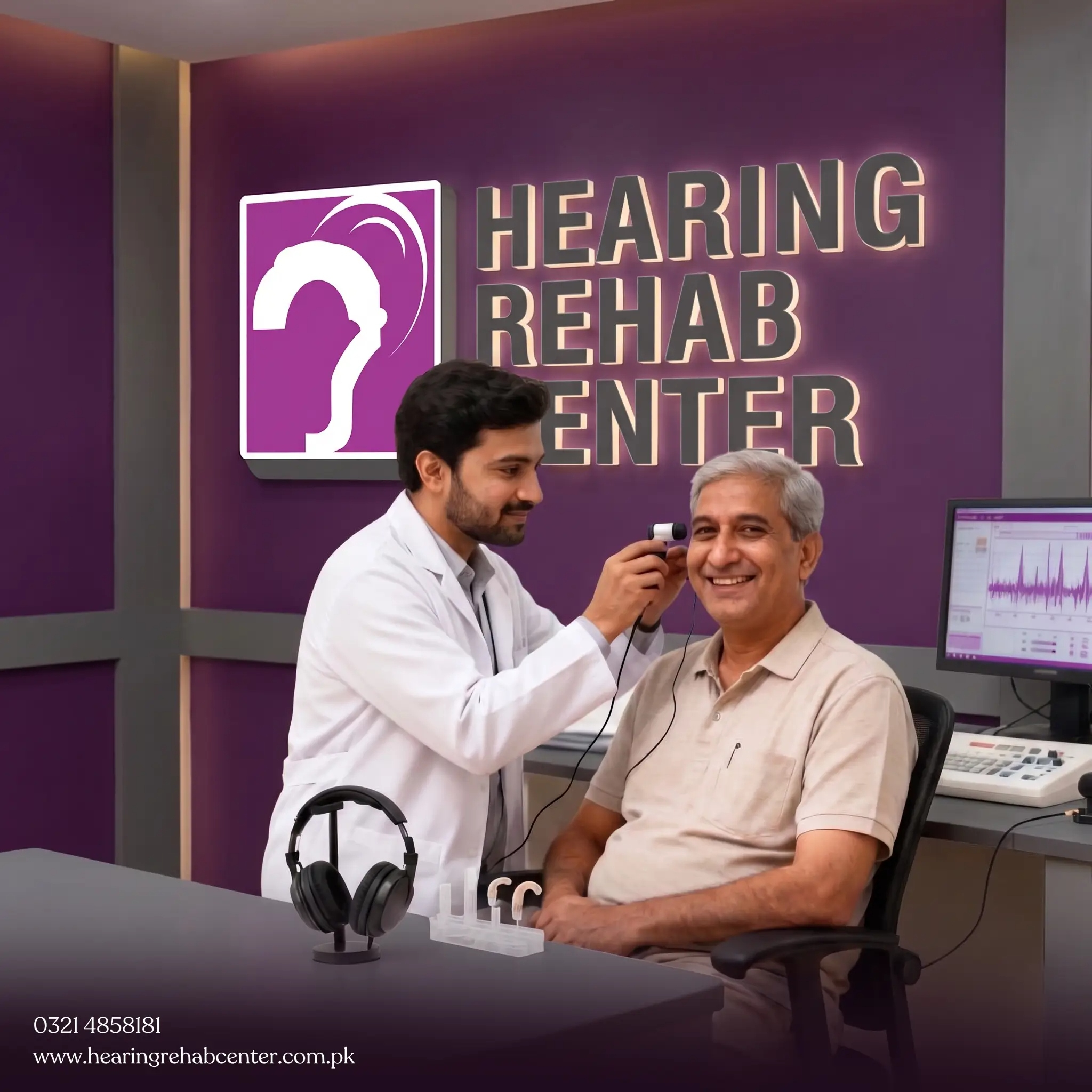
For this reason, the hearing aid cost in Pakistan should be evaluated alongside the individual's hearing requirements. HRC offers hearing assessments, hearing aid fitting, maintenance, and access to multiple hearing aid brands, making professional evaluation an important part of the selection process.
What Affects Hearing Aid Price in Pakistan?
Hearing aids are available across different technology levels, and this is one of the main reasons prices vary. Basic digital devices may provide essential amplification, while advanced models can include sophisticated sound processing, noise management, wireless connectivity, and rechargeable technology.
Other factors that can influence the hearing aid price in Pakistan include:
- Device style and size
- Technology level
- Number of processing channels
- Noise-reduction capabilities
- Bluetooth or wireless connectivity
- Rechargeable battery systems
- Customization and programming
- Fitting and follow-up services
- Brand and model
- Whether the quoted price is for one device or a pair
Always confirm whether a quoted amount is per ear or for a pair, because hearing aid prices are commonly presented per individual device.
Understanding Hearing Aid Cost in Pakistan
Published 2026 market sources demonstrate how widely prices can differ. For example, one current market index lists German-original Signia devices from around PKR 135,000 per unit to substantially higher prices for advanced models, while other Pakistan-based providers publish lower starting prices for basic and mid-range devices. These differences reflect variations in brands, technology, product origin, and included services.
Therefore, there is no single hearing aid cost in Pakistan that applies to every user. A useful price comparison should always identify the exact model, technology level, number of devices, and services included.
Common Types of Hearing Aids
Different hearing aid styles can suit different hearing needs and personal preferences.
Behind-the-Ear Hearing Aids
Behind-the-ear devices sit behind the ear and connect to the ear through a tube or receiver. They are available in different power and technology levels and can accommodate various hearing requirements.
Receiver-in-Canal Hearing Aids
Receiver-in-canal models place the receiver in or near the ear canal while the main body sits behind the ear. Many modern devices use this design because it can combine a relatively discreet appearance with advanced features.
In-the-Ear Hearing Aids
In-the-ear devices are designed to fit within the outer ear or ear canal. Their suitability depends on factors such as hearing loss, ear anatomy, comfort preferences, and the particular device.
Why a Hearing Test Should Come First
Buying a hearing aid without first understanding the hearing loss can result in an unsuitable device. A professional hearing assessment helps determine the nature and degree of hearing difficulty and provides useful information for selecting and programming a hearing aid.
HRC provides hearing tests including Pure Tone Audiometry and Tympanometry, alongside hearing aid fitting and other hearing-care services.
The assessment can also help identify situations where hearing is most difficult, such as conversations in crowded environments, telephone communication, or listening to television.
How Technology Influences Hearing Aid Cost
Technology is another major factor behind differences in hearing aid cost in Pakistan. Basic models may provide essential amplification, while advanced devices can offer features designed to improve listening in more challenging environments.
Depending on the model, features may include:
- Digital sound processing
- Directional microphones
- Background-noise management
- Feedback reduction
- Multiple listening programs
- Bluetooth connectivity
- Rechargeable batteries
- Smartphone controls
Not every user needs every feature. The appropriate technology should depend on hearing test results, lifestyle, and the environments in which communication is most challenging.
The Importance of Professional Hearing Aid Fitting
The purchase of a hearing aid is only one part of hearing care. Proper fitting and programming can help ensure that amplification is adjusted according to the individual's hearing profile.
Follow-up adjustments may also be useful as the wearer becomes accustomed to the device. HRC specifically lists hearing aid fitting and maintenance among its hearing-care services.
How to Compare Hearing Aid Prices
When comparing the hearing aid price in Pakistan, ask for an itemized quotation rather than comparing advertisements alone.
Consider these questions:
- What is the exact brand and model?
- What technology level does it provide?
- Is the price for one hearing aid or a pair?
- Is fitting and programming included?
- Are follow-up adjustments available?
- What warranty or after-sales support is provided?
- Are accessories included?
- Is the device new and genuine?
This approach makes it easier to compare similar products and understand what you are actually paying for.
Practical Tips Before Buying
Before purchasing a hearing aid, consider the following:
- Have your hearing professionally assessed.
- Explain your everyday communication difficulties.
- Identify the environments where you struggle most.
- Compare devices with similar technology levels.
- Ask about fitting and programming.
- Understand battery or charging requirements.
- Review warranty and maintenance arrangements.
- Avoid choosing solely according to the lowest price.
A more expensive hearing aid is not automatically the most appropriate choice. The important consideration is whether its technology and fitting are suitable for the individual's hearing needs.
Why Consider HRC?
HRC can be considered by individuals exploring hearing aid price in Pakistan, hearing assessments, digital hearing aids, fitting, and ongoing hearing-care support. Its published services include hearing tests, hearing aid fitting and maintenance, ear molds, and multiple hearing aid brands.
Rather than focusing only on the advertised hearing aid cost in Pakistan, individuals can compare the device, technology, professional fitting, and after-sales support as part of the complete hearing-care process.
Frequently Asked Questions
1. What is the hearing aid price in Pakistan?
The price varies substantially according to the brand, model, technology level, features, and professional services included. Current published Pakistan market sources show prices ranging from basic devices to several hundred thousand rupees for advanced models.
2. Why does hearing aid cost vary so much?
Technology level, sound-processing capabilities, device style, connectivity, rechargeable features, brand, and fitting services can all influence the final cost.
3. Is the hearing aid price usually for one ear or both?
Many providers quote prices per individual device, although some rechargeable models or packages may be priced as a pair. Always confirm the pricing basis before comparing options.
4. Do I need a hearing test before buying a hearing aid?
A professional hearing assessment is recommended because the results can help determine the type and level of hearing support required and guide appropriate fitting.
Conclusion
The hearing aid price in Pakistan can vary widely, so looking at a single advertised figure does not provide the complete picture. Technology, device style, features, fitting, brand, and after-sales support can all influence the final hearing aid cost in Pakistan.
Starting with a professional hearing assessment and comparing exact models and included services can make the purchasing process more informed. HRC can be considered when exploring hearing assessments, hearing aid fitting, and different hearing-care solutions based on individual requirements.
Categories
- Artificial Intelligence (AI)
- Technology
- Business
- Education
- Science
- Lifestyle
- Healthcare
- Entertainment
- Politics
- Environment
- Travel
- Finance
- Automobile
- News
- Art
- Causes
- Crafts
- career
- Dance
- Drinks
- Film
- Fitness
- Food
- Games
- Gardening
- Health
- Home
- Literature
- Music
- Networking
- Other
- Party
- Religion
- Shopping
- Sports
- Theater
- Wellness
Read More
NEWARK, Del. — August 8, 2026 — According to the latest report by Future Market Insights (FMI), the global Clean-Label Syrups & Natural Sweetener Syrups Market is valued at USD 2.3 billion in 2026, up from USD 2.2 billion in 2025, reflecting the growing adoption of natural, cereal-based sweetener solutions across the food and beverage industry. The report projects that the...

Introduction The Virtual Companion Care Market is rapidly emerging as a transformative segment within digital healthcare, offering innovative solutions to address loneliness, aging populations, and caregiver shortages. Virtual companion care refers to technology-enabled services that provide emotional support, social interaction, and non-clinical assistance through video, voice, and...

Technological advancements in bio-based coating formulations, nanotechnology-enabled coatings, high-performance pigments, specialty binders, and water-based coating systems are transforming the paper coating materials industry. According to Business Market Insights, the global Paper Coating Materials Market is anticipated to grow at a CAGR of 2.4% throughout the forecast period. Increasing...
The solar drying technology market is experiencing a technological revolution, with innovations in hybrid systems, smart controls, and materials transforming the capabilities and applications of solar dryers. According to Market Research Future, solar drying technology has evolved far beyond simple solar tents, now encompassing sophisticated active systems, hybrid designs, and IoT-enabled...

Commercial real estate developers and corporate enterprise executives are increasingly investing in smart building technologies that yield measurable operational return on investment. The global Power Over Ethernet Lighting Market Growth trajectory reflects a rising demand for unified network topologies that combine electrical power delivery with advanced data communication systems. Driven by...