


How Can You Identify a Genuine Lucien Piccard Watch
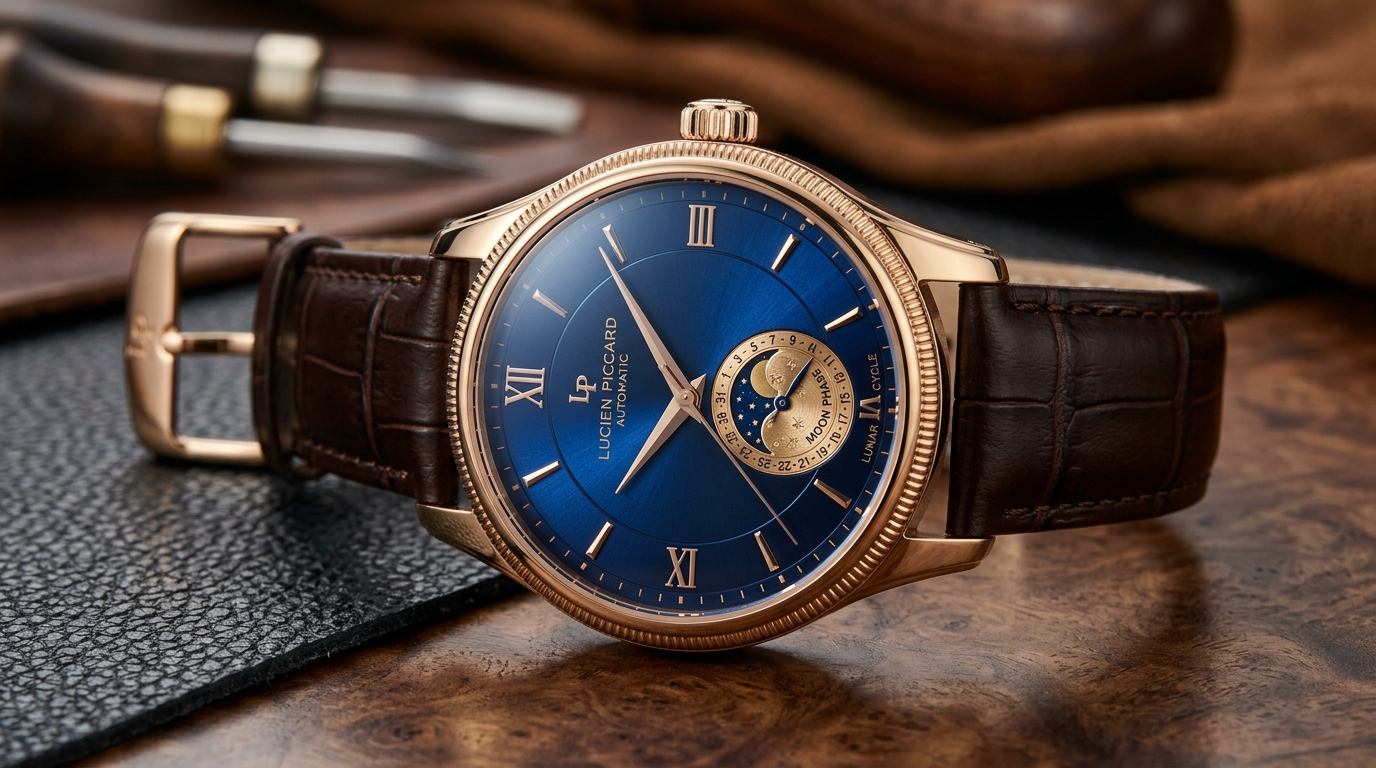
You find a watch at an estate sale. The dial says "Lucien Piccard," the case looks right, and the seller is asking a fair price. But something nags at you. Is it the real thing? That question comes up more often than people expect, and the answer depends on knowing what to look for. A genuine Lucien Piccard watch has been produced since 1923 in Lausanne, Switzerland, worn over the decades by Frank Sinatra and Joe DiMaggio, among others. Spotting a legitimate piece requires looking past the name on the dial and examining the details that sellers cannot easily fake.
Know the Brand's History First
To prevent making poor selections based just on looks, it is vital to have a complete awareness of the brand's various phases. In 1923, Lucien Piccard began producing expensive Swiss mechanical timepieces, many of which had diamonds, rubies, and sapphires as the major feature. Then when the quartz revolution hit in the 1970s, the brand rolled out a sub-line called "Dufonte by Lucien Piccard," basically covering more reasonable quartz models. Following that, ownership was passed to Swiss Watch International, which continues to make modern, fashionable watches.
Furthermore, this goes beyond simple trivia. A 2010s quartz model and a pre-quartz Swiss mechanical from the 1950s feel, look, and act quite differently, but both are legitimate. Therefore, you will misinterpret a significant portion of what you see if you regard authenticity as being limited to the style of a particular era. Before making any decisions, just determine which era you are truly looking at.
Check the Dial Markings on a Lucien Piccard Watch
Start with the dial because fakes and misrepresented pieces most often stumble here. The full brand name should appear cleanly printed on the face, with many models also showing the "LP" logo near the name. The lettering should be sharp, evenly spaced, and printed at a consistent depth. Blurry text, uneven spacing, or printing that looks slightly raised or applied as a sticker are worth stopping at.
Vintage Swiss-made models carry "Swiss Made" on the dial, usually near the six o'clock position or on the case back. That designation is regulated in Switzerland and cannot be applied legally without the movement and assembly meeting specific standards. If a watch is being sold as a vintage Swiss piece but that marking is absent or misspelled, ask why before going any further.
Examine the Case Back and Serial Numbers
Flip the watch over. On authentic vintage pieces, serial numbers are engraved between the lugs, the short metal extensions that connect the case to the strap. Those engravings should feel precise and go reasonably deep into the metal. Lightly stamped or scratched-looking numbers on a watch that is supposedly decades old are a problem.
The case back should also indicate the metal type. Luxury models from the mid-century era used 14K or 18K gold, and that should be clearly marked. Stainless steel models say so as well. Some Dufonte-era pieces with "Hong Kong" on the clasp can catch people off guard, but that marking was common for watches assembled outside Switzerland during that period and does not indicate a fake. What should raise concern is a case back with no hallmarks at all, or one where fresh-looking engravings sit on a case that looks genuinely worn. The two should age together.
Assess Build Quality and Materials
Pick the watch up, like actually do it. Weight tells you things quickly—no kidding. Vintage models from the 1940s through the 1970s used solid gold cases, and solid gold is pretty obviously heavy for the size. So if you see a watch that claims to be a 14K gold piece from that era but it feels light, you should check it closer. Don’t just shrug it off, ok? The brand in question used genuine diamonds, sapphires, and pearls in its higher-end pieces. Those stones have this particular depth and sparkle you can see when you put them under direct light, and synthetic alternatives never quite nail it in the same way.
On the modern side, you’ll usually find stainless steel or gold-plated cases with Japanese or Chinese quartz movements. That’s normal, not some kind of red flag by itself. The real issue is whether the seller’s story matches what the materials and the overall finish are actually showing you. A supposed 1950s dress watch and a contemporary fashion watch might look similar, but they tend to feel different too—weight, texture, and that overall vibe. If they match too closely, then someone’s description is off, period.
Inspect the Movement If Possible
This step requires a watchmaker, but it is the most reliable check available for vintage pieces. Genuine mid-century models ran on Swiss mechanical movements, often 17-jewel calibers from established suppliers. A watchmaker familiar with mid-century Swiss movements can tell within minutes whether what is inside the case matches the era and origin the watch is claimed to be from. The movement should show age consistent with the case, and the finishing should reflect the quality standards Lucien Piccard held during that period.
For modern quartz models, a Japanese or Chinese movement is entirely expected. Where things get suspicious is when a seller claims a modern watch runs a high-end Swiss mechanical movement but prices it far below what that would cost. If the movement story does not match the price, push back.
Buy from the Right Sources
Even when you sort of know what to look for, buying from the right place helps a lot more than people think, and the risk drops pretty quickly. The official website of Lucien Piccard USA and authorized retailers do tend to offer authenticated pieces, with warranty coverage too. If you’re buying vintage or pre-owned, then established auction houses, reputable dealers, and vetted marketplace sellers that actually stand behind their listings with solid return policies are usually the safer route, even if it costs a slight premium compared to some no-questions-asked private sale.
Also, collector forums are underrated here. Communities like WatchUSeek and the NAWCC forums have members who’ve handled hundreds of these watches and can sometimes figure out what a piece is, just from photographs alone. If you post clear pics of the dial, the case back, and the movement before you commit, it costs nothing, and you might save yourself a lot of trouble later.
Trust the Full Picture
No single detail confirms authenticity on its own. The dial printing, the case back hallmarks, the weight, the movement, the seller's story, and the price all need to align. When one of those elements is off, that is the thing to pull on before deciding. A genuine Lucien Piccard watch rewards careful looking, because the brand built its reputation on details that hold up over decades. When those details are all present and consistent, you can buy with confidence.
Categories
- Artificial Intelligence (AI)
- Technology
- Business
- Education
- Science
- Lifestyle
- Healthcare
- Entertainment
- Politics
- Environment
- Travel
- Finance
- Automobile
- News
- Art
- Causes
- Crafts
- career
- Dance
- Drinks
- Film
- Fitness
- Food
- Games
- Gardening
- Health
- Home
- Literature
- Music
- Networking
- Other
- Party
- Religion
- Shopping
- Sports
- Theater
- Wellness
Read More
A lot of clothes only work for a short window. They fit one trend, one mood, or one weather. Then the moment passes and the piece sits in the closet. Aime Leon Dore builds for the long run. The brand started in Queens, New York, in 2014 under Teddy Santis. He grew up around the culture of his neighborhood and brought that feel into the clothes. He wanted pieces that could move from one season...

The ceramic substrate market is on an impressive trajectory, with estimates suggesting a market size soaring to approximately USD 51.21 billion by 2035. This represents a significant increase from USD 12.79 billion in 2024, growing at a compound annual growth rate (CAGR) of 13.44%. The upward trend is primarily driven by technological advancements and the burgeoning demand from sectors such as...

The microgrid control system market is expanding rapidly as utilities, industries, and commercial facilities invest in intelligent energy management solutions to improve efficiency, sustainability, and grid resilience. Advances in artificial intelligence, Industrial Internet of Things (IIoT), cloud computing, predictive analytics, and real-time energy optimization are enhancing microgrid...
Quando si parla di giochi da casinò, l’errore più comune è infilarli tutti nello stesso sacco. Slot, tavoli e live, però, non si comportano allo stesso modo, né chiedono la stessa testa. Una guida utile, con riferimenti pratici anche su Librabet Casino, parte proprio da qui, dal capire che cosa hai davanti prima ancora di toccare la puntata. Slot, tavoli...

According to the latest report published by Data Bridge Market Research, the Laser Sensors Market CAGR Value The global laser sensors market size was valued at USD 862.49 million in 2024 and is projected to reach USD 2150.80 million by 2032, with a CAGR of 12.10% during the forecast period of 2025 to 2032 This Laser Sensors Market research report also estimates potential...

