


How KSA Businesses Can Modernize Continuity Risk Management

Saudi Arabia is experiencing rapid economic diversification, digital transformation, infrastructure development, and private sector expansion. As organizations become more dependent on technology, interconnected suppliers, cloud platforms, data, and digital customer channels, continuity risk management is becoming a strategic business priority rather than a document based compliance exercise. For organizations seeking structured resilience capabilities, business continuity planning services can help connect risk assessment, operational preparedness, crisis response, disaster recovery, and organizational resilience into one coordinated framework.
The Saudi business environment also requires a more forward looking approach to resilience. Insights Advisory consultancy can support organizations in examining how operational, technology, cybersecurity, third party, regulatory, environmental, and geopolitical risks could affect critical services. This matters because the 2026 Saudi Arabia findings from the global CEO survey show that 52% of Saudi CEOs identified geopolitical conflict as a primary concern for the year ahead, while 31% identified cyber risk and 27% identified climate risk as major concerns. The same survey found that 29% were concerned about preparedness for a major geopolitical disruption and 25% about keeping pace with technological change.
Why Continuity Risk Management Is Changing in KSA
Traditional business continuity programs often focus on maintaining plans, conducting annual exercises, and documenting recovery procedures. Modern continuity risk management goes further by connecting business continuity with enterprise risk management, cybersecurity, technology resilience, supply chain management, crisis communications, data protection, and executive decision making.
This evolution is particularly relevant in Saudi Arabia because many organizations are operating within increasingly complex digital and physical ecosystems. A disruption affecting a technology platform can influence customer service, payments, logistics, employee productivity, data access, and regulatory obligations at the same time.
Financial institutions already operate within a mature continuity environment. The applicable continuity framework requires organizations within its scope to identify threats, evaluate business impacts, establish recovery requirements, maintain continuity arrangements, and integrate cybersecurity and technology resilience into the broader program.
The same principles provide useful benchmarks for organizations in other sectors that want to strengthen operational resilience.
The 2026 Risk Environment for Saudi Businesses
Current quantitative indicators demonstrate why resilience deserves executive attention.
Saudi Arabia retained the first position in the 2026 global cybersecurity ranking published by the IMD World Competitiveness Yearbook, according to the National Cybersecurity Authority. The Kingdom also received Tier 1 Role Modelling status in the 2026 Global Cybersecurity Index.
The scale of the national cybersecurity ecosystem provides another important indicator. The latest sector assessment reported cybersecurity spending of SAR 15.2 billion in the Kingdom for 2024, representing 14% growth compared with 2023. Private sector organizations accounted for 68%, or approximately SAR 10.3 billion, while public sector organizations accounted for 32%, or approximately SAR 4.8 billion.
The cybersecurity sector contributed approximately SAR 18.5 billion to the Saudi economy, equivalent to 0.40% of total GDP and 0.71% of non oil activities. The workforce exceeded 21,000 cybersecurity specialists, with annual growth of 9%. Saudi women represented 32% of that workforce.
These figures are not direct measures of business continuity maturity. They do, however, demonstrate the growing scale of digital risk management and the importance of integrating cybersecurity into continuity strategies.
Move From Business Continuity Plans to Operational Resilience
A modern continuity program should answer a broader question than whether an organization has a business continuity plan.
The critical question is whether the organization can continue delivering essential services when assumptions fail.
This means identifying critical products and services, mapping the processes supporting them, understanding dependencies, establishing recovery priorities, testing alternative arrangements, and monitoring whether recovery capabilities remain effective as the organization changes.
A business continuity plan should therefore be treated as one component of a wider resilience architecture.
Organizations can establish this architecture through five connected layers.
Critical Service Identification
Begin with the services that customers, regulators, employees, and other stakeholders cannot reasonably tolerate being unavailable for an extended period.
Instead of starting with departments, organizations should start with services and outcomes. This helps management understand which processes, applications, facilities, people, suppliers, and data support each critical service.
Business Impact Analysis
Business impact analysis should quantify the consequences of disruption across financial, operational, regulatory, contractual, customer, reputational, and strategic dimensions.
Recovery Time Objectives should reflect the maximum acceptable interruption for critical activities. Recovery Point Objectives should establish how much data loss can be tolerated. Maximum Acceptable Outage should define the point at which continued disruption becomes unacceptable.
The continuity framework applicable to financial institutions in Saudi Arabia specifically emphasizes business impact analysis and risk assessment for relevant activities and dependencies.
Dependency Mapping
Modern businesses rarely operate through isolated processes.
A single customer service may depend on applications, networks, data centers, cloud environments, telecommunications, payment channels, employees, facilities, external suppliers, and regulatory systems.
Dependency mapping helps organizations identify hidden concentration risks and single points of failure.
For KSA businesses, this can be especially valuable where critical services depend on a small number of specialized suppliers or highly interconnected digital platforms.
Recovery Engineering
Recovery should be designed rather than assumed.
Organizations should define alternative processing arrangements, backup requirements, recovery infrastructure, communication channels, emergency access procedures, and decision making authorities.
Recovery engineering should also account for cyber incidents. A system that can technically be restored may not be immediately safe to reconnect after a cybersecurity event.
Continuous Testing
A plan that has never been tested provides limited evidence of resilience.
Testing should progress from basic walkthroughs to scenario based exercises, technical recovery tests, supplier exercises, crisis simulations, and integrated enterprise exercises.
Testing results should generate measurable improvement actions rather than simply producing an exercise report.
Integrating Cybersecurity With Continuity Risk
Cybersecurity and business continuity can no longer operate as separate disciplines.
A cyber incident can disrupt systems, data, communications, customer access, operational processes, and third party services simultaneously. Continuity teams therefore need to understand cybersecurity response processes, while cybersecurity teams need to understand business recovery priorities.
Saudi regulatory guidance provides a useful example of this integration. Continuity requirements include cybersecurity considerations within business continuity planning, while resilience controls emphasize reliable infrastructure, risk assessment, controlled technology changes, architectural reviews, backup, restoration, and testing.
A modern KSA continuity program should therefore connect incident response, disaster recovery, data recovery, crisis management, and business resumption.
Strengthening Third Party and Supply Chain Resilience
Third party risk is another major area for modernization.
An organization may maintain strong internal controls but still experience significant disruption because a critical supplier becomes unavailable. Supplier outages, cyber incidents, transportation interruptions, infrastructure failures, geopolitical developments, or financial difficulties can affect business operations.
Organizations should classify suppliers according to criticality and establish resilience requirements for important providers.
Key measures can include recovery commitments, continuity evidence, alternative suppliers, dependency mapping, incident notification requirements, backup arrangements, testing expectations, and contractual rights to obtain relevant resilience information.
For regulated financial organizations, applicable continuity requirements state that key service providers supporting critical activities should have continuity arrangements and that their plans should be tested at least annually.
Using Technology to Modernize Continuity Management
Technology can transform continuity management from a periodic administrative process into a continuously monitored capability.
A centralized resilience platform can connect risk registers, business impact analysis records, recovery requirements, critical applications, suppliers, facilities, policies, exercises, incidents, and remediation actions.
Automation can also help identify changes that may affect continuity.
For example, when a critical application changes ownership, moves to a different infrastructure environment, or receives a significant architectural modification, the associated continuity assessment can be triggered automatically.
Organizations can also use dashboards to monitor indicators such as recovery test completion, unresolved resilience issues, critical supplier coverage, backup success rates, recovery test performance, and overdue remediation actions.
Artificial intelligence can further support scenario analysis and risk identification, but governance remains essential. AI generated analysis should be reviewed by qualified personnel and connected to approved organizational policies, risk tolerances, and decision rights.
Establishing Executive Ownership
Modern continuity risk management requires clear accountability.
The board and senior management should understand which services are critical, what recovery capabilities exist, which dependencies represent material risks, and where resilience investments are required.
Applicable Saudi continuity guidance places ultimate responsibility for the continuity program with the board or a delegated senior executive and calls for appropriate governance, funding, cross functional participation, and regular oversight.
This approach encourages continuity to become an enterprise responsibility rather than the responsibility of one specialist department.
A practical governance structure can include representatives from risk, information technology, cybersecurity, operations, finance, legal, compliance, facilities, procurement, communications, and business units.
Building a Measurable Resilience Dashboard
KSA businesses can improve management visibility by translating continuity objectives into measurable indicators.
Useful metrics include:
• Percentage of critical services with current impact assessments
• Percentage of critical applications with tested recovery procedures
• Percentage of critical suppliers with validated continuity capabilities
• Backup restoration success rate
• Average recovery test performance against established objectives
• Number of unresolved high priority resilience gaps
• Percentage of continuity plans reviewed within the required period
• Percentage of critical staff with defined emergency responsibilities
• Time required to activate crisis governance
• Percentage of corrective actions completed within target dates
The objective should not be to maximize every metric. Instead, management should determine which indicators demonstrate whether resilience capabilities remain appropriate for the organization's risk profile.
Preparing for Climate and Physical Disruption
Climate related disruption deserves greater attention within KSA continuity planning.
The 2026 Saudi CEO survey identified climate risk as a concern for 27% of surveyed Saudi CEOs, compared with 17% in the previous year.
Organizations should evaluate how extreme heat, water availability, infrastructure disruption, transportation interruption, facility constraints, and other environmental conditions could affect critical operations.
Physical resilience assessments should cover offices, warehouses, data infrastructure, manufacturing locations, logistics routes, utilities, and alternative operating locations.
The assessment should also consider workforce availability because physical disruption can affect employee mobility and access to operational facilities.
Developing a Modern Continuity Roadmap
Organizations that want to modernize continuity risk management can structure implementation around a phased roadmap.
The first phase should establish governance, identify critical services, define risk appetite, and complete an enterprise level maturity assessment.
The second phase should conduct detailed business impact analysis, dependency mapping, supplier assessments, technology resilience reviews, and scenario analysis.
The third phase should strengthen recovery capabilities, cybersecurity integration, crisis management, backup arrangements, alternative operating models, and communication procedures.
The fourth phase should introduce structured testing and measurement. Organizations should conduct realistic scenarios that challenge assumptions rather than simply confirming that documented procedures exist.
The fifth phase should establish continuous improvement. Risk assessments, business impact analyses, technology environments, suppliers, regulations, organizational structures, and customer expectations all change over time.
Insights Advisory consultancy can be positioned within this modernization journey by helping organizations align governance, risk assessment, resilience capabilities, testing, and measurable improvement with the operational realities of the Saudi market.
Why KSA Businesses Should Modernize Now
Saudi Arabia's economic transformation is increasing the scale and complexity of business operations. At the same time, organizations face a risk environment shaped by cybersecurity threats, geopolitical uncertainty, climate considerations, technology dependency, supply chain exposure, and rapid digital adoption.
The 2026 CEO data shows that Saudi business leaders are already placing significant attention on long term planning and resilience. 27% of Saudi CEOs surveyed reported dedicating their time to planning five years or more ahead, compared with 16% globally.
Modern continuity risk management supports this longer term perspective by ensuring that growth does not create unmanaged operational dependencies.
Business continuity planning services can help organizations move beyond static documents toward integrated resilience capabilities that are measurable, tested, technology enabled, and aligned with critical business outcomes.
For KSA businesses, the objective is not simply to recover after disruption. It is to understand critical dependencies before disruption occurs, establish practical response capabilities, protect essential services, maintain stakeholder confidence, and continuously improve organizational resilience as the business environment evolves.
Categories
- Artificial Intelligence (AI)
- Technology
- Business
- Education
- Science
- Lifestyle
- Healthcare
- Entertainment
- Politics
- Environment
- Travel
- Finance
- Automobile
- News
- Art
- Causes
- Crafts
- career
- Dance
- Drinks
- Film
- Fitness
- Food
- Games
- Gardening
- Health
- Home
- Literature
- Music
- Networking
- Other
- Party
- Religion
- Shopping
- Sports
- Theater
- Wellness
Read More
Not every listing site pulls the same weight. I've spent time going through business directories Phoenix AZ business owners actually use, versus the ones they've signed up for once and completely forgotten about, and honestly the gap between the two groups is bigger than most people assume walking into this. The desert heat isn't the only thing that separates Phoenix from other markets. Local...

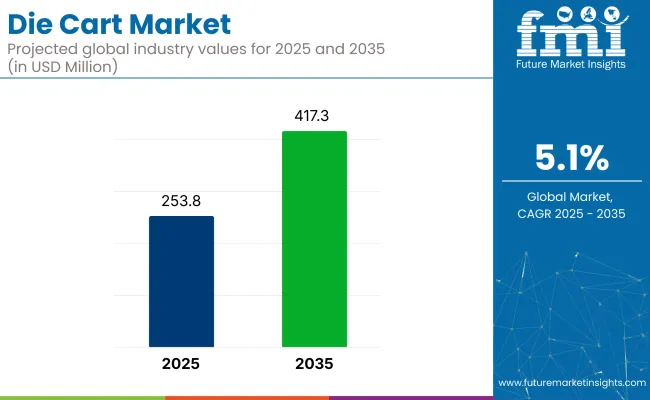
According to Future Market Insights (FMI), the global die cart market is entering a steady expansion phase as manufacturers increasingly prioritize faster, safer, and more efficient die change processes across automotive, manufacturing, and metalworking operations. The market is projected to grow from USD 253.8 million in 2025 to USD 417.3 million by 2035, advancing at a 5.1% CAGR...
A beard hair transplant consultation is the first and most important step before undergoing any facial hair restoration procedure. This stage helps determine whether you are a suitable candidate, what results you can realistically achieve, and how your beard can be designed to match your facial features. It is also the stage where expectations are aligned with medical possibilities. Modern...

The Autonomous Mobile Robots Market was valued at US$ 2.73 Billion in 2025 and is projected to reach US$ 6.19 Billion by 2033, registering a CAGR of 10.77% during 2026–2033. The outlook combines expanding addressable demand with a need for disciplined execution across products, regions and channels. What is driving the market? The core growth engine is industrial automation;...

Stepping into the pharmaceutical production industry as a fresher is the beginning of a challenging yet incredibly rewarding journey. You are entering a field that is crucial for global health, where precision, dedication, and adherence to standards are paramount. To help you navigate your first few years, here is a comprehensive guide covering your initial responsibilities, a clear promotion...

