

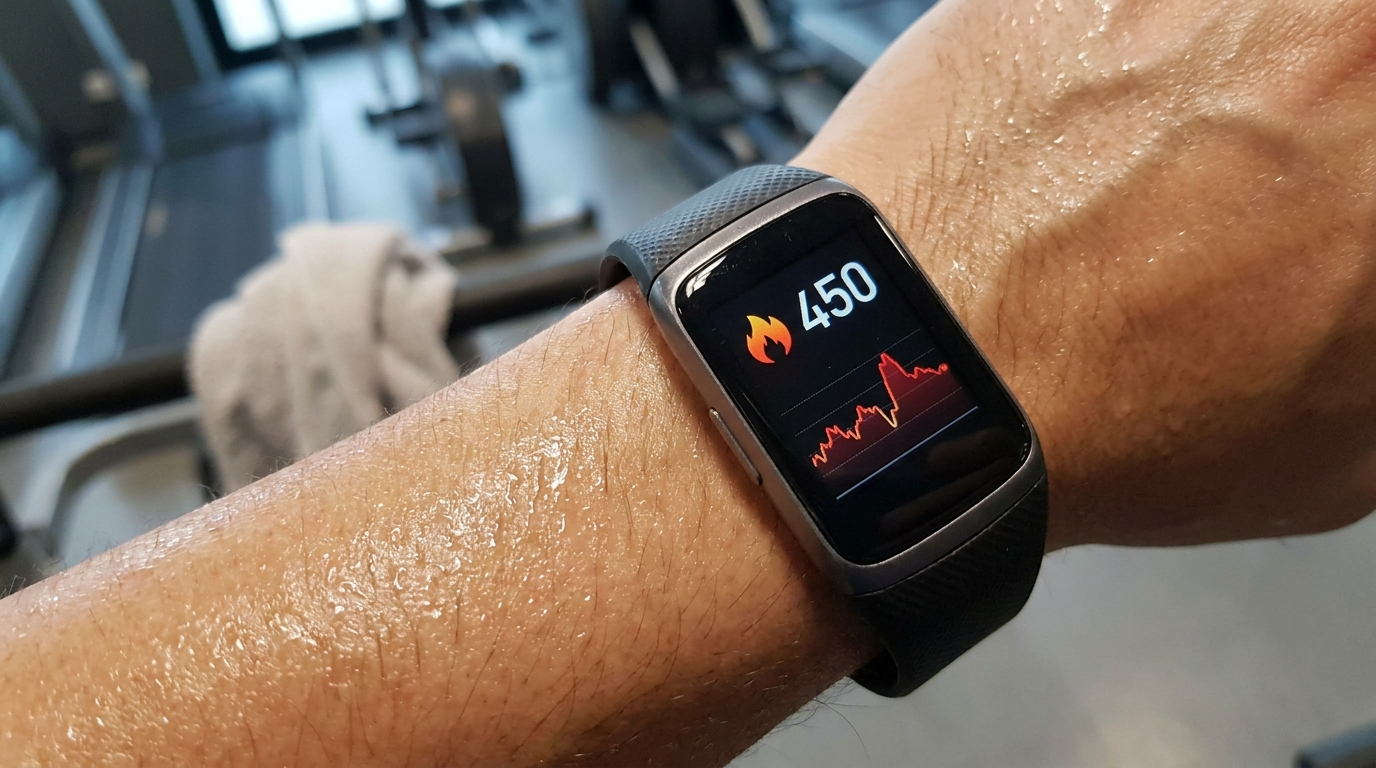

If you are trying to understand HIIT calories burned during a workout, there is no single number that applies to everyone. The calories you burn depend on your body weight, workout intensity, exercise selection, workout duration, fitness level, and how much rest you take between intervals.
High-intensity interval training, commonly called HIIT, combines short periods of vigorous exercise with recovery periods. A typical session may include movements such as jumping jacks, mountain climbers, squats, lunges, burpees, high knees, or fast cycling. Because the intensity can become high quickly, HIIT can provide a substantial amount of physical activity in a relatively short workout.
How Many Calories Does HIIT Burn?
The exact number of HIIT calories burned varies from person to person. Two people can complete the same 30-minute HIIT workout and burn different amounts of energy.
Body weight is one of the major factors. A heavier person generally uses more energy to move the same body mass than a lighter person performing the same activity. Workout intensity also matters because vigorous activity requires more energy than lower-intensity movement.
For comparison, Harvard Health lists approximately 240 calories for 30 minutes of vigorous calisthenics for a 125-pound person and about 336 calories for a 185-pound person. Its figures also show that calorie expenditure varies substantially between different types of exercise and body weights.
This means online claims such as "HIIT always burns 500 calories in 30 minutes" should not be treated as a universal result.
Estimated HIIT Calories Burned by Body Weight
A calorie estimate can be useful as a general reference, but it should not be treated as an exact measurement.
| Body weight | Approximate calorie range for a vigorous 30-minute workout* |
|---|---|
| 125 lb / 57 kg | Around 240+ calories |
| 155 lb / 70 kg | Around 300+ calories |
| 185 lb / 84 kg | Around 330+ calories |
*These figures are based on Harvard Health's 30-minute vigorous calisthenics estimates and are provided as a comparison rather than a precise HIIT calorie calculator. Actual HIIT expenditure can be higher or lower depending on the exercises, intensity and recovery periods.
For this reason, HIIT calories burned should be viewed as an estimate rather than a fixed target.
What Determines HIIT Calories Burned?
Several factors influence how much energy your body uses during interval training.
1. Body Weight
Body weight affects the energy required to perform many physical movements. Exercises such as jumping, running, squatting and burpees require you to move your body mass repeatedly.
This is one reason calorie estimates from fitness watches and online calculators can differ between people.
2. Workout Intensity
Intensity has a direct relationship with energy expenditure. The CDC classifies physical activity using measures such as METs, which estimate the amount of energy used during an activity. Activities at 6 METs or more are considered vigorous intensity.
During HIIT, the work intervals may be performed at a vigorous effort, while recovery intervals reduce the intensity.
A useful practical measure is how hard you are breathing. The CDC notes that during vigorous activity, you generally cannot say more than a few words without pausing for a breath.
3. Workout Duration
A 10-minute HIIT workout will generally use less total energy than a 30-minute session, assuming similar intensity.
However, longer is not automatically better. HIIT is designed around periods of higher effort, so the quality and intensity of the work intervals matter alongside total workout time.
4. Exercise Selection
Different exercises have different energy demands.
For example, fast running, jumping rope, burpees and high-impact movements can require considerable energy. Strength-focused exercises performed slowly may have a different energy cost.
The 2024 Adult Compendium of Physical Activities provides standardized MET values for more than 1,100 physical activities and is designed to help quantify energy expenditure across different activities.
5. Rest Periods
HIIT is not continuous maximum-effort exercise.
A workout may alternate between 30 seconds of hard work and 30 seconds of recovery, for example. The recovery periods are part of the workout structure, but they also reduce the average intensity of the complete session.
This is important when estimating HIIT calories burned. A workout with frequent or long recovery periods may produce a different calorie expenditure from one with shorter recovery periods.
Does HIIT Burn More Calories Than Running?
HIIT and running can both provide vigorous aerobic exercise, but comparing calorie expenditure depends on the exact workout.
For example, Harvard Health estimates that a 155-pound person burns about 288 calories during 30 minutes of running at 5 mph. Vigorous stationary cycling and other high-intensity activities can produce different figures.
HIIT also varies considerably because it is a training format rather than one specific exercise. A HIIT workout based on bodyweight squats will not necessarily use the same amount of energy as a workout involving repeated sprint intervals.
The better comparison is therefore between the actual activities, intensity, duration and individual body weight rather than simply comparing "HIIT" with "running."
Does HIIT Keep Burning Calories After the Workout?
You may have heard that HIIT causes your body to burn a large number of additional calories for hours after exercise.
There is a real physiological basis for increased energy use after exercise, but it should not be treated as a reason to assume that every HIIT session produces hundreds of additional calories.
The main calorie expenditure still comes from the activity itself. Your overall energy balance also depends on food intake, daily movement, body composition and other factors.
For weight management, consistently performing physical activity and maintaining an appropriate calorie intake are more useful than trying to calculate a large "afterburn" number from every workout.
How Long Should a HIIT Workout Be?
HIIT workouts can be relatively short because the work intervals are performed at a high intensity.
Harvard's Nutrition Source describes HIIT sessions of around 30 minutes as a practical workout format combining aerobic and resistance exercise, with vigorous intensity being an important part of the training approach.
A beginner does not need to start with an extremely difficult session. A simple structure could include:
-
5 minutes of warm-up
-
20 seconds of higher-intensity exercise
-
40 seconds of recovery
-
Repeat for several rounds
-
5 minutes of cool-down
As fitness improves, you can gradually adjust work intervals, recovery periods, exercise difficulty or total rounds.
How Can You Increase Calories Burned During HIIT?
If your goal is to increase energy expenditure during a HIIT workout, focus on the quality of the session rather than chasing a specific calorie number.
You can increase the challenge by:
-
Using larger full-body movements
-
Increasing work-interval intensity
-
Reducing unnecessary rest
-
Adding exercises such as mountain climbers, burpees or high knees
-
Increasing the number of controlled rounds
-
Combining cardio and strength movements
The goal should still be proper technique and an intensity appropriate for your current fitness level.
Trying to make every interval as hard as possible can make it difficult to maintain good form and recover between workouts.
Is HIIT Good for Weight Loss?
HIIT can contribute to weight loss because physical activity increases energy expenditure. However, weight loss is not determined by one workout or the number displayed on a fitness tracker.
The CDC recommends that adults get at least 150 minutes of moderate-intensity aerobic activity or 75 minutes of vigorous-intensity aerobic activity per week, along with muscle-strengthening activity on at least two days.
HIIT can be one way to accumulate vigorous physical activity, but it does not have to replace every other form of exercise.
A balanced routine can include HIIT, strength training, walking, running, cycling or other activities you can perform consistently.
How Accurate Are Fitness Trackers for HIIT Calories?
Fitness watches and exercise machines estimate calorie expenditure using information such as heart rate, movement, body weight and activity data. They can be useful for tracking trends, but the displayed calorie number should not be considered a laboratory measurement.
HIIT makes calorie estimation particularly challenging because the workout contains repeated changes in intensity.
If your watch says you burned 420 calories, that does not necessarily mean your actual energy expenditure was exactly 420 calories.
Use the number as a general tracking estimate rather than a precise measurement.
The Bottom Line on HIIT Calories Burned
There is no universal answer to HIIT calories burned because calorie expenditure depends on the person and the workout.
Body weight, exercise selection, intensity, workout duration and recovery periods all affect energy use. A vigorous 30-minute workout can burn a meaningful amount of energy, but the exact number can vary considerably between individuals.
Instead of focusing only on calories, use HIIT as part of a consistent fitness routine. Combine vigorous exercise with strength training and regular daily movement, and choose workout intensity that you can perform safely and consistently.
If you are looking for a structured way to get started, try a beginner-friendly HIIT routine that combines simple movements with planned recovery periods. For women in Langley, Brookswood Bootcamp offers high-intensity group fitness sessions combining cardio, strength and endurance work.
Ready to make HIIT part of your weekly routine? Book a session with Brookswood Bootcamp and get started with a structured workout designed for different fitness levels.

