


Can Sideburn Hair Transplant in Dubai Be Combined With Beard Restoration?
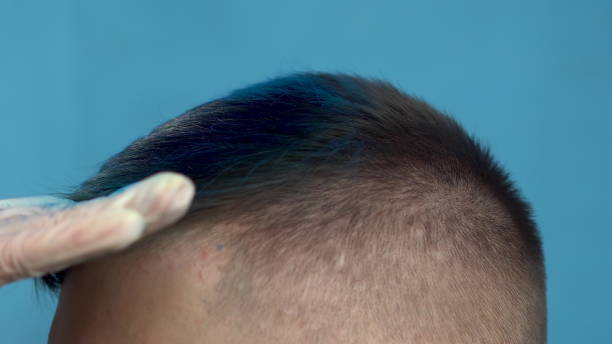
Sideburn restoration and beard transplantation can sometimes be planned together when a patient has sparse sideburns alongside wider areas of facial-hair deficiency. Sideburn Hair Transplant in Dubai can strengthen the transition between the temple and beard while additional grafts may be used to improve selected areas of the beard.
The key is to treat the face as one connected facial-hair pattern rather than designing the sideburn and beard independently.
Sideburn Hair Transplant in Dubai With Combined Facial Hair Restoration
A combined approach may be considered when hair is insufficient in more than one facial region.
For example, a patient may have weak sideburns, sparse cheeks, and reduced jawline density. Treating only one of these areas may leave the overall facial-hair pattern visually incomplete.
A coordinated plan can address the most noticeable areas while maintaining consistent hair direction and density.
When Combined Sideburn and Beard Restoration May Be Considered
Combined restoration may be relevant for patients with:
- Naturally sparse sideburns and cheeks
- Weak sideburn-to-beard transitions
- Limited beard density with incomplete sideburns
- Facial hair loss affecting multiple regions
- Previous trauma involving the sideburn and beard
- Asymmetrical facial-hair distribution
The treatment plan depends on the individual's anatomy and donor resources.
Why the Sideburn and Beard Should Be Designed Together
The sideburn creates a visual bridge between the temple and beard.
If the sideburn is made significantly denser than the adjoining cheek or beard, the transition can look abrupt. Likewise, increasing beard density without addressing a weak sideburn may leave a visible gap near the temple.
Designing both areas together helps establish a more continuous pattern.
Hair Direction Across the Sideburn and Beard
Different facial regions naturally grow in different directions.
Sideburn hairs may angle downward along the face, while cheek hairs can follow another orientation. Jawline and chin hairs may have their own growth patterns.
During combined restoration, grafts need to be placed according to the specific recipient zone rather than using one uniform direction.
Graft Distribution for Sideburn Hair Transplant in Dubai
Graft distribution should reflect the patient's existing density.
A sideburn may need concentrated correction in a small area, while the beard may require wider spacing across a larger region.
The surgeon can determine where each graft provides the greatest visual benefit.
This helps prevent unnecessary use of donor follicles.
Creating a Natural Transition Between Sideburn and Beard
The connection between the two areas is one of the most important parts of combined restoration.
A natural transition usually involves changes in density and direction rather than a hard boundary.
Existing facial hair provides a reference for deciding where additional grafts should begin and how the density should gradually change.
Facial Proportions and Combined Restoration
Facial-hair density can influence the perceived proportions of the face.
Adding coverage to the cheek or jawline may change how the sideburn is visually perceived. Conversely, strengthening the sideburn can make a sparse beard appear more noticeable if the surrounding areas are not considered.
A combined plan takes these relationships into account.
Sideburn Hair Transplant in Dubai for Men With Different Grooming Styles
Grooming habits should be discussed before treatment.
A patient who maintains a short beard may need a different design from someone who wears a longer, fuller beard.
Haircuts also matter. Fades and short temple styles can expose the upper sideburn, while longer hairstyles may conceal part of the transition.
The restoration should remain appropriate for the patient's normal appearance.
How Donor Hair Availability Affects Combined Treatment
Combined treatment uses follicles from the available donor area.
The number and characteristics of donor follicles need to be assessed before deciding how much facial coverage is realistic.
A patient may have enough donor hair for targeted sideburn correction but not for extensive beard reconstruction.
In such cases, treatment priorities can be discussed during consultation.
Managing Expectations for Combined Facial Hair Restoration
More treatment areas do not automatically mean a better result.
The objective should be to create a coherent facial-hair pattern that suits the patient's natural characteristics.
Density, graft survival, hair caliber, and growth direction all influence the final appearance.
Realistic planning is especially important when several facial regions are being treated.
Recovery After Combined Sideburn and Beard Transplantation
Recovery depends on the number and location of treated areas.
Patients may experience temporary redness, crusting, or mild swelling. Care instructions should be followed carefully to protect the newly placed grafts.
The treated areas will not necessarily look immediately natural because the follicles require time to establish and progress through their growth cycle.
Growth and Maturation of Transplanted Facial Hair
Transplanted facial hair may initially shed before new growth develops.
The growth process is gradual, and the texture and appearance can continue to mature over time.
The sideburn and beard should eventually be evaluated as a complete pattern rather than judging one small area during the early stages.
Clinic note: Combined facial-hair restoration requires coordinated planning. Sideburn density, beard coverage, hair direction, and donor availability should be considered together to maintain a natural transition.
When Treating the Sideburns Alone May Be Better
Not every patient needs combined treatment.
If the beard already has sufficient density and the main issue is a weak sideburn, isolated restoration may provide the desired improvement with a smaller treatment area.
Treating only the areas that genuinely require additional follicles can also help preserve donor resources.
Personalized Planning at Tajmeels Clinic
Tajmeels Clinic can assess the sideburns and beard as connected components of the facial-hair pattern.
The consultation can examine existing density, donor characteristics, preferred beard style, hairstyle, facial proportions, and areas where additional coverage may have the greatest impact.
For patients considering Sideburn Hair Transplant in Dubai alongside beard restoration, individualized planning helps determine whether a combined approach is appropriate.
Categories
- Artificial Intelligence (AI)
- Technology
- Business
- Education
- Science
- Lifestyle
- Healthcare
- Entertainment
- Politics
- Environment
- Travel
- Finance
- Automobile
- News
- Art
- Causes
- Crafts
- career
- Dance
- Drinks
- Film
- Fitness
- Food
- Games
- Gardening
- Health
- Home
- Literature
- Music
- Networking
- Other
- Party
- Religion
- Shopping
- Sports
- Theater
- Wellness
Read More
Medical endoscopes have become indispensable tools in modern healthcare, enabling physicians to perform minimally invasive examinations and procedures with greater accuracy and safety. These devices are widely used for diagnosing and treating gastrointestinal, respiratory, urological, and gynecological conditions. As healthcare systems across South and Central America continue to advance,...

The Evolution of Stress-Free Virtual Spaces in the Modern Pacific Era The rapid expansion of specialized digital platforms in New Zealand has created a unique opportunity for the Arab diaspora to find tailored spaces designed specifically for mental decompression. In a world increasingly saturated with high-stakes competitive setups and demanding intellectual tasks, the arrival of low-cognitive...

Launching a blockchain or Web3 project without a structured marketing roadmap often leads to wasted budgets, inconsistent messaging, and slow community growth. The first 90 days are critical because they determine how potential investors, users, partners, and industry participants perceive the project. Rather than focusing only on promotion, founders should prioritize building credibility,...

The Concussions Market is expanding as awareness of head injuries increases among healthcare professionals, athletes, and the wider public. According to Market Research Future, the market was valued at USD 6.34 billion in 2024 and is expected to reach USD 11.54 billion by 2035, growing at a CAGR of 5.6% from 2025 to 2035. Better diagnosis, treatment, and prevention are supporting this growth....
The Flat Glass Market is witnessing remarkable growth, fueled by an increasing focus on sustainability and energy efficiency. With a projected market size of USD 269.4 million by 2035, this sector is set to expand at a compound annual growth rate (CAGR) of 4.90%. Key drivers include rising construction activities and stringent energy regulations, which are transforming the landscape of flat...
