Vibe Marketing Services: Building Personalized Engagement Strategies for Different Audience Segments
Vibe Marketing is changing how brands connect with their audiences by placing customer interests, emotions, and digital behaviour at the centre of marketing decisions. Instead of delivering the same message to everyone, businesses can create relevant experiences for different audience segments. This approach helps brands build stronger relationships, improve engagement, and make their marketing efforts more meaningful.
What Is Vibe Marketing?
Vibe Marketing focuses on creating a consistent brand personality and delivering experiences that resonate with specific audiences. It combines creative storytelling, audience insights, cultural awareness, and technology to make marketing feel more personal.
Traditional marketing often relies on broad demographic categories, such as age, location, or income. Modern audiences, however, have different expectations even when they share similar demographic characteristics. Two customers of the same age may respond to entirely different messages, visual styles, and offers.
Vibe Marketing addresses this difference by examining customer motivations, preferences, interests, and interactions. Brands can then shape their communication around what matters to each group.
For example, a fitness brand might appeal to beginners through simple workout guidance while offering performance-focused content to experienced athletes. The product category remains the same, but the message reflects the audience's needs.
Why Audience Segmentation Matters
Audience segmentation divides a broad customer base into smaller groups with shared characteristics. It allows marketers to develop more relevant campaigns instead of relying on generalised messaging.
Effective segmentation can improve several areas of marketing performance:
-
Higher engagement: Relevant messages give people a stronger reason to interact with a brand.
-
Better conversion opportunities: Customers receive information that matches their interests and stage in the buying journey.
-
Improved customer retention: Personalised communication helps maintain relationships beyond the first purchase.
-
More efficient spending: Marketing teams can prioritise the channels and messages that perform well for each audience.
-
Clearer brand positioning: Consistent communication helps customers understand what a brand represents.
Segmentation should not become a collection of rigid labels. Customer interests change over time, and marketing strategies must adapt accordingly.
Key Audience Segments for Personalized Marketing
1. Demographic Segmentation
Demographic segmentation considers factors such as age group, occupation, income range, and life stage. These details can help businesses understand broad customer requirements.
A financial education platform, for instance, may provide budgeting resources for students and investment education for working professionals. The objective is not to assume that every person in a group behaves identically. It is to establish a useful starting point for relevant communication.
2. Behavioural Segmentation
Behavioural segmentation examines what customers actually do. Website visits, product views, purchase history, email interactions, and repeat purchases can reveal valuable patterns.
An online retailer could send product care advice to recent buyers and comparison guides to shoppers who repeatedly view similar products. These messages respond to observed actions rather than relying entirely on assumptions.
Businesses should collect and use behavioural information transparently, with appropriate consent and privacy safeguards.
3. Psychographic Segmentation
Psychographic segmentation explores customer values, interests, lifestyles, attitudes, and motivations. It can help brands understand why people choose one product over another.
For example, an environmentally conscious audience may respond to credible information about product durability, responsible sourcing, and waste reduction. Customers who prioritise convenience may be more interested in delivery options and time-saving features.
Psychographic insights can make storytelling more relevant, provided that marketers validate their assumptions through research and feedback.
4. Engagement-Based Segmentation
Not every customer has the same relationship with a brand. Some people are discovering it for the first time, while others regularly purchase products or recommend them to friends.
A practical engagement model includes:
-
New audiences: Educational content that introduces the brand and explains its value.
-
Interested prospects: Product comparisons, demonstrations, and answers to common concerns.
-
Active customers: Usage tips, personalised recommendations, and relevant product updates.
-
Loyal advocates: Referral opportunities, community participation, and exclusive educational resources.
This structure helps businesses communicate with customers according to their current needs rather than repeatedly delivering introductory promotions.
How Vibe Marketing Services Build Personalized Engagement
Effective Vibe Marketing Services combine audience research with creative execution and ongoing measurement. The process should be systematic, even when the resulting campaigns feel spontaneous and natural.
Step 1: Understand the Audience
Start with customer interviews, surveys, website analytics, social media interactions, and sales feedback. Look for recurring questions, common objections, purchasing motivations, and preferred communication channels.
Create practical audience profiles that explain what each group wants to achieve. Avoid building profiles around stereotypes or unsupported assumptions.
Step 2: Develop Distinct Brand Messages
Each audience segment should receive a message that reflects its priorities while maintaining the brand's overall identity.
A travel company, for example, could emphasise affordability for budget-conscious travellers, local culture for experience seekers, and convenience for busy professionals. All three messages should communicate the same underlying brand values.
A clear Content Marketing Strategy connects these messages with useful articles, videos, guides, email campaigns, and social media content.
Step 3: Select the Right Channels
Different audience groups may prefer different ways of discovering and interacting with brands. Short-form videos can introduce a product, detailed articles can answer complex questions, and email can support customers who want regular updates.
Channel selection should follow audience behaviour and campaign objectives. Businesses do not need to maintain an active presence on every platform. They need to focus on the channels where their intended customers are most receptive.
Step 4: Use Data to Improve Relevance
AI-Powered Marketing can help teams analyse customer interactions, identify content patterns, organise audience segments, and generate variations of marketing messages.
For example, an AI-assisted system might identify that a group of customers frequently reads product comparison articles before making a purchase. Marketers can respond with clearer comparisons, practical demonstrations, and answers to common questions.
Human oversight remains essential. AI-generated content should be checked for accuracy, tone, relevance, and potential bias. Personalisation must also respect customer privacy and applicable data protection requirements.
Step 5: Test and Refine Campaigns
Personalisation is an ongoing process. Marketers should test different headlines, creative formats, calls to action, and delivery times to discover what works best.
Track engagement rates, click-through rates, qualified leads, conversions, repeat purchases, and customer retention. Compare results across audience segments rather than relying exclusively on overall campaign averages.
A campaign that generates many clicks but few qualified enquiries may attract attention without creating meaningful business value.
Creating Digital Marketing Campaigns That Feel Relevant
Successful Digital Marketing Campaigns give customers a reason to participate. They encourage interaction through useful information, entertaining experiences, community discussions, and personalised recommendations.
Consider a sportswear company launching a new running shoe. Instead of publishing one generic advertisement, it could create a beginner's running guide, a performance comparison for experienced runners, and customer stories featuring local running communities.
Each campaign serves a different audience while supporting the same product launch.
Useful campaign formats include:
-
Interactive quizzes that recommend suitable products.
-
Customer stories that reflect different needs and experiences.
-
Educational video series tailored to specific interests.
-
Community challenges that encourage participation.
-
Personalised email sequences based on genuine customer preferences.
Brand Growth Solutions should prioritise meaningful engagement over short-term attention. The strongest campaigns help people make informed decisions and build confidence in the brand.
Measuring the Success of Personalized Engagement
Personalised marketing needs clear performance indicators. Without measurement, teams may confuse attractive creative work with effective marketing.
Useful metrics include:
| Metric | What It Reveals |
|---|---|
| Engagement rate | Whether people interact with the content |
| Click-through rate | Whether the message motivates further action |
| Conversion rate | Whether interactions lead to desired outcomes |
| Customer acquisition cost | How efficiently the campaign attracts customers |
| Repeat purchase rate | Whether customer relationships continue |
| Customer lifetime value | The long-term commercial value of customer relationships |
Businesses should establish a baseline before launching a new strategy. They can then compare segment-level results and run controlled experiments to determine whether personalisation actually improves outcomes.
It is also important to consider the quality of engagement. A smaller group of genuinely interested customers may be more valuable than a large audience that interacts briefly and never returns.
Common Mistakes to Avoid
Personalised engagement can fail when businesses focus on technology instead of customer needs.
Common mistakes include creating too many audience segments, using outdated customer information, sending excessive promotional messages, and making personalisation feel intrusive. Another problem is changing the brand's personality so much across channels that customers no longer recognise it.
Businesses should keep segmentation manageable, update customer insights regularly, and give audiences appropriate control over their communication preferences. Every personalised message should have a clear purpose and provide value.
The best Digital Services support this process through connected analytics, content management, marketing automation, and campaign reporting. However, technology cannot replace sound judgement, original ideas, or an honest understanding of customers.
Conclusion
Vibe Marketing offers a practical way to make brand communication more relevant, engaging, and consistent. By combining audience segmentation, thoughtful storytelling, behavioural insights, and responsible technology, businesses can create experiences that reflect different customer needs.
The key is to treat personalisation as a service to the audience rather than simply a technique for increasing conversions. When customers receive useful information, appropriate recommendations, and communication that respects their preferences, stronger relationships can follow.
Businesses looking to develop a structured approach to audience engagement can explore the digital marketing and technology capabilities available through HyprForge . Its services can support organisations seeking practical ways to connect marketing strategy, digital experiences, and business growth.
Frequently Asked Questions
1. What are Vibe Marketing Services?
Vibe Marketing Services help businesses develop audience-focused marketing strategies using customer insights, creative storytelling, relevant content, and digital engagement techniques. Their purpose is to make brand communication more meaningful to different customer groups.
2. How does Vibe Marketing improve audience engagement?
Vibe Marketing improves engagement by aligning messages, content formats, and communication channels with customer interests and behaviour. Relevant experiences can encourage more meaningful interactions, stronger brand trust, and better conversion opportunities.
3. What role does AI play in personalized marketing?
AI helps marketers analyse customer data, identify behavioural patterns, organise audience segments, and develop content variations. Human review is necessary to maintain accuracy, authenticity, fairness, and responsible data use.
4. How can businesses measure the success of personalized marketing?
Businesses can measure success through engagement rates, click-through rates, conversion rates, customer acquisition costs, repeat purchases, and customer lifetime value. Segment-level comparisons and controlled tests help establish whether personalisation produces measurable improvements.
5. Is Vibe Marketing suitable for small businesses?
Yes. Small businesses can begin with a few clearly defined audience segments, relevant social media content, targeted email communication, and basic analytics. They can expand personalisation gradually as they learn more about customer preferences and campaign performance.
Categories
- Artificial Intelligence (AI)
- Technology
- Business
- Education
- Science
- Lifestyle
- Healthcare
- Entertainment
- Politics
- Environment
- Travel
- Finance
- Automobile
- News
- Art
- Causes
- Crafts
- career
- Dance
- Drinks
- Film
- Fitness
- Food
- Games
- Gardening
- Health
- Home
- Literature
- Music
- Networking
- Other
- Party
- Religion
- Shopping
- Sports
- Theater
- Wellness
Read More
Driven by surging global smart building expansion and widespread demand for frictionless workspace user experiences, the Office Automation Market Share trajectory remains steep across multiple commercial domains. Key drivers include the rapid deployment of high-frequency occupancy-sensing modules, high-precision tuning units, and cloud-connected diagnostics portals that require fast, reliable...

Silicone Rubber Market Report Overview The Silicone Rubber Market report provides a comprehensive and analytically structured examination of the Silicone Rubber market. Based on rigorous primary and secondary research methodologies, it evaluates competitive dynamics, technological advancements, regulatory environments, and evolving consumer expectations. The study delivers a...

The global consumer electronics ecosystem, automotive driver-assistance architectures, and industrial machine vision manufacturing industries are undergoing an extensive technological evolution, with advanced imaging arrays serving as a cornerstone for modern data collection. A camera module represents an integrated assembly of optical lenses, complementary metal-oxide-semiconductor (CMOS)...
Material Engineering and Surface Chemistry in Microcarrier Design The performance of microcarrier-based cell culture depends heavily on the physical structure and surface properties of the beads. Bioprocess engineers must select matrix materials that match the attachment requirements, shear sensitivity, and harvest needs of specific cell lines. Modern microcarriers are engineered from a variety...
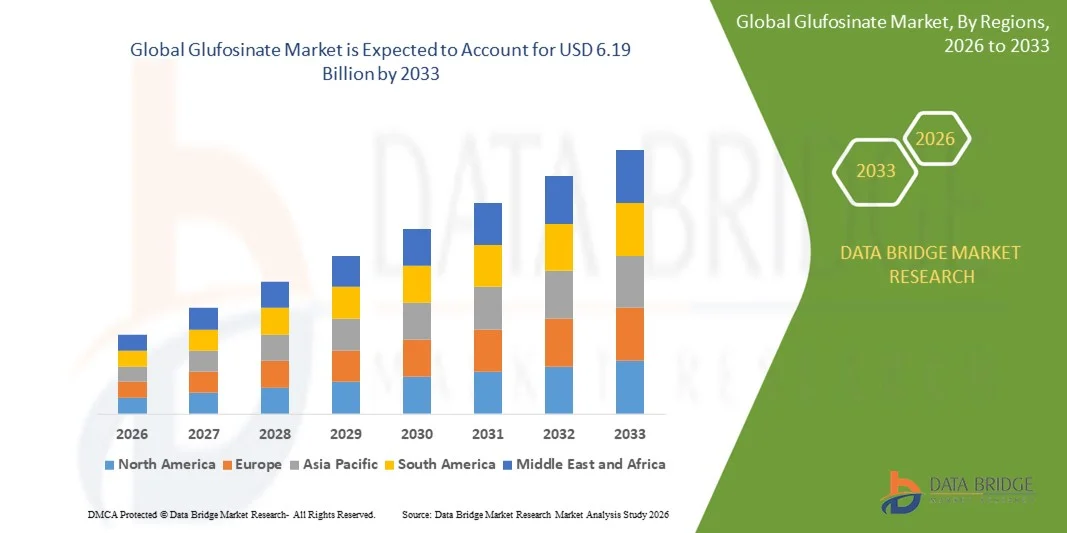
According to the latest report published by Data Bridge Market Research, the Glufosinate Market The global glufosinate market size was valued at USD 3.34 billion in 2025 and is expected to reach USD 6.19 billion by 2033, at a CAGR of 8.0% during the forecast period. The persuasive Glufosinate Market report covers several topics including market...