

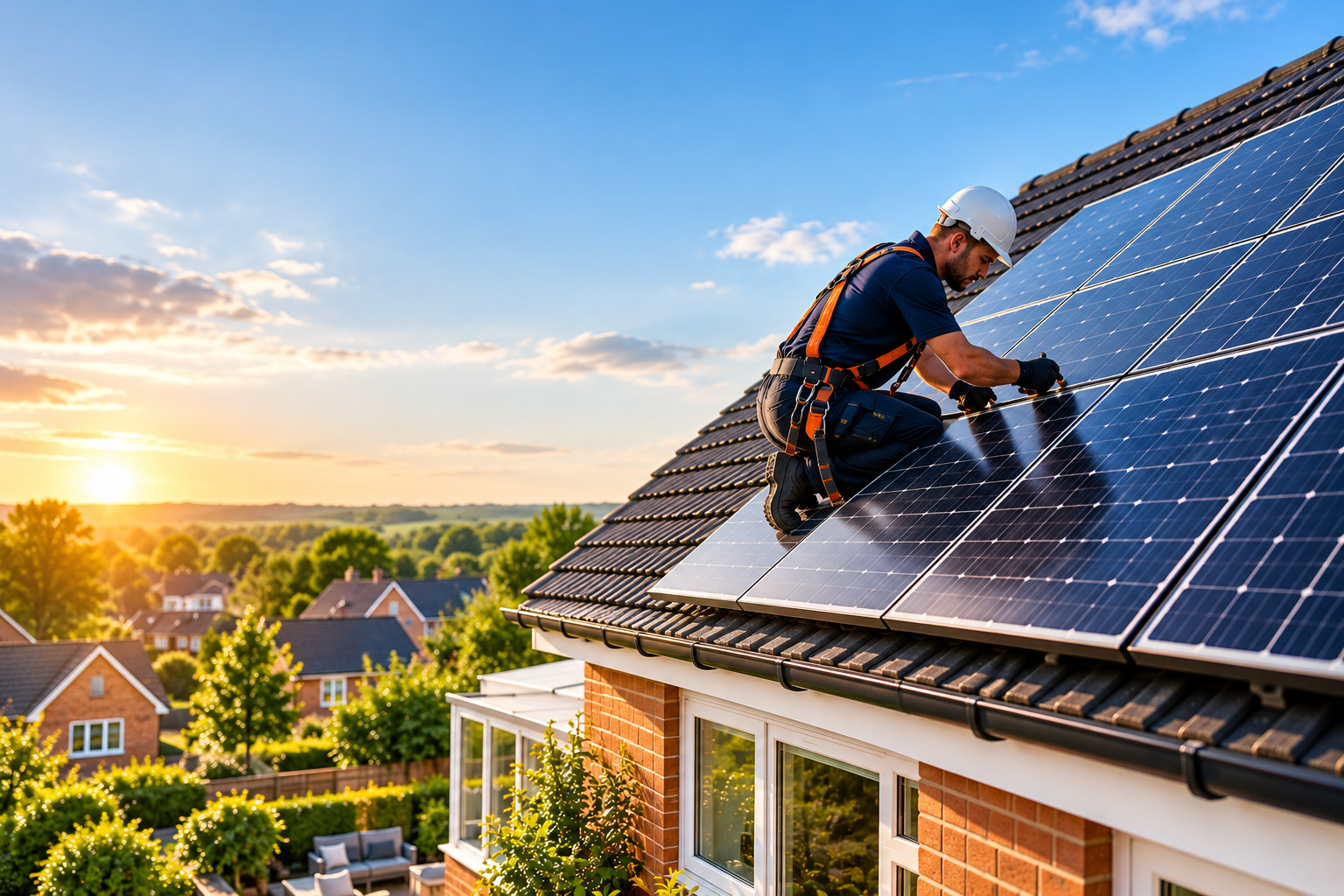

With electricity costs remaining a major concern for households across the UK, more homeowners are looking for practical ways to reduce their energy expenses. Solar energy has emerged as an attractive solution, offering the opportunity to generate clean electricity while becoming less dependent on traditional energy suppliers.
Solar panel installation is a long-term home improvement that can support lower energy bills, reduced carbon emissions, and greater control over household electricity consumption. Understanding how solar panels work and what to expect from installation can help homeowners make informed decisions.
What Is Solar Panel Installation?
Solar panel installation involves fitting photovoltaic (PV) panels to a property's roof or another suitable location. These panels capture sunlight and convert it into electricity that can power everyday household appliances.
A typical residential solar energy system includes solar panels, an inverter, mounting equipment, wiring, and monitoring technology. Depending on individual energy requirements, homeowners can also add battery storage to retain surplus electricity for later use.
Professional solar panel installation services help homeowners choose equipment suited to their property, electricity consumption, and long-term energy goals.
Why Are More UK Homeowners Choosing Solar Energy?
Reduce Monthly Electricity Bills
One of the biggest advantages of installing solar panels is the potential to reduce electricity expenses. By generating renewable electricity during daylight hours, households can purchase less energy from the national grid.
The savings depend on factors such as system size, electricity consumption, energy tariffs, and how much solar power is used within the home.
Generate Clean and Renewable Energy
Solar panels produce electricity without direct greenhouse gas emissions during operation. Using solar-generated electricity can reduce a household's reliance on fossil fuel-based energy and contribute to a more sustainable future.
Gain Greater Energy Independence
Generating electricity at home provides more control over energy consumption. When solar panels are combined with battery storage, homeowners can use stored electricity during the evening or when sunlight is limited.
Support Long-Term Property Value
Energy-efficient improvements can make homes more attractive to environmentally conscious buyers. Although solar panels do not guarantee an increase in property value, a well-maintained solar system may enhance a property's appeal.
How Does the Solar Panel Installation Process Work?
The installation process usually involves several important stages.
1. Property assessment: A qualified installer evaluates the roof's condition, orientation, available space, and shading.
2. System design: A suitable solar system is designed according to the household's energy requirements and the property's physical characteristics.
3. Equipment selection: Appropriate panels, inverters, mounting equipment, and optional batteries are selected.
4. Professional installation: Trained technicians securely mount the panels, install the electrical equipment, and connect the system.
5. Testing and commissioning: The completed installation is inspected and tested to confirm that it operates safely and correctly.
Once installed, homeowners can monitor electricity generation and track system performance using compatible monitoring applications.
What Factors Affect Solar Panel Installation Costs?
Installation costs vary depending on the property's characteristics and the equipment selected.
The main factors include:
-
System capacity: Larger systems typically require more panels and a greater initial investment.
-
Panel efficiency: Higher-efficiency panels can provide greater output from limited roof space.
-
Roof complexity: Difficult access, unusual roof shapes, and additional structural requirements can increase installation costs.
-
Battery storage: Adding a battery increases upfront expenditure but may improve how much solar electricity is used at home.
-
Equipment warranties: Product quality, installer workmanship, and warranty coverage should be considered alongside price.
Homeowners should request a detailed quotation that includes equipment specifications, estimated generation, installation work, and warranty information.
Is Solar Panel Installation Suitable for Every Home?
Most residential properties can be assessed for solar power, but not every roof will deliver the same performance.
Roof direction, shading, available surface area, and structural condition all influence the suitability of an installation. South-facing roofs are often ideal for strong annual electricity generation in the UK, although east- and west-facing roofs can also perform effectively.
Even with the UK's changing weather, solar panels can generate electricity on cloudy days, although output is generally lower than under direct sunlight.
A professional assessment can help establish whether an installation is technically suitable and financially worthwhile.
How to Choose the Right Solar Panel Installer
Choosing the right installation company is just as important as selecting suitable equipment.
Homeowners should look for experienced professionals who provide clear quotations, realistic generation estimates, suitable warranties, and reliable aftercare.
It is also worth checking relevant industry certifications, including whether an installer holds appropriate MCS certification, particularly where eligibility for certain export arrangements or financial incentives may depend on certification requirements.
Comparing several quotations can help homeowners understand their options and avoid making decisions based solely on upfront cost.
Final Thoughts
Solar panel installation offers UK homeowners a practical opportunity to generate renewable electricity, manage long-term household energy costs, and reduce their environmental impact.
Although the initial investment requires careful consideration, a properly designed solar system can provide benefits for many years.
By assessing their property's suitability, understanding their energy needs, and choosing experienced installation professionals, homeowners can take a meaningful step towards a cleaner and more energy-efficient future.

