


Introduction
Managing business finances effectively is one of the most important responsibilities for any company operating in the United Kingdom. From maintaining accurate financial records and managing cash flow to preparing tax returns and meeting reporting deadlines, accounting plays a crucial role in the long-term success of a business. However, these responsibilities can quickly become overwhelming when business owners must balance financial administration with sales, customer relationships, staff management, and daily operations.
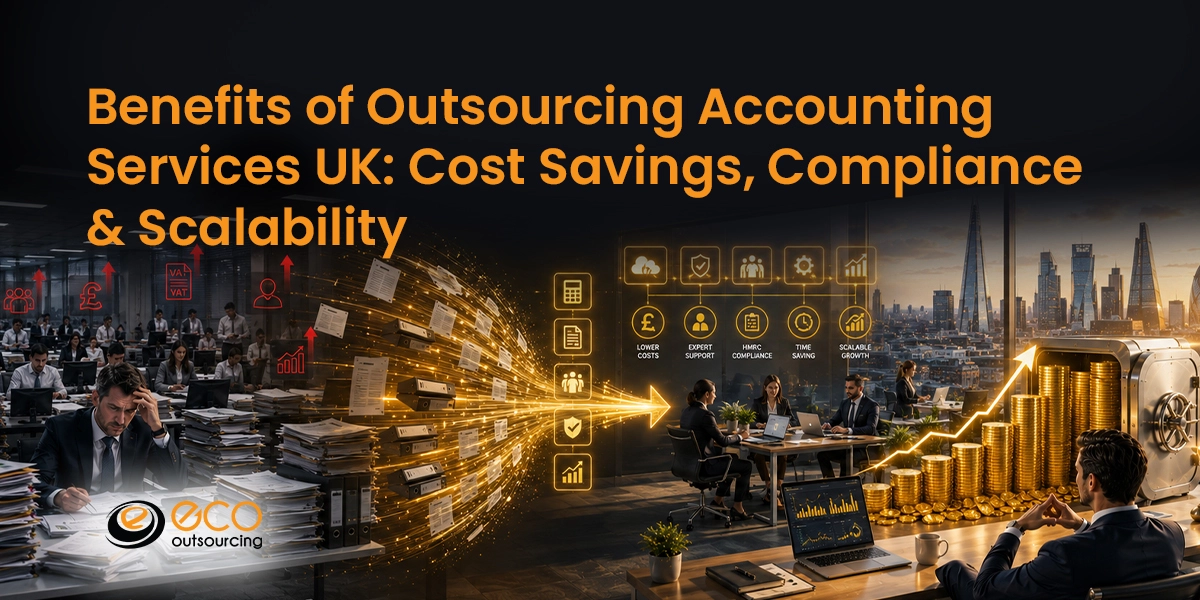
This is where the Benefits of Outsourcing Accounting Services become particularly valuable. Rather than managing every accounting task internally, businesses can work with experienced external professionals who provide tailored financial support, reliable reporting, and practical guidance.
For startups, freelancers, growing companies, and established small and medium-sized enterprises, outsourced accounting services UK providers offer an opportunity to access professional expertise without necessarily employing a full-time accounting team. This approach can help businesses manage expenses, maintain organised financial records, prepare for changing compliance requirements, and make more informed commercial decisions.
The value of outsourcing extends beyond saving money. A well-managed accounting partnership can improve financial visibility, strengthen internal controls, reduce administrative pressure, and provide additional support as a company expands.
Understanding the different advantages of outsourcing accounting helps business owners determine whether this approach fits their financial goals, operational requirements, and plans for sustainable growth.
What Are Outsourced Accounting Services?
Accounting outsourcing involves assigning selected financial responsibilities to an external accountant, bookkeeping professional, or specialist accounting firm. The services can be limited to routine bookkeeping or extended to a broader range of financial management activities.
For example, a small consultancy might outsource its monthly bookkeeping and VAT preparation, while a growing retailer could require bookkeeping, payroll coordination, management accounts, cash flow forecasting, and year-end support.
Common services include:
-
Outsourced bookkeeping services for recording income, expenses, invoices, and payments.
-
Financial reporting services for preparing profit and loss statements, balance sheets, and management reports.
-
VAT accounting services for reviewing transactions, calculating VAT, and preparing returns.
-
Payroll outsourcing UK services for managing payroll calculations, deductions, and relevant reporting.
-
Business tax planning UK support for understanding tax obligations and evaluating applicable allowances.
-
Management accounting services for reviewing budgets, profitability, and business performance.
-
Cash flow forecasting services for estimating future receipts, payments, and funding requirements.
-
Cloud accounting services for managing financial information through suitable digital platforms.
Businesses can select the services they need rather than paying for a complete finance department from the beginning.
The objective is to create an accounting arrangement that supports accurate records, dependable reporting, and better decisions while allowing business owners to remain focused on their core activities.
1. Reduce Business Costs Through Professional Accounting Support
One of the most recognised Benefits of Outsourcing Accounting Services is the opportunity to manage accounting costs more efficiently.
Hiring an in-house accountant involves more than paying a salary. Employers may also need to consider recruitment expenses, employer National Insurance contributions, workplace pension contributions, training, software subscriptions, equipment, and employment administration.
For smaller businesses, these additional expenses can represent a significant commitment, particularly when the accounting workload does not justify a permanent full-time position.
Reduce Recruitment and Employment Expenses
Finding an experienced accountant can take time and money. Businesses must identify suitable candidates, assess their qualifications, conduct interviews, and provide the necessary onboarding and training.
An outsourced accounting arrangement provides access to professional support without requiring the company to recruit an employee for every accounting responsibility.
Through cost-effective accounting services, a business can agree on a defined monthly fee or another pricing structure that reflects the scope of work. This makes it easier to plan expenditure and evaluate the value received.
The financial comparison should consider the complete cost of both options, not simply the employee's salary against an outsourcing quotation. Businesses should also examine the provider's qualifications, service quality, and the tasks included in the agreed price.
Pay for the Services Your Business Needs
A startup with a small number of transactions may need only basic bookkeeping and occasional reporting. A larger company might require frequent reconciliations, payroll support, detailed management accounts, and regular financial reviews.
Accounting outsourcing for small businesses allows companies to match financial support to their actual requirements.
This flexibility is especially useful for seasonal businesses, companies with fluctuating transaction volumes, and organisations experiencing periods of rapid growth.
Before signing an agreement, business owners should confirm whether the fee includes software, monthly reconciliations, year-end adjustments, financial reports, additional transactions, and advice meetings. Unexpected charges can reduce the financial benefits of an otherwise attractive arrangement.
2. Improve Compliance With UK Accounting and Tax Requirements
Businesses operating in the UK must follow financial reporting, tax, and record-keeping requirements relevant to their legal structure and activities. Managing these responsibilities incorrectly can lead to unnecessary stress, additional professional costs, and possible penalties.
One of the important accounting outsourcing benefits UK businesses can gain is access to professionals who understand financial reporting procedures and can help organise the information required for relevant obligations.
Maintain Accurate Financial Records
Reliable tax returns and financial reports begin with accurate bookkeeping. Sales invoices, purchase receipts, supplier payments, bank transactions, and other supporting documents must be recorded consistently.
When business owners manage these responsibilities alongside their everyday workload, bookkeeping can fall behind. Missing receipts, unexplained transactions, and unreconciled accounts may then become more difficult to resolve.
Professional bookkeeping and accounting services establish a structured process for maintaining records, reviewing transactions, and identifying discrepancies.
Regular reconciliations help businesses recognise problems earlier, rather than discovering significant differences shortly before a reporting deadline.
Organise HMRC Reporting and Deadlines
Depending on their circumstances, businesses may need to manage VAT returns, PAYE reporting, Corporation Tax, Self Assessment, and statutory accounts.
A qualified accounting provider can help prepare financial information, monitor agreed deadlines, identify missing records, and complete relevant submissions within the contracted scope of work.
This support is valuable because obligations differ between limited companies, sole traders, partnerships, and other business arrangements.
Through HMRC compliance support, companies can establish clear responsibilities, maintain supporting documentation, and prepare financial information more consistently.
Outsourcing does not automatically remove the legal responsibilities of directors or business owners. They must still provide complete and accurate information, review important financial decisions, and understand the obligations that remain their responsibility.
Prepare for Making Tax Digital in 2026 and Beyond
Digital record-keeping is an increasingly important part of the UK's tax system. Making Tax Digital accounting support can help eligible businesses prepare for relevant software requirements and understand the practical changes involved.
Making Tax Digital for Income Tax began on 6 April 2026 for qualifying sole traders and landlords whose combined qualifying income from self-employment and property exceeded £50,000 in the 2024 to 2025 tax year.
The next phase begins on 6 April 2027 for those whose qualifying income exceeded £30,000 in the 2025 to 2026 tax year. A further phase is scheduled for 6 April 2028 for those whose qualifying income exceeded £20,000 in the 2026 to 2027 tax year.
These thresholds refer to qualifying gross income, not profit after business expenses. Eligibility and exemptions depend on the applicable rules.
An accounting provider can help affected individuals review their circumstances, select compatible software, establish digital record-keeping routines, and prepare for quarterly updates.
Preparing early can reduce last-minute pressure and make the transition easier to manage. Businesses should also remember that Making Tax Digital for Income Tax is not the same as a universal requirement for every limited company.
3. Scale Accounting Services as Your Business Expands
Business growth brings new financial responsibilities. More customers, invoices, suppliers, employees, and transactions can increase the amount of time required to maintain accurate records.
One of the most useful Benefits of Outsourcing Accounting Services is the ability to expand accounting support as operational demands change.
Support Business Growth Without Constant Recruitment
When a company grows, its financial reporting needs may become more sophisticated. Owners might need monthly management accounts, departmental budgets, profitability analysis, or more detailed cash flow forecasts.
Scalable accounting services make it possible to introduce these capabilities without immediately recruiting additional permanent employees.
A business can begin with routine bookkeeping and later add reporting, financial analysis, payroll coordination, or strategic support.
This approach allows the accounting arrangement to evolve alongside revenue, transaction volume, staffing levels, and organisational complexity.
Help Startups Build Strong Financial Foundations
Startups often operate with limited resources. Founders must decide how to spend available funds while developing products, finding customers, and establishing sustainable revenue.
Professional accounting services for startups UK businesses can use help create organised financial records from the beginning.
Accurate accounts make it easier to monitor expenditure, evaluate pricing, understand cash reserves, and assess whether the business can afford additional staff or equipment.
Reliable financial information can also help founders prepare for discussions with lenders, investors, and potential commercial partners.
Instead of waiting until the company becomes larger to establish sound accounting processes, startups can build a practical financial system that grows with the business.
Manage Seasonal Workloads More Effectively
Some businesses experience significant changes in activity throughout the year. Retailers may face busy holiday periods, hospitality companies may experience seasonal demand, and professional service providers may see increased workloads around important reporting deadlines.
Outsourcing can provide additional capacity when these demands arise, provided the service agreement covers the required workload.
Documented procedures and agreed reporting schedules can help keep routine tasks moving even when transaction volumes increase.
This flexibility is particularly useful when maintaining a large permanent accounting team would be financially impractical.
4. Access Specialist Expertise and Better Financial Guidance
Employing one accountant does not necessarily provide every skill a business needs. Tax preparation, management reporting, payroll, forecasting, and financial analysis may require different areas of expertise.
An established provider can offer access to professionals who specialise in different aspects of accounting, depending on the services available.
This makes outsourced finance and accounting services valuable for businesses that need more than basic transaction recording.
Make Better Decisions With Management Reports
Financial information becomes more useful when business owners understand what it reveals about performance.
Management reports can show whether operating costs are increasing, which services generate stronger margins, how much customers owe, and whether actual expenditure is exceeding the budget.
With management accounting and financial analysis, owners can investigate the reasons behind changes in profitability and take corrective action.
For example, a company might experience rising sales but declining profits because supplier prices have increased or discounts have become too frequent.
Regular analysis can help identify these issues and support better pricing, budgeting, and resource allocation decisions.
Improve Cash Flow Visibility
Profitability does not automatically mean that a business has enough cash available to meet its immediate obligations.
A company may report strong revenue but struggle to pay suppliers because customers have not settled their invoices. Unexpected expenditure or seasonal fluctuations can create similar problems.
Professional cash flow management services help businesses estimate when money is likely to arrive and when payments will become due.
A well-maintained forecast can highlight potential shortfalls before they occur, giving management more time to follow up overdue invoices, adjust spending, or arrange suitable financing.
The accuracy of a forecast depends on reliable records and realistic assumptions. It should therefore be reviewed regularly as circumstances change.
Make Informed Tax Planning Decisions
Tax planning should be based on accurate records and a clear understanding of the rules that apply to the business.
Appropriate business tax planning UK support can help owners assess eligible reliefs, understand potential tax consequences, and organise information needed for accurate reporting.
For example, the timing of an investment, the structure of a business expense, or a change in ownership may have tax implications worth reviewing before a decision is finalised.
Professional guidance can help business owners explore legitimate options without relying on assumptions or taking unnecessary compliance risks.
5. Save Time and Focus on Core Business Activities
Time is one of the most valuable resources available to a business owner.
Raising invoices, recording expenses, reconciling bank transactions, chasing missing documents, and preparing financial reports can consume hours every week. When owners manage all these tasks themselves, they have less time available for sales, customer service, strategic planning, and business development.
The Benefits of Outsourcing Accounting Services include creating more time for activities that directly support business performance.
An external provider can take responsibility for agreed accounting processes, while the owner retains oversight and provides the information required to keep records accurate.
This division of responsibilities can improve productivity without separating management from the company's financial position.
The greatest value comes when time saved on routine administration is used productively. Business owners can strengthen customer relationships, improve service delivery, develop new revenue opportunities, and plan for sustainable growth.
6. Use Cloud Accounting to Improve Financial Visibility
Technology has changed how businesses manage financial information. Cloud accounting services allow companies to store records digitally, process transactions, connect suitable bank feeds, and access selected reports through online systems.
Depending on the software and service agreement, owners may be able to review outstanding invoices, monitor expenditure, and share documents with their accountants without exchanging large quantities of paperwork.
An experienced provider can help establish suitable workflows and reporting routines, making financial information easier to organise and review.
However, technology alone cannot guarantee accurate accounts. Incorrect transaction classifications, missing documents, and poorly configured systems can still create reporting problems.
The best results come from combining appropriate software with knowledgeable professionals, consistent procedures, and regular checks.
Businesses should also review software access, subscription charges, data ownership, integration requirements, and security controls before moving financial processes to a new platform.
7. Strengthen Data Security and Business Continuity
Accounting records contain sensitive commercial information, including employee details, customer transactions, supplier information, and business financial performance.
Selecting a reliable outsourcing provider therefore requires more than comparing service prices.
Businesses should ask how the provider protects records, manages user permissions, stores documents, creates backups, and responds to security incidents.
Clear agreements should also explain confidentiality requirements, data protection responsibilities, record retention, and the arrangements for returning information if the relationship ends.
Another important consideration is continuity. If one employee becomes unavailable, documented procedures and appropriate team coverage can help prevent essential accounting tasks from stopping entirely.
A secure outsourced accounting service should provide clear accountability, sensible access controls, and consistent communication.
Although no arrangement eliminates every risk, reviewing these safeguards can help a business make a better-informed decision.
8. Outsourced Accounting vs In-House Accounting
Outsourcing and in-house accounting both have advantages. The appropriate choice depends on a company's size, transaction volume, operational complexity, budget, and need for daily financial support.
An in-house accountant may be suitable when a business has a substantial, continuous workload and requires someone who works closely with internal departments throughout the day.
Outsourcing can be more practical when the company needs specialist expertise or reliable accounting processes but does not have enough work to justify a complete permanent team.
Many businesses also benefit from a hybrid approach.
For example, internal employees might approve supplier payments, provide sales information, and manage financial decisions, while an external provider handles bookkeeping, reconciliations, VAT preparation, and monthly management accounts.
This arrangement combines internal knowledge with external expertise.
Before deciding, businesses should compare total costs, establish how quickly reports are needed, and determine which responsibilities must remain under direct internal control.
9. How to Choose the Right Accounting Outsourcing Provider
Choosing the right provider is essential to achieving meaningful results. A low price offers limited value when reports arrive late, communication is poor, or the service does not cover the tasks a company needs.
Start by defining the responsibilities you want to outsource. Clarify whether you require bookkeeping, tax preparation, payroll coordination, VAT support, management reporting, or cash flow forecasting.
Then assess the provider's experience, professional qualifications, industry knowledge, and procedures for reviewing completed work.
Ask for a transparent quotation that explains the monthly fee, transaction limits, software charges, additional work, and excluded services.
Communication should also be discussed before the agreement begins. Establish who will manage the account, how quickly questions will be answered, when reports will be delivered, and how urgent issues will be handled.
Request a clear monthly reporting schedule. For example, you might agree that reconciliations and management accounts should be completed by a particular date each month, subject to receiving the necessary documents on time.
It is also important to determine how your business will access its accounting records and how the provider will support a future handover.
Finally, agree on measurable performance expectations and review them regularly. A successful relationship depends on professional competence, clear responsibilities, reliable communication, and accurate financial information.
Conclusion
The Benefits of Outsourcing Accounting Services extend well beyond reducing bookkeeping responsibilities. For businesses across the United Kingdom, outsourcing can improve cost management, strengthen financial reporting, support relevant tax compliance requirements, and provide access to specialist expertise.
It can also help companies respond to growth, manage changing workloads, adopt digital accounting processes, and make more informed decisions about their financial future.
For startups and smaller businesses, outsourcing offers a practical way to establish dependable accounting processes without immediately building a complete internal department. Growing companies can expand their support as their reporting requirements become more complex, while established organisations can use external professionals to complement their existing finance teams.
However, successful outsourcing requires careful planning. Businesses should evaluate service quality, agree on responsibilities, understand the full cost, protect sensitive information, and remain actively involved in reviewing their finances.
The aim is not simply to transfer administrative tasks to an external provider. It is to create a reliable financial management system that helps the business operate efficiently, maintain better control, and identify opportunities for sustainable growth.
With the right provider and a clearly defined working arrangement, outsourced accounting services UK businesses choose can become a valuable investment in long-term financial stability and commercial success.

