

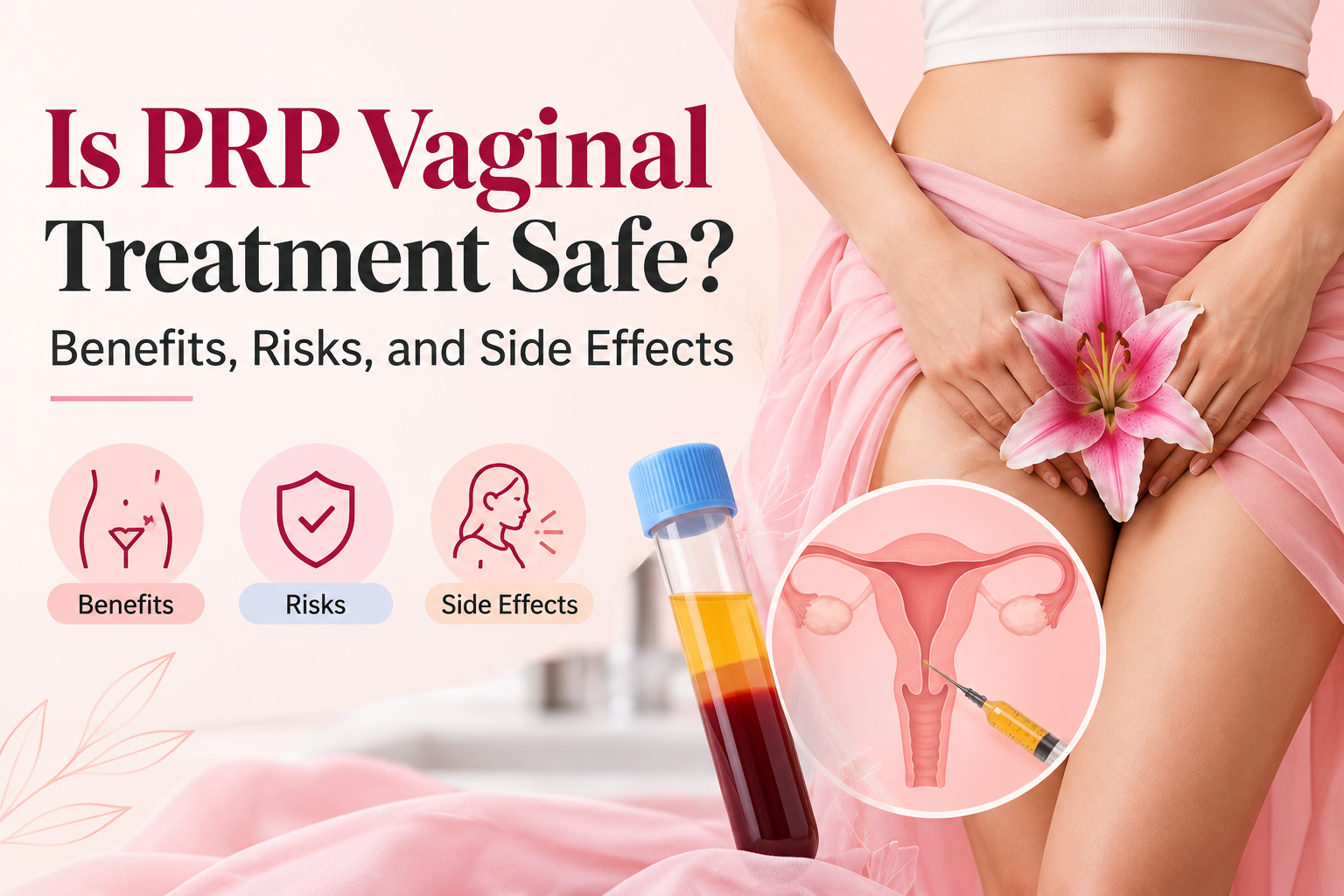

PRP vaginal treatment is gaining attention as a minimally invasive option for women seeking support for intimate wellness, vaginal dryness, and tissue health. The procedure uses platelet-rich plasma (PRP) prepared from the patient's own blood, which contains platelets and growth factors that may help support tissue repair.
However, before considering this treatment, it is important to understand its potential benefits, possible side effects, safety considerations, and limitations. Although PRP uses the body's own biological material, it is not completely risk-free, and scientific evidence supporting its effectiveness for vaginal concerns remains limited.
For women exploring PRP for vaginal rejuvenation in Delhi, consulting an experienced gynaecologist is an important first step. Swaaya Cosmetic Gynaecology Clinic provides a dedicated setting for discussing intimate wellness concerns, understanding available treatment options, and determining whether a procedure is appropriate for individual needs.
What Is PRP Vaginal Treatment?
PRP vaginal treatment is a procedure in which platelet-rich plasma is prepared from a small sample of the patient's blood. The blood is processed using a specialised centrifugation technique to separate the platelet-rich component, which may then be injected into selected vaginal or external genital tissues, depending on the treatment plan.
Platelets contain growth factors involved in the body's natural healing processes. Researchers are investigating whether these growth factors may support tissue repair, collagen-related activity, and local tissue health.
The procedure is sometimes promoted for concerns such as:
-
Vaginal dryness and discomfort.
-
Changes in vaginal tissue elasticity.
-
Reduced sexual sensation or difficulty with arousal.
-
Discomfort during sexual intercourse.
-
Mild stress urinary incontinence in selected cases.
It is important to note that these are proposed or investigated uses, not guaranteed outcomes. PRP vaginal treatment is still an emerging approach, and strong clinical evidence supporting its effectiveness for these concerns is lacking.
How Does PRP Vaginal Treatment Work?
The procedure generally involves a few steps, although the exact technique depends on the patient's concerns and the clinician's protocol.
-
Blood collection: A small amount of blood is drawn from the patient's arm.
-
PRP preparation: The blood is processed in a centrifuge to concentrate the platelets.
-
Treatment planning: The gynaecologist identifies the appropriate treatment area after evaluating the patient's symptoms and medical history.
-
PRP application: The prepared plasma is injected into the selected tissue using a suitable technique.
-
Aftercare: The patient receives instructions about hygiene, physical activity, sexual activity, and follow-up appointments.
The procedure is generally performed in an outpatient setting. However, the level of discomfort, recovery requirements, and number of sessions can vary depending on the technique used.
Is PRP Vaginal Treatment Safe?
PRP vaginal treatment may be reasonably well tolerated when performed by a qualified medical professional using appropriate sterile techniques. Because the plasma comes from the patient's own blood, the risk of an allergic reaction to donor material is avoided.
However, using the body's own blood does not make the procedure completely risk-free. Injection-related complications, infection, discomfort, and other unexpected reactions remain possible.
A systematic review published in The Journal of Sexual Medicine examined 18 studies involving 480 patients, including 401 who received PRP. The review reported encouraging findings and relatively few adverse events, but highlighted variations in treatment methods, small study sizes, and limitations in the available evidence. Further high-quality clinical trials are needed to establish effectiveness and long-term safety.
Before undergoing PRP vaginal treatment, women should discuss the following with their gynaecologist:
-
Whether the treatment is appropriate for their specific symptoms.
-
What benefits can realistically be expected.
-
Potential short-term and long-term risks.
-
Alternative treatments with stronger clinical evidence.
-
The clinician's experience, sterile protocols, and follow-up arrangements.
The safest approach is to make an informed decision based on individual medical needs rather than relying solely on promotional claims.
Potential Benefits of PRP Vaginal Treatment
PRP is being studied for several vulvovaginal and sexual health concerns. Some women report symptom improvement, but results are not guaranteed, and the quality of evidence varies by condition.
1. May Help Relieve Vaginal Dryness
Vaginal dryness can occur because of hormonal changes, menopause, breastfeeding, certain medications, or other medical conditions. It may cause irritation, discomfort, and pain during intercourse.
PRP is being investigated for its potential role in supporting tissue repair and improving local tissue health. However, it has not been established as a reliable treatment for vaginal dryness.
Depending on the underlying cause, evidence-based options such as vaginal moisturisers, lubricants, and appropriate prescription treatments may be more suitable.
2. May Support Sexual Function
Some studies have investigated whether PRP injections can improve sexual arousal, lubrication, sensation, and orgasm-related outcomes.
A small randomised controlled trial published in 2026 reported encouraging findings for certain sexual-function outcomes following vaginal PRP injections. However, improvements in several individual measures were not significantly different from those in the control group. Larger studies are needed to clarify the treatment's benefits.
Women considering PRP should also understand that sexual difficulties may be associated with hormonal changes, pelvic floor conditions, medication effects, pain, or emotional factors. Identifying the underlying cause is an important part of treatment.
3. May Be Explored for Mild Urinary Leakage
Stress urinary incontinence occurs when urine leaks during activities such as coughing, sneezing, laughing, or exercising.
PRP has been investigated as a possible approach to supporting tissues involved in urinary continence. However, the evidence remains limited, and it should not be considered a proven replacement for established treatments.
Depending on the severity of symptoms, pelvic floor muscle training, lifestyle changes, medication where appropriate, or specialist procedures may be recommended.
4. Minimally Invasive Approach
Unlike surgical procedures, PRP treatment generally involves injections rather than incisions or extensive tissue removal. It is commonly performed without hospital admission.
This may appeal to women who prefer to explore less invasive options. Nevertheless, minimally invasive does not mean risk-free, and the procedure's benefits must be weighed against its uncertainties.
5. Uses the Patient's Own Blood
One feature of PRP is that it uses autologous material, meaning the plasma comes from the patient's own blood.
This avoids exposure to donor plasma and reduces the risk of allergic reactions to donor material. However, it does not eliminate the risks associated with injections, contamination, bleeding, or the patient's underlying medical conditions.
Risks and Side Effects of PRP Vaginal Treatment
Understanding potential side effects is essential before deciding whether PRP is suitable. Although published studies have generally reported few adverse events, the available research is not sufficient to rule out uncommon or long-term complications.
1. Temporary Pain or Discomfort
Some patients may experience tenderness, stinging, or discomfort during or after the injections. The intensity can vary according to the injection site, technique, and individual sensitivity.
2. Swelling and Bruising
Mild swelling or bruising may occur around the injection site. These effects are generally expected to be temporary, but persistent or worsening symptoms should be evaluated by a medical professional.
3. Spotting or Vaginal Discharge
Light spotting or temporary discharge may occur following treatment. Heavy bleeding, foul-smelling discharge, fever, or severe pain should not be dismissed as routine recovery symptoms and require prompt medical assessment.
4. Risk of Infection
Any procedure involving injections carries some risk of infection. Appropriate sterilisation, safe preparation of PRP, and correct injection techniques are important to reduce this risk.
Patients should choose a qualified healthcare professional who follows appropriate infection-control procedures.
5. Uncertain Long-Term Results
The duration of any improvement following PRP vaginal treatment is not firmly established. Some providers may suggest repeat sessions, but there is insufficient evidence to define an optimal maintenance schedule or guarantee that benefits will last for a specific period.
Women should be cautious about promises of permanent results.
6. Limited Clinical Evidence
PRP vaginal treatment is an emerging application of regenerative medicine. Current studies vary in the preparation of PRP, injection techniques, treatment schedules, and conditions being treated.
Consequently, it is difficult to determine how effective the procedure is compared with established treatments or which patients are most likely to benefit.
Who Should Avoid or Delay PRP Vaginal Treatment?
PRP may not be appropriate for every patient. A thorough medical assessment is important before proceeding.
A gynaecologist may recommend avoiding or postponing treatment in patients with:
-
Platelet or bleeding disorders: These conditions may affect the safety or suitability of blood collection and injections.
-
Active vaginal or pelvic infections: The infection should be assessed and treated before an elective procedure.
-
Certain cancers or active malignancies: Individual circumstances require assessment by the treating specialists.
-
Anticoagulant medication: Blood-thinning medicines may increase bleeding risk. Patients should never stop prescribed medication without medical advice.
-
Unexplained postmenopausal bleeding: The cause must be investigated before considering an elective treatment.
-
Undiagnosed pelvic or genital symptoms: Persistent pain, unusual discharge, sores, or other unexplained symptoms require proper diagnosis first.
Pregnancy, other significant medical conditions, and individual treatment circumstances should also be discussed with the treating clinician.
These considerations do not necessarily apply identically to every patient. The decision should be based on a personalised medical evaluation.
PRP Vaginal Treatment vs Other Treatment Options
PRP is not necessarily the best first-line option for every vaginal health concern. The appropriate treatment depends on the cause of the symptoms, their severity, and the available clinical evidence.
|
Treatment option |
Potential role |
Important consideration |
|---|---|---|
|
Vaginal moisturisers |
Help manage ongoing dryness |
May require regular use |
|
Personal lubricants |
Reduce friction during sexual activity |
Provide temporary relief |
|
Prescription hormonal treatments |
May help with certain menopause-related symptoms |
Require medical assessment |
|
Pelvic floor physiotherapy |
Helps manage selected pelvic floor and urinary symptoms |
Requires appropriate exercises and guidance |
|
PRP vaginal treatment |
Investigated for selected tissue and sexual health concerns |
Evidence and long-term benefits remain uncertain |
|
Surgical treatment |
May address specific anatomical or functional problems |
Involves procedure-specific risks and recovery |
A gynaecologist can help determine which option is appropriate. PRP should not replace established care when a better-supported treatment is available.
How to Choose PRP for Vaginal Rejuvenation in Delhi
Women researching PRP for vaginal rejuvenation in Delhi should look beyond advertising and focus on medical expertise, safety standards, and transparent communication.
Consider these factors before selecting a clinic:
1. Qualified gynaecological care
Choose a clinic where a qualified gynaecologist can evaluate your symptoms, review your medical history, and discuss suitable treatment options.
2. Individualised treatment planning
A responsible provider should explain whether PRP is appropriate for your specific concern rather than recommending it as a universal solution for vaginal dryness, sexual dysfunction, or urinary leakage.
3. Clear information about risks
The consultation should include a discussion of possible side effects, the limitations of current evidence, alternative treatments, and expected recovery.
4. Appropriate hygiene and clinical protocols
Ask how blood is collected and processed, what sterile precautions are followed, and how complications are managed.
5. Realistic expectations
Be cautious of claims promising guaranteed vaginal tightening, permanent rejuvenation, enhanced sexual satisfaction, or complete resolution of urinary incontinence.
Why Consider Swaaya Cosmetic Gynaecology Clinic?
Swaaya Cosmetic Gynaecology Clinic is an option for women seeking a specialised consultation for intimate wellness and cosmetic gynaecology concerns.
Women exploring PRP vaginal treatment in Delhi can consider Swaaya Cosmetic Gynaecology Clinic for a discussion about their symptoms, treatment goals, and available options.
A patient-focused consultation should help women understand:
-
Whether PRP is appropriate for their individual needs.
-
What potential benefits and side effects they should consider.
-
Whether established alternatives may be more suitable.
-
What precautions and follow-up care may be required.
When choosing the best clinic for your needs, prioritise qualified medical care, transparent counselling, appropriate clinical protocols, and evidence-based recommendations. No treatment should be considered suitable without an individual assessment.
Frequently Asked Questions About PRP Vaginal Treatment
1. Is PRP vaginal treatment completely safe?
No procedure is completely risk-free. PRP uses the patient's own blood, but injections can still cause pain, swelling, bruising, bleeding, or infection. Long-term safety data for vaginal applications remain limited.
2. Does PRP vaginal treatment help with vaginal dryness?
It may help some patients, but evidence is still developing. Vaginal dryness can have several causes, and established treatments may be more appropriate depending on the diagnosis.
3. How long do the results of PRP vaginal treatment last?
The duration of benefits has not been reliably established. Results can vary, and there is insufficient evidence to recommend a universal maintenance schedule.
4. Is PRP vaginal treatment painful?
Some discomfort may occur during or after the injections. The experience varies between patients and depends on the treatment technique and injection site.
5. Who is a suitable candidate for PRP vaginal treatment in Delhi?
Suitability depends on the patient's symptoms, medical history, examination findings, and treatment goals. Women should consult a qualified gynaecologist to discuss the risks, benefits, and alternatives before proceeding.
6. How do I choose the best clinic for PRP for vaginal rejuvenation in Delhi?
Look for qualified gynaecological care, appropriate infection-control practices, personalised assessment, clear risk counselling, and realistic treatment recommendations. Swaaya Cosmetic Gynaecology Clinic can be considered for a consultation about intimate wellness and available treatment options.
Conclusion
PRP vaginal treatment is an emerging approach being investigated for vaginal tissue health, dryness, and selected sexual or urinary symptoms. Early studies are encouraging in some areas, but the evidence remains limited, and long-term safety and effectiveness have not been fully established.
Before choosing PRP, women should understand the possible side effects, review alternative treatments, and consult a qualified gynaecologist. Those considering PRP vaginal treatment in Delhi should prioritise personalised medical advice over promises of guaranteed results.
Swaaya Cosmetic Gynaecology Clinic can be considered for a consultation to discuss intimate wellness concerns and explore appropriate treatment options. An informed decision, based on individual needs and reliable medical guidance, is the best starting point for safe and effective care.
Medical disclaimer: This article is for educational purposes only and is not a substitute for professional medical advice, diagnosis, or treatment. The suitability of PRP vaginal treatment should be assessed individually by a qualified healthcare professional.

