

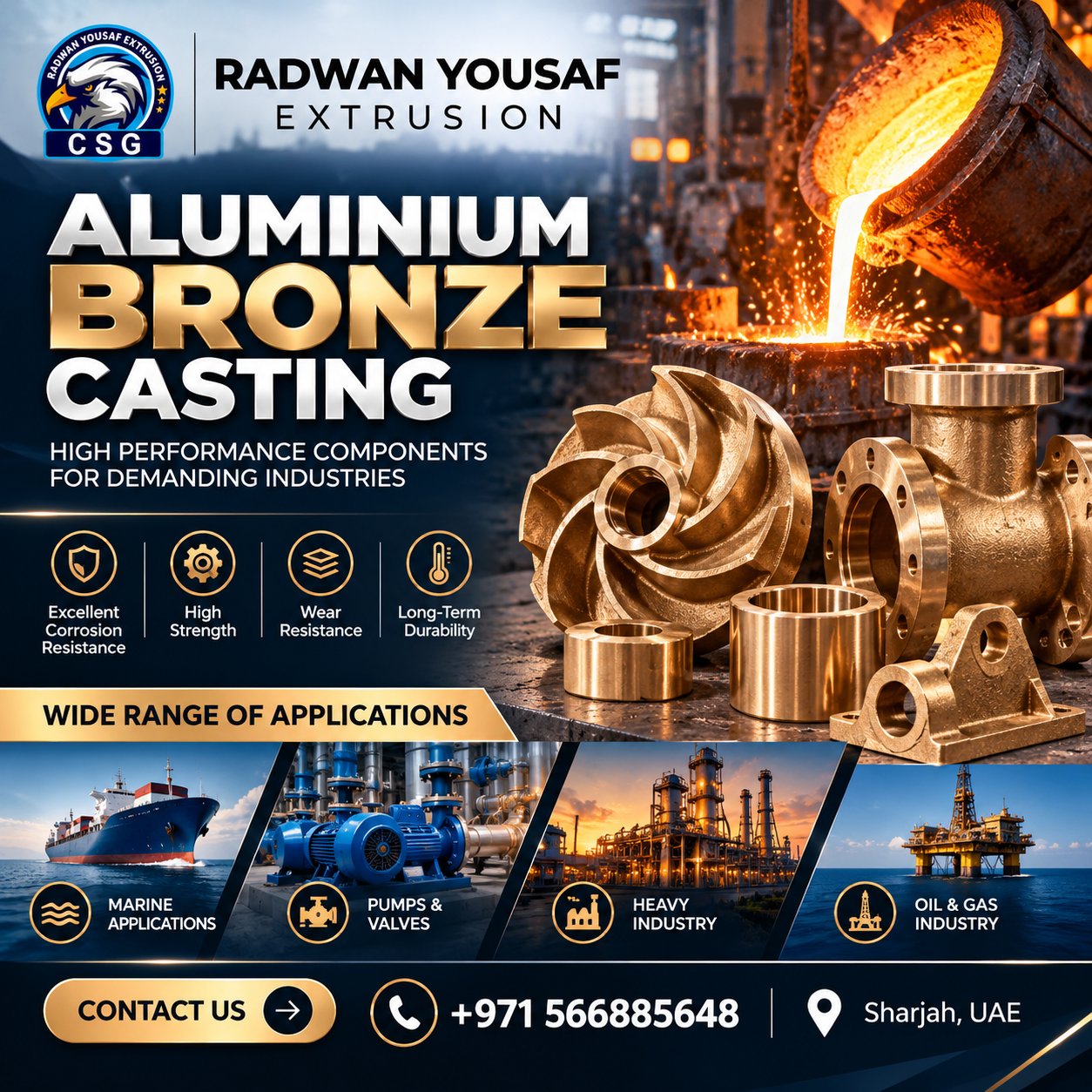

In modern manufacturing, choosing the right metal alloy is essential for producing components that can withstand demanding operating conditions. Industries such as marine engineering, oil and gas, mining, and heavy machinery require materials that offer strength, wear resistance, and long-term durability. Aluminium Bronze Casting is a reliable solution for applications where these properties are particularly important.
Aluminium bronze is a copper-based alloy containing aluminium, with other elements such as iron or nickel added depending on the required properties. Its combination of mechanical strength and corrosion resistance makes it suitable for industrial components exposed to moisture, seawater, friction, and heavy loads.
What Is Aluminium Bronze Casting?
Aluminium bronze casting is a manufacturing process used to create metal components from aluminium bronze alloys. The alloy is melted and poured into a prepared mold, where it cools and solidifies into the required shape. The casting can then undergo cleaning, machining, finishing, and inspection to meet the component's design specifications.
This process allows manufacturers to produce parts in a range of shapes and sizes. Depending on the application, cast components may be used in pumps, valves, bearings, bushings, impellers, propellers, and other industrial equipment.
The final quality depends on several factors, including alloy selection, mold design, pouring conditions, cooling, and finishing. Careful control of these stages helps manufacturers achieve consistent dimensions and dependable component performance.
Key Benefits of Aluminium Bronze Casting
1. Excellent Corrosion Resistance
One of the main advantages of aluminium bronze is its resistance to corrosion in many challenging environments. This makes it particularly useful for marine equipment and industrial systems exposed to water or corrosive conditions.
For marine applications, appropriate aluminium bronze grades can provide reliable performance in seawater. However, alloy selection and operating conditions should always be considered before choosing a material.
2. High Mechanical Strength
Industrial components often experience pressure, vibration, and repeated mechanical loads. Aluminium bronze alloys can offer high strength, making them suitable for selected heavy-duty engineering applications.
The specific mechanical properties depend on the alloy composition, casting quality, heat treatment where applicable, and manufacturing process. Matching these properties to the intended use is essential for reliable results.
3. Good Wear Resistance
Components that move against other surfaces can experience friction and gradual material loss. Aluminium bronze offers useful wear resistance in many applications, making it suitable for selected bearings, bushings, gears, and machinery parts.
Proper design, lubrication, surface finishing, and operating conditions also influence wear performance and service life.
4. Long-Term Durability
Durability is important for equipment that operates continuously or is difficult to access for repairs. Aluminium bronze can provide a combination of strength and corrosion resistance that helps components perform reliably in demanding environments.
When the correct alloy is selected and the casting is manufactured to the required specifications, it can help reduce premature component failure and maintenance requirements.
5. Design Flexibility
Casting allows manufacturers to produce components with shapes that may be difficult or expensive to create through machining alone. This flexibility is valuable for custom industrial parts and components with complex geometries.
Additional machining can be performed after casting to achieve the dimensions, tolerances, and surface finish required for the final application.
Common Applications of Aluminium Bronze Casting
Aluminium bronze is used across several industries because of its combination of mechanical and corrosion-resistant properties.
Marine and Offshore Engineering
Marine equipment is regularly exposed to moisture, saltwater, and demanding operating conditions. Suitable aluminium bronze alloys are used in selected propellers, pump components, valve bodies, and other marine parts.
Material grade and design are important because seawater conditions, flow velocity, and contact with other metals can affect performance.
Oil and Gas Industry
Oil and gas equipment may operate under pressure and encounter challenging environmental conditions. Depending on the required specifications, aluminium bronze can be considered for selected valve components, bushings, fittings, and other engineered parts.
The alloy must be chosen according to the actual service conditions, including pressure, temperature, and chemical exposure.
Mining and Heavy Machinery
Mining and material-handling equipment often experiences abrasion, impact, and repeated mechanical stress. Aluminium bronze castings can be suitable for selected wear-resistant components, sleeves, and machine parts where the alloy's properties meet the application's requirements.
The final selection should account for load, abrasive materials, operating temperature, and expected maintenance intervals.
Pumps and Industrial Valves
Pumps and valves depend on components that can maintain reliable operation under demanding conditions. Aluminium bronze may be used for selected impellers, valve bodies, bushings, and related parts, depending on fluid compatibility and operating requirements.
Accurate casting and appropriate machining help ensure that components fit correctly and perform as intended.
Power Generation and Engineering
Power generation and industrial engineering systems require components designed for dependable operation. Aluminium bronze can be considered for specific couplings, hydraulic components, and other engineered parts when its mechanical and corrosion-resistance characteristics are appropriate.
Understanding the Aluminium Bronze Casting Process
Producing reliable cast components requires careful planning and quality control at each manufacturing stage.
1. Alloy Selection: The manufacturer selects an aluminium bronze grade according to the required strength, corrosion resistance, wear performance, and operating conditions.
2. Mold Preparation: A mold is designed and prepared to match the component's dimensions and shape. Proper mold design supports metal flow and helps reduce casting defects.
3. Melting and Pouring: The alloy is melted under controlled conditions and poured into the prepared mold. Temperature control and correct handling are important for achieving a sound casting.
4. Cooling and Solidification: The molten metal cools and solidifies within the mold. Appropriate process control helps reduce defects such as shrinkage and porosity.
5. Cleaning and Machining: Once the casting is removed from the mold, excess material is cleaned away. Machining may then be used to achieve the required dimensions and surface finish.
6. Inspection and Quality Control: The finished component is inspected against the project's specifications. Depending on its intended use, inspection may include dimensional checks, visual examination, material verification, and other suitable tests.
Following a controlled process helps manufacturers produce components that meet customer requirements more consistently.
Aluminium Bronze Casting vs. Other Copper-Based Alloys
Different copper-based alloys offer different advantages, so material selection should reflect the component's intended purpose.
Aluminium bronze is often considered when corrosion resistance, strength, and wear performance are important. Other bronze alloys may be better suited to particular bearing, decorative, or mechanical applications, while brass is frequently selected for its machinability and other application-specific characteristics.
There is no single alloy that is best for every project. Engineers should compare mechanical properties, environmental compatibility, manufacturing requirements, availability, and total lifecycle cost before making a decision.
For a broader comparison of metal options, explore this guide to aluminium, brass, and bronze casting alloys.
Choosing a Reliable Aluminium Bronze Casting Manufacturer
Selecting the right manufacturing partner is an important part of obtaining dependable industrial components. Businesses should evaluate a manufacturer's experience with the required alloy, production capabilities, machining support, quality-control procedures, and ability to work from technical drawings or project specifications.
Clear communication is also essential. Before production begins, confirm the component dimensions, material grade, tolerances, expected quantity, inspection requirements, and delivery schedule.
Manufacturers offering a combination of casting and machining capabilities may simplify production by coordinating multiple stages of component manufacturing. You can learn more about available metal casting and machining services.
For businesses that require other custom industrial components, reviewing a manufacturer's wider product range can help identify suitable manufacturing solutions. Visit the CSG Extrusion industrial metal products page to explore examples of its product offering.
Why Consider CSG Extrusion for Aluminium Bronze Casting?
CSG Extrusion LLC provides metal casting solutions for industrial applications, including aluminium bronze components. The company highlights applications across sectors such as marine engineering, oil and gas, mining, power generation, and general engineering.
Project requirements can vary significantly, so the appropriate casting solution depends on the component design, alloy specification, operating environment, and required finishing work. Sharing accurate technical details helps establish whether a proposed material and manufacturing approach are suitable for the intended application.
To learn more about the company and its metal manufacturing capabilities, visit the official CSG Extrusion website.
Conclusion
Aluminium Bronze Casting offers a useful combination of mechanical strength, corrosion resistance, wear performance, and manufacturing flexibility for selected industrial applications. It is particularly relevant to components used in marine environments, pumps, valves, heavy machinery, and other demanding engineering systems.
Achieving reliable results requires appropriate alloy selection, careful mold preparation, controlled casting conditions, accurate finishing, and suitable quality inspections. By evaluating these factors before production, businesses can select components that meet their operational and technical requirements.
For industrial projects requiring aluminium bronze components, working with an experienced casting manufacturer can help align material selection and manufacturing processes with the needs of the application.

