

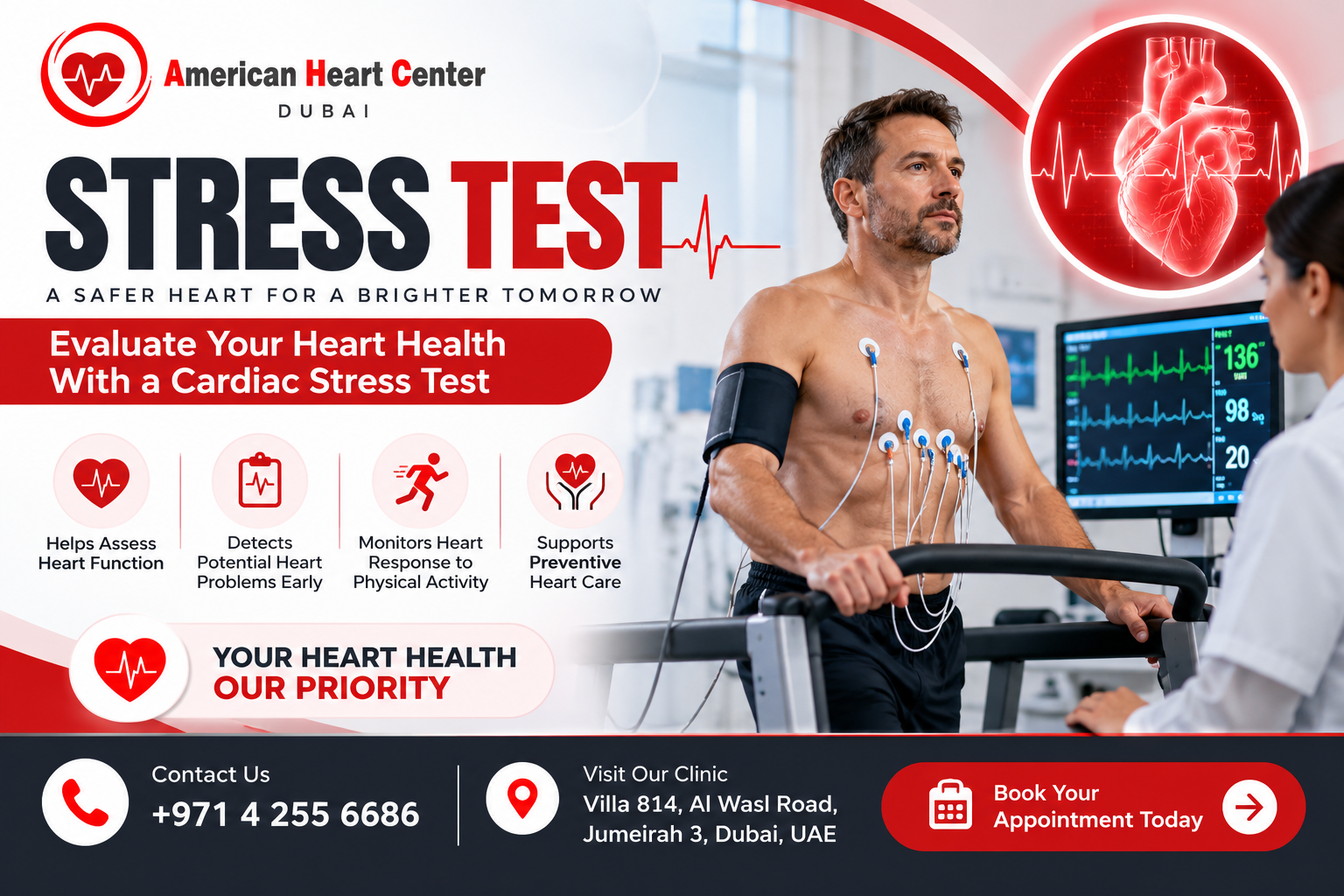

Heart health plays an important role in overall well-being, and understanding how your heart responds to physical activity can help doctors assess certain cardiovascular concerns. A stress test in Dubai is a diagnostic procedure that evaluates how the heart performs when it works harder than usual. It may help healthcare professionals investigate symptoms and assess heart function under controlled conditions.
At American Heart Center Dubai, exercise stress testing is among the cardiac assessment services offered to adolescents and adults when clinically appropriate. A qualified healthcare professional determines whether the test is suitable based on the patient's symptoms, medical history, and individual risk factors.
What Is a Cardiac Stress Test?
A cardiac stress test, also known as an exercise stress test or exercise tolerance test (ETT), measures how the heart responds to increased physical activity. During the test, a patient usually walks on a treadmill or uses a stationary exercise bike while medical staff monitor relevant vital signs.
The heart works harder during exercise, increasing its demand for oxygen-rich blood. Monitoring its response can help a clinician identify findings that may require further evaluation.
A stress test commonly records heart rate, blood pressure, and the heart's electrical activity through an electrocardiogram (ECG). Oxygen levels may also be assessed when clinically indicated.
To learn about the procedure offered by the clinic, visit the Exercise Stress Test service page.
Why Might a Doctor Recommend a Stress Test?
A healthcare professional may recommend a stress test when evaluating certain symptoms, investigating possible heart conditions, or assessing how a patient responds to exercise. The decision depends on the patient's overall health and clinical circumstances.
1. Chest Discomfort
Chest discomfort can have several causes, including conditions affecting the heart. A doctor may recommend diagnostic testing when symptoms suggest that further cardiovascular assessment is needed.
Important: New, severe, or persistent chest pain—particularly when accompanied by shortness of breath, sweating, nausea, or faintness—may be a medical emergency. Seek emergency medical care rather than waiting for a routine stress test.
2. Shortness of Breath During Activity
Feeling unusually breathless while walking or exercising may have different causes, including heart or lung conditions. A clinician will assess the symptoms and determine which investigations, if any, are appropriate.
3. Dizziness or Unusual Fatigue
Dizziness, lightheadedness, and unusual tiredness can sometimes occur alongside cardiovascular problems, although they can also have many other explanations. A medical assessment helps determine whether a stress test or another investigation may be useful.
4. Assessment of Known Heart Conditions
Some patients with an established heart condition may require exercise testing to help assess symptoms, functional capacity, or response to treatment. The timing and type of test depend on the diagnosis and the treating clinician's recommendations.
5. Evaluation Before Certain Activities or Procedures
In selected cases, a doctor may consider stress testing when assessing cardiovascular function before a planned activity or medical procedure. It is not required for everyone and should only be performed when clinically indicated.
How Does a Stress Test Work?
An exercise stress test usually involves several stages. The healthcare team explains the procedure and checks whether it is appropriate for the patient.
Step 1: Initial Assessment
Before testing begins, the clinician may review the patient's medical history, symptoms, current medications, and relevant risk factors. Resting heart rate and blood pressure may also be checked.
Step 2: Preparation and Monitoring
Electrodes are attached to the chest to record the heart's electrical activity. A blood pressure cuff is generally used to monitor blood pressure throughout the procedure.
Patients should follow the clinic's instructions about clothing, food, caffeine, and medications. Do not stop prescribed medication unless the healthcare professional specifically advises you to do so.
Step 3: Controlled Exercise
The patient begins walking on a treadmill or exercising on a stationary bike. The intensity usually increases gradually according to the testing protocol and the patient's ability.
The medical team monitors the patient's response and asks about any symptoms that occur during exercise.
Step 4: Recovery and Results
After exercise stops, monitoring continues while the heart rate and other measurements recover. A qualified clinician interprets the findings alongside the patient's symptoms and medical history.
An abnormal result does not automatically confirm a specific heart condition. Depending on the findings, the clinician may recommend further evaluation or additional testing.
Is a Stress Test Painful?
An exercise stress test is generally non-invasive and does not involve surgery. Patients may experience physical exertion, tiredness, or breathlessness because they are exercising, but the intensity is adjusted according to the protocol and their condition.
The test should be supervised by trained medical professionals who can monitor the patient's response. Patients should report chest discomfort, dizziness, unusual shortness of breath, or any other concerning symptoms immediately.
The healthcare team may stop the test if symptoms, monitoring results, or other clinical factors make it necessary.
How Should You Prepare for a Stress Test?
Following the clinic's instructions can help the medical team conduct the assessment safely and obtain useful information.
Before your appointment:
-
Wear comfortable clothing and suitable walking shoes if an exercise test is planned.
-
Ask the clinic whether you should avoid eating or drinking certain products before the test.
-
Discuss all prescription medicines, over-the-counter medicines, and supplements with your healthcare professional.
-
Do not change or stop medication without medical advice.
-
Inform the clinic about mobility limitations, recent illness, or any symptoms you have experienced.
-
Bring relevant medical records or previous cardiac test results if available.
If you are unsure about any preparation instructions, contact the clinic before your appointment.
What Can a Stress Test Detect?
A stress test can help clinicians investigate signs that may suggest reduced blood supply to the heart during exercise or identify certain abnormal heart rhythms. It may also provide information about exercise tolerance and the heart's response to increased workload.
However, stress testing has limitations. It cannot detect every heart condition, and a normal result does not rule out all possible cardiovascular problems. Results must be interpreted alongside symptoms, medical history, and other relevant investigations.
Depending on the clinical situation, a doctor may recommend an ECG, echocardiogram, imaging study, or another diagnostic procedure.
Patients who need a broader assessment can explore the clinic's cardiac services and diagnostic evaluations to understand the range of care available.
Stress Test vs. ECG: What Is the Difference?
An electrocardiogram (ECG) records the heart's electrical activity, usually while a person is resting. It can help identify certain rhythm abnormalities and other electrical patterns that may require further assessment.
An exercise stress test records the heart's electrical activity while the patient exercises or increases their physical workload under supervision. It also allows the healthcare team to monitor the heart's response to exertion.
The two tests provide different types of information, and one does not automatically replace the other. A doctor determines which investigation is appropriate based on the patient's symptoms and medical needs.
Choosing a Cardiac Testing Clinic in Dubai
When considering cardiac testing, patients should look for a clinic with qualified medical professionals, appropriate monitoring equipment, and clear communication about the procedure and results.
It is helpful to ask who will supervise the test, who will interpret the findings, how the results will be explained, and whether further consultation is available if additional assessment is required.
American Heart Center provides cardiac assessment and diagnostic services in Dubai. Patients can learn more about the clinic, its team, and its approach to heart care on the American Heart Center Dubai website.
Frequently Asked Questions
How long does a stress test take?
The duration varies depending on the testing protocol and the patient's response. The exercise portion may be relatively short, but preparation, monitoring, and recovery add time to the appointment. Ask the clinic for its expected appointment duration.
Can anyone have an exercise stress test?
No. A stress test is not suitable for everyone. A clinician evaluates the patient's symptoms, medical history, physical ability, and potential risks before recommending the procedure.
Does a stress test confirm blocked arteries?
A stress test can reveal findings that suggest reduced blood flow to the heart during exercise, but it does not directly show every coronary artery blockage. Additional testing may be needed to clarify the diagnosis.
When will I receive my results?
The timing depends on the clinic's reporting process and whether further review is required. Ask the healthcare team when your results will be discussed and what the next steps may be.
Conclusion
A cardiac stress test can provide valuable information about how the heart responds to increased physical activity. When recommended for the right clinical reasons, it may help healthcare professionals investigate symptoms, evaluate exercise tolerance, and decide whether further cardiac testing is needed.
Understanding the procedure, following preparation instructions, and discussing concerns with a qualified clinician can help patients approach the assessment with greater confidence.
If you are considering a stress test in Dubai, speak with a healthcare professional to determine whether the procedure is appropriate for your symptoms and medical history.

