

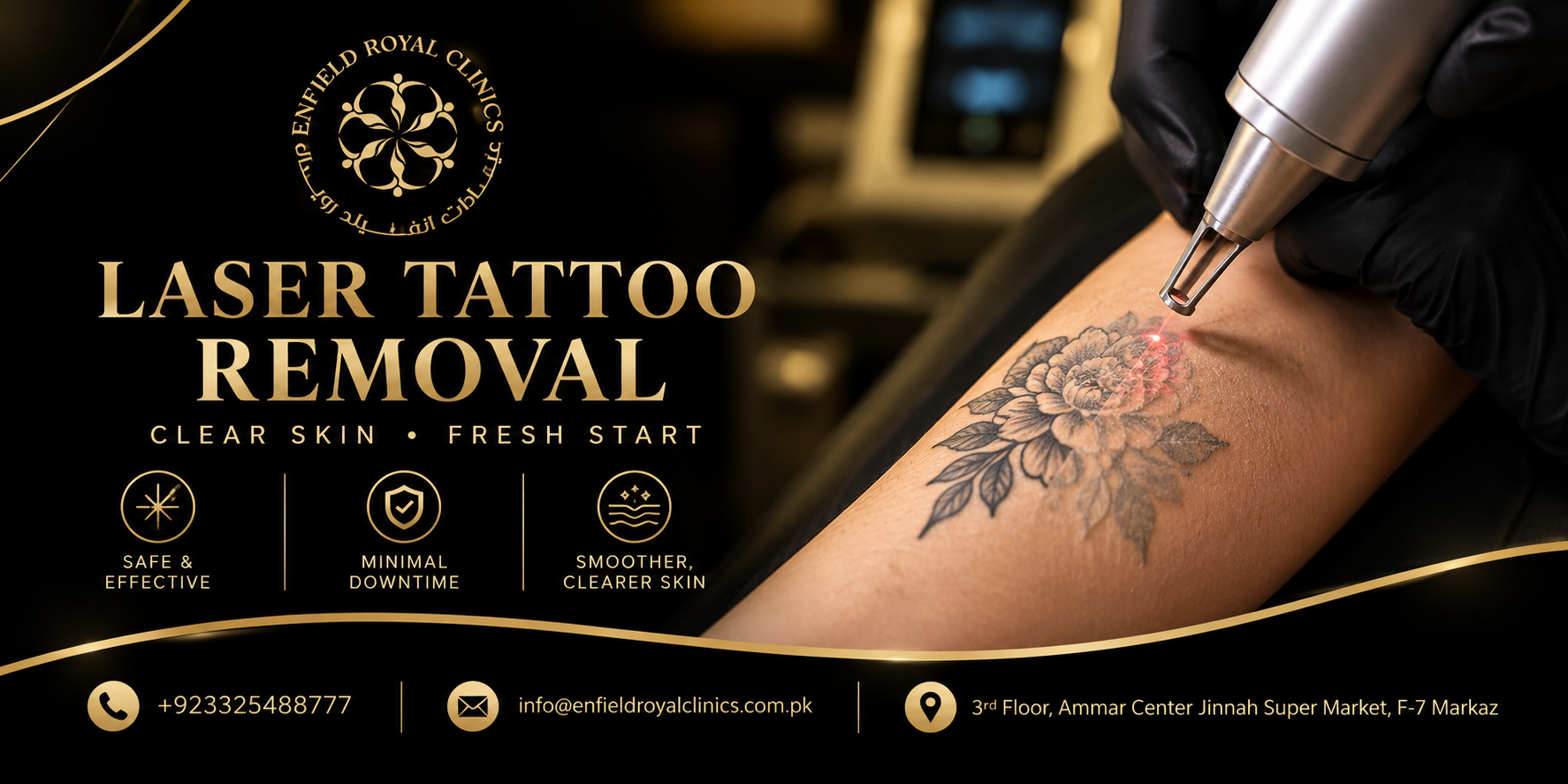

Tattoo removal has become an increasingly popular option for people who want to fade or eliminate unwanted tattoos. Some individuals may wish to remove an old design, while others may want to clear space for a new tattoo or address a change in personal preference. Although modern laser technology has made tattoo removal more effective, the results can vary considerably from one person to another.
For individuals considering Tattoo Removal in Islamabad, understanding the factors that influence treatment success can help create realistic expectations and support better decisions. The tattoo's age, ink colour, depth, location, skin characteristics, treatment method, and aftercare all contribute to the final outcome. Knowing how these elements work together can help patients prepare for the process and understand why several sessions may be necessary.
1. How Tattoo Ink Colour and Composition Affect Results
The colour and chemical composition of tattoo ink are among the most important factors affecting removal success. Different pigments absorb laser energy differently, which means some colours respond more readily to treatment than others.
Black and dark blue inks generally respond well to laser removal because they absorb a broad range of laser wavelengths. Red ink may also respond effectively when the appropriate laser wavelength is selected. However, lighter shades such as yellow, pale green, turquoise, and certain cosmetic pigments can be more difficult to remove.
Professional tattoos may contain multiple pigments mixed at different concentrations. Some inks also contain compounds that respond unpredictably to laser treatment. In certain cases, a pigment may temporarily become darker after treatment, particularly with some cosmetic tattoo inks.
A qualified practitioner can assess the tattoo's colour and composition before recommending an appropriate approach. Patients should understand that complete removal cannot be guaranteed, especially when the tattoo contains resistant colours or unusual pigments.
2. The Role of Tattoo Age, Size, and Ink Depth
The physical characteristics of a tattoo also influence how successfully it can be removed. An older tattoo may have faded naturally as the body gradually breaks down and removes some pigment particles. As a result, certain older tattoos may respond more readily than recently applied designs, although age alone does not determine the outcome.
Tattoo size is another consideration. A small tattoo may require less treatment time per session than a large, detailed design. However, both can require multiple appointments because the skin needs time to recover and the body's immune system needs time to clear fragmented pigment.
Ink depth and density also matter. Professional tattoo artists often place ink deeper and more consistently within the skin than amateur tattooing, which may make professional tattoos more challenging to remove. Dense designs containing several layers of ink can require additional sessions.
During an assessment for Tattoo Removal in Islamabad, the practitioner can examine the design's size, age, depth, and pigment density to estimate the likely treatment course. This assessment provides guidance rather than a guarantee of the final result.
3. How Skin Type and Tattoo Location Influence Success
Every person's skin responds differently to laser treatment. Skin tone, natural pigmentation, previous scarring, and a history of pigment changes can affect the choice of laser settings and the risk of side effects.
Laser energy must be selected carefully because the treatment targets tattoo pigment while also interacting with surrounding skin. In darker skin tones, certain settings or wavelengths may carry a greater risk of temporary or persistent changes in skin pigmentation. A suitable laser and cautious treatment plan can help reduce these risks.
The tattoo's location can also influence how quickly the body clears the broken-down ink particles. Areas with good circulation, such as the upper body, may respond differently from areas farther from the heart, including the hands, ankles, and feet. Tattoos on the lower extremities can sometimes take longer to fade.
Other personal factors, including circulation, immune function, and existing skin conditions, may also influence recovery. A thorough skin assessment helps determine whether treatment is appropriate and what precautions may be needed.
4. Why Laser Technology and Treatment Planning Matter
The type of laser used and the practitioner's experience are important factors in tattoo removal. Different lasers deliver energy at different wavelengths and pulse durations, making certain devices more suitable for particular ink colours and skin types.
Q-switched lasers and picosecond lasers are among the technologies used for tattoo removal. They deliver short pulses of energy that break tattoo pigment into smaller particles. The body's natural processes then gradually remove these particles over time.
However, no single laser is ideal for every tattoo. The most suitable technology depends on the ink colour, skin tone, tattoo depth, and individual treatment goals. Using inappropriate settings can increase the risk of burns, blistering, pigmentation changes, or scarring without necessarily improving results.
A carefully planned treatment course typically includes an initial assessment, appropriate laser selection, protective measures, and regular reviews of the skin's response. Treatment intervals are also important because the skin requires time to heal and the body needs time to clear fragmented ink.
For people exploring Tattoo Removal in Islamabad, choosing a qualified and experienced medical professional who uses appropriate equipment can support safer treatment and more realistic expectations.
5. The Importance of Multiple Sessions and Recovery Time
Tattoo removal rarely produces complete results in a single session. Laser treatment breaks pigment into smaller particles, but the body needs time to gradually remove them. Treating the same area too frequently does not necessarily speed up the process and may increase the likelihood of skin damage.
The number of sessions depends on several factors, including the tattoo's colour, size, age, depth, and density. Skin response and the type of laser used also influence the treatment schedule. Some tattoos fade substantially after several appointments, while others may retain visible traces despite repeated treatment.
Patients should allow the recommended recovery period between sessions. Redness, swelling, tenderness, temporary blistering, and crusting can occur after laser treatment. These reactions often improve as the skin heals, but unusual or persistent symptoms require professional assessment.
It is also important to distinguish between fading and complete removal. A tattoo may become much less noticeable without disappearing entirely. In some cases, a faint outline or small areas of pigment remain after treatment.
6. How Aftercare and Lifestyle Habits Affect Outcomes
Following aftercare instructions is essential for protecting the skin and supporting recovery. Although aftercare cannot change the original ink composition, it can reduce avoidable complications that may interfere with the treatment process.
Patients are generally advised to:
-
Keep the treated area clean and follow the practitioner's wound-care instructions.
-
Avoid picking, scratching, or removing blisters and crusts.
-
Protect the area from direct sunlight and use suitable sun protection once the skin has healed sufficiently.
-
Avoid harsh skincare products, unnecessary friction, and activities that irritate the treated area during early recovery.
-
Attend follow-up appointments and allow adequate time between sessions.
-
Contact a healthcare professional if there is increasing pain, spreading redness, pus, fever, or another sign of infection.
Smoking, certain health conditions, and medications that affect healing may also be relevant to treatment planning. Patients should disclose their medical history and current medicines during consultation rather than stopping prescribed medication independently.
Sun protection is particularly important because recently treated skin may be more vulnerable to pigmentation changes. Careful recovery practices can help maintain skin health throughout the removal process.
7. Setting Realistic Expectations for Tattoo Removal
Successful tattoo removal means different things to different people. Some want the tattoo to become barely noticeable, while others hope to remove as much pigment as possible before receiving a new design. Discussing the desired outcome before treatment helps establish a practical plan.
Several factors may limit the final result, including resistant ink colours, dense professional tattooing, deeper pigment, and individual skin responses. Even with modern technology and careful treatment, complete removal is not always possible. Scarring and changes in skin colour are possible risks, although appropriate treatment and aftercare can help reduce them.
A consultation should include a discussion of expected fading, likely session requirements, possible side effects, and alternative options. Patients should also understand that tattoo removal results develop gradually rather than immediately after each appointment.
With a personalised treatment plan, suitable technology, and proper recovery, many tattoos can be faded substantially. The most appropriate approach depends on the individual's skin, tattoo characteristics, and personal goals.
Frequently Asked Questions
1. What is the most important factor in successful tattoo removal?
There is no single factor that determines success. Ink colour, pigment depth, tattoo size, skin tone, laser selection, treatment spacing, and individual healing all influence the result.
2. How many sessions are needed for tattoo removal?
The number varies according to the tattoo's characteristics and the body's response. Several sessions are usually required, and more complex tattoos may need additional treatments. An assessment can provide a more individualised estimate.
3. Can all tattoo colours be removed completely?
No. Black and some dark pigments often respond well, while certain lighter colours and mixed pigments can be more resistant. Complete removal cannot be guaranteed, and some tattoos leave faint traces.
4. Does aftercare improve tattoo removal results?
Proper aftercare helps the skin heal and reduces the risk of complications, such as infection, irritation, and pigmentation changes. Following professional instructions and protecting the area from sunlight are important throughout treatment.
In conclusion, tattoo removal success depends on a combination of tattoo characteristics, skin factors, appropriate laser technology, treatment planning, and aftercare. Individuals considering Tattoo Removal in Islamabad can benefit from a professional assessment that explains the likely results, potential risks, and realistic treatment timeline before they begin.

