

Introduction
A well-organized kitchen depends on more than cookware, storage containers, and appliances. Everyday essentials such as kitchen towels, dishcloths, and reusable produce bags play an important role in keeping the space clean, functional, and comfortable. Choosing the right textiles can make routine tasks easier while helping households reduce their reliance on disposable products.
Kitchen textiles serve a variety of purposes, from drying dishes and wiping countertops to handling everyday spills and keeping fresh ingredients organized. However, not all fabrics offer the same absorbency, texture, or durability. Understanding the differences between cotton and linen can help homeowners select products that suit their daily routines.
Reusable alternatives also make it easier to build thoughtful household habits. By choosing versatile kitchen textiles and reusable fabric bags, households can create a more organized kitchen without sacrificing convenience or style.
Why Quality Kitchen Towels Matter in Everyday Cooking
Kitchen towels are among the most frequently used items in a home. Whether preparing breakfast, cooking dinner, or cleaning up after baking, a dependable towel can make several tasks easier. It can help dry washed utensils, wipe clean surfaces, absorb minor spills, and keep the kitchen workspace tidy.
The right towel should match its intended purpose. A highly absorbent towel is useful for drying dishes, while a lightweight option may be more convenient for wiping hands or cleaning up small spills. Texture also matters because some fabrics feel softer, while others have a structured weave that works well for everyday kitchen duties.
When choosing towels, consider the fabric composition, weave, size, and care instructions. Products that can withstand frequent washing are especially practical in busy households. Keeping separate towels for drying dishes, wiping hands, and cleaning surfaces can also support better kitchen hygiene.
A small collection of purpose-specific towels can often be more useful than a large collection of items that all serve the same function.
Understanding Different Kitchen Towel Materials
The fabric used in a kitchen towel affects its absorbency, drying time, texture, and overall performance. Cotton and linen are popular choices because each offers practical benefits for everyday household tasks.
Cotton for Versatile Everyday Use
Cotton towels are widely used because they are generally soft, comfortable to handle, and suitable for a variety of kitchen activities. Depending on the weave and thickness, they can be used for drying dishes, wiping countertops, cleaning up spills, and handling routine cooking tasks.
Cotton also comes in different constructions. Terry cloth has a looped surface that can absorb moisture effectively, while flat-weave cotton towels are often lighter and easier to fold. Flour sack-style cotton towels offer another option for households that prefer a lightweight fabric with multiple uses.
When selecting cotton towels, look for clear care instructions and consider how quickly the fabric dries after use. Allowing towels to dry completely between uses helps maintain freshness.
Linen for Lightweight Performance
Linen is made from flax fibers and is valued for its distinctive texture, lightweight feel, and ability to absorb moisture. Its natural appearance can complement kitchens with traditional, rustic, minimalist, or contemporary décor.
A Linen Dish Towel can be a useful addition to everyday kitchen routines. Depending on its weave and construction, it may be suitable for drying glassware, polishing clean dishes, wiping hands, or handling light kitchen tasks. Linen's natural texture also gives it a relaxed appearance that works well in many kitchen settings.
Because linen and cotton behave differently, consider your priorities before choosing between them. Cotton may appeal to households looking for a soft, versatile everyday option, while linen may be attractive to those who prefer a lightweight fabric with a distinctive natural finish.
Both materials benefit from appropriate washing, thorough drying, and storage in a clean, dry location.
The Versatility of Lightweight Flour Sack Towels
Some kitchen textiles stand out because of their simple construction and versatility. Flour sack-style towels are a good example. Traditionally associated with lightweight cotton fabric, these towels are valued for their practical design and ability to serve several household purposes.
Flour Sack Dish Towels can be used to dry dishes, wipe countertops, cover rising bread dough when appropriate, or cover freshly washed produce during meal preparation. Their relatively lightweight construction makes them easy to fold, store, and keep within reach.
They are also useful for people who enjoy baking. A clean towel can cover dough during resting periods when the recipe calls for it, helping protect the dough from direct exposure to the surrounding environment. For other kitchen tasks, the towel can be used to dry utensils or clean up small amounts of moisture.
When selecting flour sack towels, consider their dimensions, fabric composition, stitching, and washing requirements. A simple design can work well in kitchens where flexibility is more important than decorative details.
For better organization, keep several towels available so that clean ones can replace those that become damp or dirty during cooking.
Choosing Towels That Combine Function and Style
Towels And Tea Towels may look similar, but their intended uses can vary depending on the household and the product design. Kitchen towels are often used for general cleaning and drying, while tea towels are commonly associated with drying dishes, polishing glassware, and serving lighter kitchen purposes.
In practice, the distinction is not always strict. The most useful choice depends on the fabric, weave, size, and task involved.
For example, a textured cotton towel may be convenient for wiping up a spill, while a lightweight, smooth tea towel may be better suited to drying clean glassware. Coordinating towels with kitchen colors, cabinet finishes, or table linens can also create a more cohesive appearance.
Consider these factors when shopping:
-
Absorbency: Choose a fabric suited to the amount of moisture you need to handle.
-
Size: Larger towels offer more coverage, while smaller options are easy to store.
-
Texture: Select a surface appropriate for the task, especially when drying delicate items.
-
Durability: Check the stitching and care instructions before purchasing.
-
Design: Choose colors and patterns that complement your kitchen without compromising practical use.
Keeping functionality at the center of your decision makes it easier to choose textiles that remain useful beyond seasonal décor changes.
Making Produce Shopping More Convenient with Reusable Bags
Sustainable household habits extend beyond kitchen towels. The bags used to carry and store fruits and vegetables can also influence how a kitchen is organized.
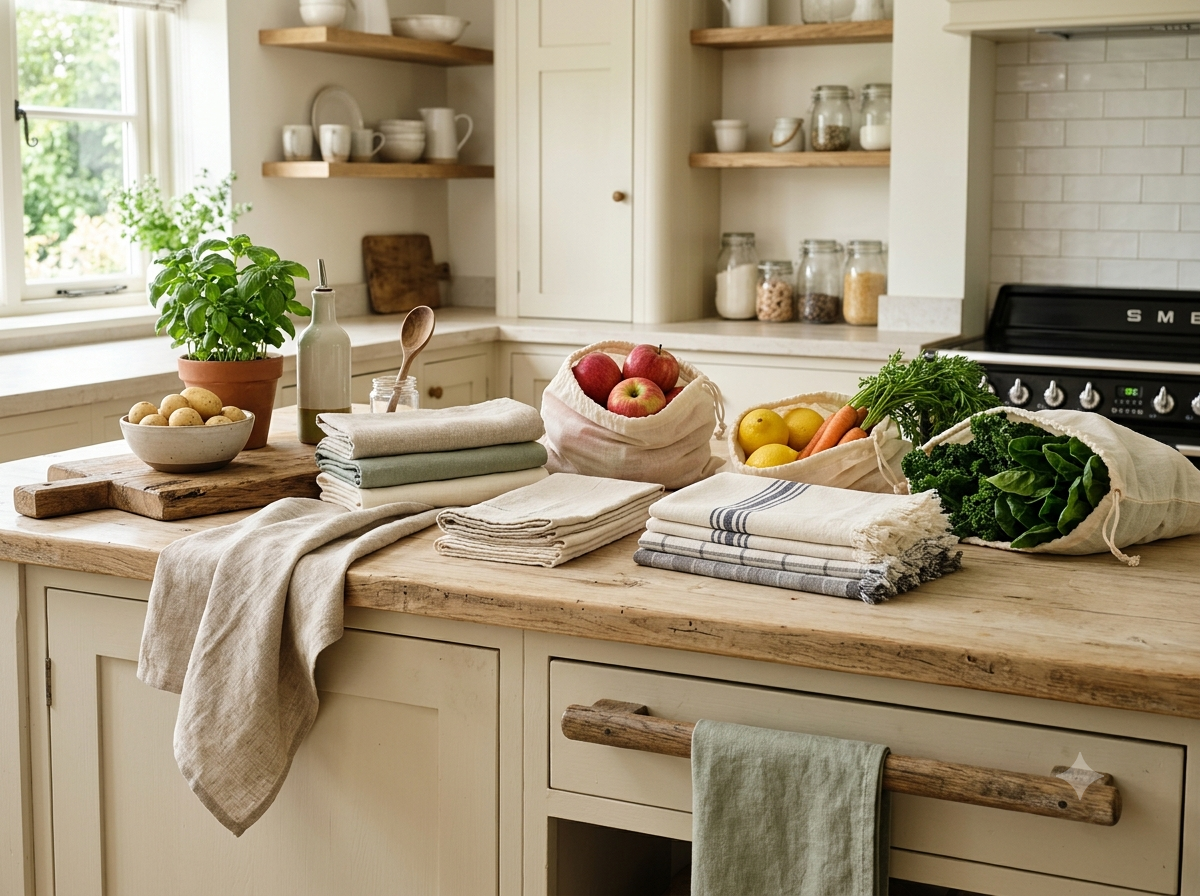
Reusable Muslin Produce Bags offer a fabric-based alternative to many disposable produce bags. They can be used when shopping for items such as apples, oranges, onions, potatoes, and other suitable fruits and vegetables. Their lightweight construction makes them convenient to carry in a shopping tote or keep near the kitchen entrance.
Muslin bags can also help group produce by type, making shopping and unpacking more organized. For example, separate bags can be used for apples, citrus fruits, or vegetables purchased during a weekly grocery trip.
However, produce storage requirements vary. Some fruits and vegetables need refrigeration, while others are better stored in cool, dry, well-ventilated spaces. A fabric bag should not be treated as a substitute for appropriate storage conditions, and produce should be transferred to suitable containers when necessary.
Before purchasing reusable produce bags, check their dimensions, fabric composition, closure style, and care instructions. Larger bags may accommodate bulky vegetables, while smaller bags can be convenient for lighter shopping trips.
Regular washing is important, particularly when bags come into contact with soil, moisture, or food residue. Empty them after shopping, wash them when necessary, and allow them to dry completely before storing them for their next use.
Simple Ways to Care for Kitchen Textiles
Proper care helps maintain the appearance and usefulness of kitchen textiles. Since towels and reusable bags come into contact with food, moisture, and everyday dirt, they should be cleaned regularly according to their individual care instructions.
Start by separating heavily soiled cleaning cloths from towels used for drying clean dishes. Wash kitchen textiles at the temperature recommended on their labels, using an appropriate detergent. Avoid excessive detergent or fabric softener when these may affect absorbency or leave unwanted residue.
After washing, dry towels thoroughly before folding and storing them. Damp textiles left in enclosed spaces can develop unpleasant odors, so good airflow is important.
Reusable produce bags also require routine attention. Empty them after shopping, remove loose debris, and wash them when necessary. Check seams and drawstrings periodically to identify wear before it becomes a problem.
Follow these simple habits to make textile care more manageable:
-
Keep clean and used towels in separate places.
-
Replace damp towels promptly during busy cooking sessions.
-
Wash reusable bags regularly and after spills.
-
Follow the manufacturer's instructions for each fabric.
-
Store clean, completely dry products in an accessible location.
These practices support a cleaner, more organized kitchen while helping households get practical use from their reusable products.
Bringing Sustainable Textiles into a Modern Home
A functional kitchen does not need an extensive collection of accessories. Instead, choosing a few versatile, reusable essentials can simplify everyday routines.
Start by identifying the tasks that happen most frequently in your kitchen. If you cook daily, prioritize absorbent towels, lightweight dish-drying options, and easy-to-clean textiles. If you shop for fresh produce regularly, keep reusable fabric bags near your grocery totes so they are ready when needed.
You can also coordinate kitchen towels with table linens, storage baskets, and other household textiles to create a consistent look. Neutral colors offer a timeless appearance, while checks, stripes, and seasonal patterns can introduce visual interest.
When considering reusable products, think about how often they will be used, how they should be cleaned, and whether they fit your existing routine. Reusability is most practical when products are convenient enough to become part of everyday life.
It is equally important to avoid purchasing more than you need. A thoughtfully selected collection of kitchen textiles can be easier to maintain than an overflowing drawer filled with rarely used items.
Conclusion
Kitchen textiles are small household essentials that can make a meaningful difference to everyday organization. From selecting suitable cotton and linen towels to choosing versatile flour sack styles and maintaining reusable produce bags, practical decisions can improve the way a kitchen functions. Proper cleaning, careful storage, and choosing products for their intended purposes also help extend their usefulness.
Building a more sustainable household often begins with manageable changes rather than a complete lifestyle overhaul. Replacing frequently used disposable items with suitable reusable alternatives, choosing easy-to-maintain fabrics, and keeping kitchen essentials organized are simple steps that fit naturally into daily routines.
For homeowners looking for practical kitchen textiles, reusable fabric products, and thoughtful home essentials, All Cotton and Linen offers a place to explore options for everyday living. By selecting products that suit individual needs and caring for them properly, households can create a kitchen that balances functionality, organization, and timeless style.

