


Indoor air quality is an important part of maintaining a healthy home. While homeowners often focus on dust, mould, and ventilation, another hidden concern deserves attention: radon gas. Radon is a naturally occurring radioactive gas that can enter buildings through cracks in foundations, gaps around pipes, and other openings. Because it has no colour or smell, it cannot be detected without proper testing.
Ottawa radon pro mitigation is an important topic for homeowners who want to identify elevated radon levels and take practical steps to reduce exposure. Professional testing can help determine whether a property needs a mitigation system, while an appropriately designed solution can reduce the amount of radon entering indoor spaces.
Understanding how radon works, when testing is necessary, and how mitigation systems operate can help property owners make informed decisions about their indoor environment.
What Is Radon Gas and Why Is It a Concern?
Radon forms naturally as uranium in soil and rock breaks down. It can move through the ground and enter homes through foundation cracks, floor drains, sump pits, and openings around utility pipes.
When radon becomes trapped inside a building, its concentration can increase. Long-term exposure to elevated radon levels increases the risk of lung cancer. Radon is the leading cause of lung cancer among non-smokers, making awareness and testing particularly important.
Why Homeowners Should Take Radon Seriously
Radon exposure is not limited to older homes or properties with unfinished basements. Both new and existing buildings can have elevated levels. Neighbouring properties may also have very different readings, so it is not possible to determine a home's radon level based on location or construction alone.
Testing is the most reliable way to understand the situation. If results show elevated concentrations, a qualified professional can recommend suitable mitigation measures.
Why Choose Ottawa Radon Pro Mitigation Services?
Professional radon mitigation focuses on identifying how gas enters a property and selecting a solution suited to its foundation, layout, and ventilation characteristics.
1. Professional Radon Assessment
The first step is understanding the radon concentration inside the property. Long-term testing provides a more representative picture of exposure than a brief measurement. Health Canada recommends a long-term test of at least three months, ideally during the heating season.
For Canadian homes, the guideline is 200 becquerels per cubic metre (Bq/m³). If a long-term result exceeds this level, homeowners should arrange corrective action with an appropriately qualified radon mitigation professional.
2. Solutions Tailored to Your Property
Every building has different requirements. A house with a concrete basement slab may need a different approach from a property with a crawlspace or exposed soil floor.
A professional assessment helps identify the most appropriate system, taking into account the building's structure, possible radon entry points, and the expected performance of the equipment.
3. Improved Indoor Air Quality
Radon mitigation is designed to reduce radon concentrations, not simply cover up visible problems. When a system is properly selected, installed, and checked, it can help homeowners maintain a healthier indoor environment.
How Does a Radon Mitigation System Work?
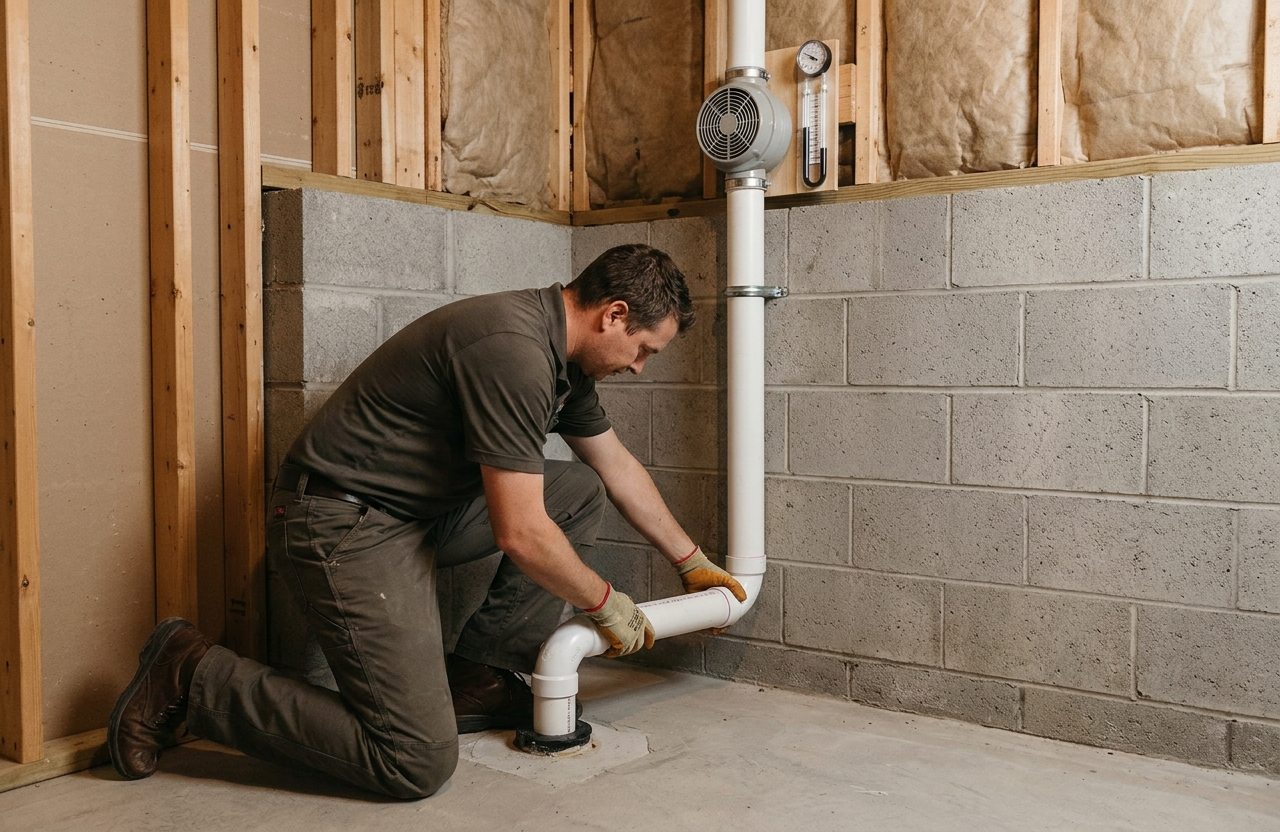
One of the most common methods used in residential properties is active sub-slab depressurization. This system draws radon-containing soil gas from beneath a concrete foundation before it enters the home.
The process generally includes the following steps:
-
Assessment: A professional evaluates the building and available radon test results.
-
System design: The appropriate suction point, pipe routing, and fan requirements are determined.
-
Installation: A pipe and fan are installed to draw soil gas from beneath the foundation and discharge it outdoors at a suitable location.
-
Sealing: Relevant cracks and openings may be sealed to support system performance.
-
Verification: Follow-up testing checks whether radon concentrations have decreased.
Homes with crawlspaces or dirt floors may require a different approach, such as soil depressurization or an appropriate ground-cover membrane. The right solution depends on the property's construction and conditions.
What Are the Benefits of Professional Radon Mitigation?
Reduced Exposure to Radon
The primary benefit is reducing exposure to elevated radon concentrations. This is particularly important because radon cannot be reliably identified through smell, appearance, or ordinary household observations.
Greater Confidence in Your Home
Testing before and after mitigation provides useful information about the property's indoor radon levels. Rather than relying on assumptions, homeowners can use measured results to understand whether corrective measures are working.
Support for Long-Term Property Maintenance
A radon mitigation system is part of a property's overall maintenance plan. Homeowners should monitor the system, check that its fan operates as intended, and arrange further testing when appropriate.
Practical Advice for Different Buildings
Professional guidance can help homeowners understand the available options for detached houses, townhouses, basement spaces, and other building types. A solution should be based on testing and assessment rather than a one-size-fits-all installation.
When Should You Consider Radon Mitigation in Ottawa?
Consider professional advice if a long-term radon test shows a concentration above Canada's guideline, if you are concerned about radon in an occupied basement, or if an existing mitigation system is no longer operating properly.
Homeowners who have never tested their property should consider starting with a long-term test. Renovations, changes to the foundation, or alterations to an existing mitigation system may also justify reassessing radon levels.
If you receive an elevated result, discuss the appropriate timeline for corrective action with a qualified professional. Do not assume that opening windows or relying on ordinary ventilation will provide a dependable long-term solution.
How to Choose a Reliable Radon Mitigation Company
Before hiring a service provider, consider the following factors:
-
Qualifications: Ask about relevant training and Canadian National Radon Proficiency Program (C-NRPP) credentials.
-
Assessment process: Find out how the company evaluates your property before recommending equipment.
-
Written estimates: Request clear details about installation work, materials, testing, and any additional charges.
-
Verification: Confirm how post-installation testing will be arranged and explained.
-
Maintenance guidance: Ask how to monitor the fan and what to do if the system stops operating.
Choosing a professional who explains the process clearly can help you understand the proposed work and its expected results. You can also consult the official Canadian radon mitigation information before making a decision.
Why Is Regular Radon Monitoring Important?
Installing a mitigation system is an important step, but homeowners should not assume that radon levels will remain unchanged forever. Building alterations, foundation work, and equipment problems can affect system performance.
Check the system's indicator, if fitted, and arrange maintenance if the fan stops working or unusual changes occur. Follow the installer’s recommendations for repeat testing. A post-mitigation test is particularly important because it provides evidence of how effectively the system has reduced radon levels.
Long-term monitoring and appropriate maintenance help homeowners make informed decisions about ongoing radon protection.
About Ottawa Radon Pros
Ottawa Radon Pros provides radon testing, radon mitigation, radon removal, and mitigation system repair and upgrade services in Ottawa, Kanata, Cornwall, and surrounding areas. The company describes solutions including active sub-slab depressurization and active soil depressurization, with approaches selected according to property requirements. Homeowners looking to understand their radon levels can visit the website to learn more about the available services and request a quotation.
To learn more, click here to visit Ottawa Radon Pros and explore the available radon testing and mitigation services.
Conclusion
Radon is an invisible indoor air concern that homeowners should not overlook. Since elevated concentrations cannot be identified by smell or sight, testing is the essential first step toward understanding the risk. When results indicate elevated levels, professional mitigation can provide a practical way to reduce radon entry and improve indoor conditions.
Ottawa radon pro mitigation offers homeowners a useful starting point for learning about testing, choosing a suitable mitigation approach, and maintaining their systems over time. By arranging appropriate testing, selecting a qualified professional, and verifying the results after installation, property owners can take informed steps toward a safer indoor environment.

