

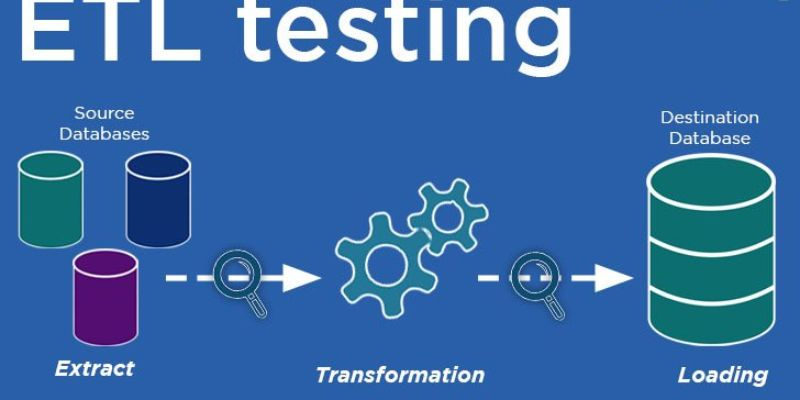

Working with large amounts of data can become challenging when information moves between different systems. A small error during data transfer may affect reports, customer records, or business decisions. Cloud-based ETL testing tools help testers verify that data is extracted, transformed, and loaded correctly without relying solely on local testing environments. For learners exploring data testing careers, understanding these tools is useful because companies increasingly work with cloud data platforms. At FITA Academy, learners can build their understanding of data technologies and prepare to handle testing challenges found in modern IT projects.
Testing Data from Different Locations
Cloud-based testing tools let teams access testing environments over the internet, making it easier to store information in different locations. Testers can ensure that information is moving from an on-premises database to a cloud data warehouse without requiring all of these resources on a local machine. This is useful when your business has multiple teams and several data sources. A tester may verify the number of records, compare values in the source and target, and explore the differences remotely. Still, access needs to be set appropriately to ensure that the sensitive information is kept safe.
Reducing Infrastructure and Maintenance Work
Setting up a traditional testing environment may require servers, storage, software installation, and regular maintenance. Cloud-based tools reduce some of this work because the provider handles much of the underlying infrastructure. Teams can spend more time checking data quality instead of maintaining machines and troubleshooting environment issues. A Training Institute in Chennai that teaches data testing concepts can help learners understand how cloud environments differ from locally managed systems. Knowing the basics of storage, access control, and computing resources also helps testers communicate more effectively with cloud engineers.
Handling Large Volumes of Data
A data pipeline can handle thousands or millions of data records in each iteration. These volumes can be very large, and testing on a limited local machine can take a significant amount of time and may be different from the production environment. Depending on the service and configuration, cloud platforms can be used to scale up additional computing resources when workloads increase. This ability can be harnessed by testers to match big data sets, verify transformation rules, and confirm that all records ultimately arrive at the target system. They still need to watch for the time they take and the amount of resources they consume, as their workload may increase the cost of the cloud.
Improving Data Validation and Accuracy
A cloud-based ETL testing tool enables teams to test the conformance of transformed data to the expected business rules. A retailer can, for instance, funnel sales data across a number of stores into a cloud data warehouse. Testers can verify totals, determine if there are transactions missing, test for duplicate transactions, and test for correct date and currency conversions. Automated checks can run any time the data pipeline changes or new data is added. These tests help teams catch issues in their early stages before they end up on dashboards or business reports and can affect crucial decisions.
Supporting Faster Testing Cycles
Data pipelines often change when companies introduce new applications, modify database structures, or update business requirements. Cloud-based testing environments can help teams repeat validation checks after these changes without rebuilding the entire setup each time. Testing can also be connected to development workflows so that selected checks run whenever a pipeline is modified. People pursuing ETL Testing Training in Chennai can benefit from learning how these workflows support data engineering teams. Understanding when to run regression tests and how to investigate failed checks is useful when preparing for testing roles.
Strengthening Team Collaboration
Typically, people who work on an ETL project include testers, data engineers, database administrators, and business analysts. Access to shared testing results, logs, and reports can be provided to the authorized members of the team via cloud-based platforms. If the data doesn't match, the tester can provide details of the failed validation to the appropriate team for investigation. For instance, if the number of target records is less than the number of source records, this can be useful to help the engineers trace a failed transformation or incomplete load. Documentation and access control will still play a critical role, particularly if there is any of a company's or customer's information that is sensitive.
Managing Security and Testing Costs
While cloud-based ETL testing can help eliminate the need for dedicated hardware, it does not come without its cost considerations. Charges may vary depending on computing time, storage space, data transfers, and services used during testing. Teams should take out the temporary resources when they are not in use and should check the use of the resources during more extensive tests. Security is also a concern, as test sets might include personally and/or business-sensitive information. Role-based access, masking of sensitive data, data encryption, and suitable data retention policies help to minimize exposure and make the testing process manageable.
Understanding cloud-based ETL testing tools can help you prepare for roles that involve data quality, database validation, and cloud data pipelines. Start by learning SQL, source-to-target validation, and common data transformation errors, then practice testing datasets in a cloud environment. Learners at a B-school in Chennai or other career-focused institutions can benefit from developing these technical skills alongside analytical thinking and clear communication. The ability to explain a data issue, show evidence, and work with engineers is valuable when joining a data team. Strong testing knowledge helps you contribute to more reliable business data.

