


Quick summary
-
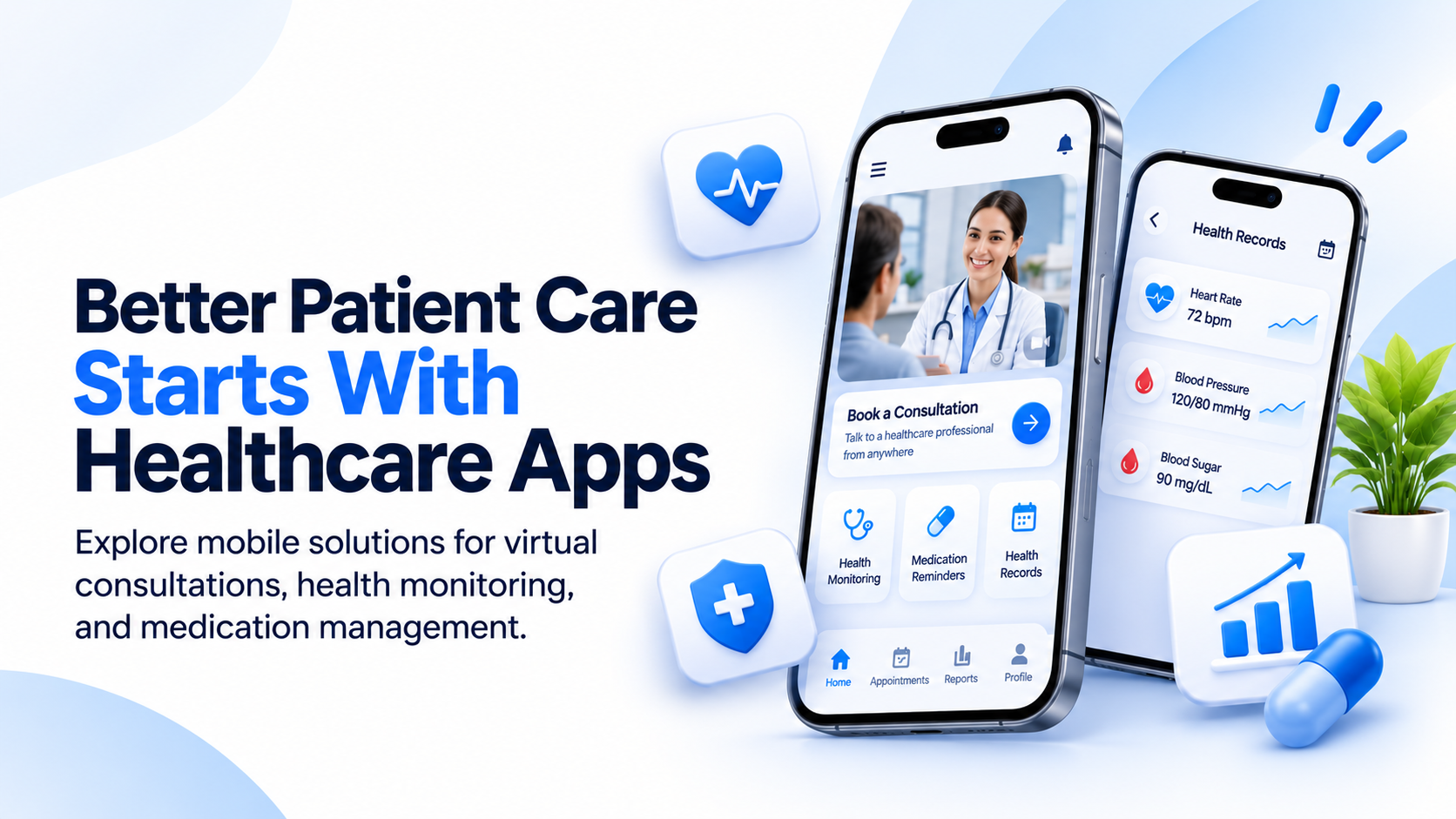
Healthcare apps cut wait times by moving booking, reminders and follow-ups onto a phone.
-
Remote monitoring lets clinicians catch problems before a patient ends up in an emergency.
-
Connected records mean patients repeat their history less often.
-
Privacy and TGA rules shape how an Australian health app must be built.
-
The right development partner matters as much as the idea itself.
Healthcare app development is changing how Australians book appointments, take medicines and speak to their doctors. A patient who once waited weeks for a follow-up can now message a clinic, check results and join a video consultation from the couch. Working with an experienced healthcare app development company is often the difference between an app people use daily and one they delete after a week.
This article covers what these apps do, where they help patients most, and what to look for when you hire a builder.
What healthcare apps actually do for patients
A healthcare app is software that connects patients, clinicians and health data. Some are simple, like a booking tool for a physio clinic. Others are complex, like a platform that tracks blood glucose and alerts a diabetes educator when readings spike.
The common thread is access. Care no longer depends on being in a waiting room at 9 am on a weekday. That matters in a country where people in regional Queensland or the Northern Territory may live hours from the nearest specialist.
The shift was speeding up well before 2020, but Medicare telehealth items introduced in March 2020 pushed many clinics to go digital almost overnight. Many never went back.
Five ways apps improve patient care
Faster, easier access to care
Online booking, digital intake forms and queue updates remove a lot of friction. Patients fill in their history on their phone before they arrive, so the consultation time goes to the actual problem. Clinics also see fewer missed appointments when reminders go out by push notification or SMS.
Better medication adherence
People forget tablets. It is that simple. Apps with dose reminders, refill alerts and short educational prompts help patients stick to a plan, which matters most for long-term conditions like asthma, hypertension and type 2 diabetes.
Remote monitoring between visits
A patient with heart failure may see a cardiologist twice a year, but their weight, blood pressure and symptoms change every day. Apps paired with wearables or home devices send that data to the care team. A nurse can phone the patient when a trend looks wrong, rather than waiting for a crisis.
Connected records
Australia already has My Health Record, with more than 23 million records created. A well-built app can pull in permitted data, such as pathology results, immunisations and discharge summaries, so patients and clinicians work from the same information. Fewer repeated tests and fewer “which medication were you on?” conversations follow.
Better communication
Secure messaging gives patients a way to ask a quick question without booking a full appointment. For anxious patients, being able to ask is often what keeps them engaged with treatment.
Features and the patient benefit they deliver
|
Feature |
What the patient gets |
|
Online booking and reminders |
Shorter waits, fewer missed visits |
|
Video consults |
Care without travel |
|
Medication tracking |
Fewer missed doses |
|
Wearable integration |
Earlier warning of problems |
|
Secure messaging |
Quick answers without an appointment |
|
Records access |
One clear view of their own health data |
Why the choice of healthcare app development company matters
Health apps are not like retail apps. A bug in a shopping cart costs a sale. A bug in a medication reminder can affect someone’s health.
A capable healthcare app development company builds with clinicians, not just for them. That means sitting with nurses and GPs early, mapping real workflows and testing with actual patients before launch. Teams that skip this step tend to ship apps that look polished but add clicks to a clinician’s day.
What Australian compliance involves
Any app handling health data in Australia has to respect the Privacy Act 1988 and the Australian Privacy Principles. Health information counts as sensitive information, so the rules are stricter. Data should be encrypted in transit and at rest, and hosting location matters for many public-sector clients.
Some apps also count as software as a medical device. If your app diagnoses, treats or monitors a condition, the Therapeutic Goods Administration (TGA) may regulate it. Finding that out after development is expensive, so your partner should raise it in the first workshop.
How to choose the best healthcare app development company
The best healthcare app development company for your project is not always the biggest or the cheapest. It is the one that understands your patients, your regulators and your existing systems.
Questions worth asking before you sign
-
Have you built apps for Australian clinics, hospitals or health startups, and can I speak to those clients?
-
How do you handle Privacy Act and TGA requirements?
-
Can the app connect with our practice management system, My Health Record or other tools we already use?
-
Who owns the code and data when the project ends?
-
What does support look like after launch?
Vague answers to any of these are a warning sign.
Signs you have found the right partner
The best healthcare app development company will ask more questions than you expect in the first meeting. They will want to know who uses the app, what the clinical risk is and how success will be measured. They will also push back on features that add complexity without helping patients.
Look at their past work too. A short case study showing a drop in no-shows or faster triage tells you more than a long list of services. For a closer look at the patient-side results, this overview of how healthcare mobile apps improve patient care is a good starting point.
Where to start
Begin small. Pick one problem, such as missed appointments or slow intake, and build the simplest app that fixes it. Test it with a handful of patients, fix what breaks, then expand. Teams that try to launch everything at once often stall in year one.
If you are weighing up partners, shortlist two or three, ask the questions above and request a paid discovery phase. It costs little compared with a failed build and shows you how the team actually works.
FAQs
How much does healthcare app development cost in Australia?
A simple app, such as booking and reminders, can start around AUD 40,000 to 80,000. Apps with video, device integration or clinical decision support often run well above AUD 150,000. Compliance work and integrations are usually what move the price.
How long does it take to build a healthcare app?
A focused first version typically takes four to six months, including discovery, design, development and testing. Larger platforms take longer.
Do healthcare apps need TGA approval?
Only if the app meets the definition of a medical device, for example by diagnosing or monitoring a condition. Simple booking or reminder apps usually do not. Check this early with your development partner.
Is patient data safe in a mobile app?
It can be, if the app uses encryption, secure authentication, access controls and compliant hosting. Safety depends on how the app is built and maintained, not on the fact that it is an app.
Can a healthcare app connect to My Health Record?
Yes, but it requires registration and conformance testing with the Australian Digital Health Agency. An experienced team will plan for this from the start.

