

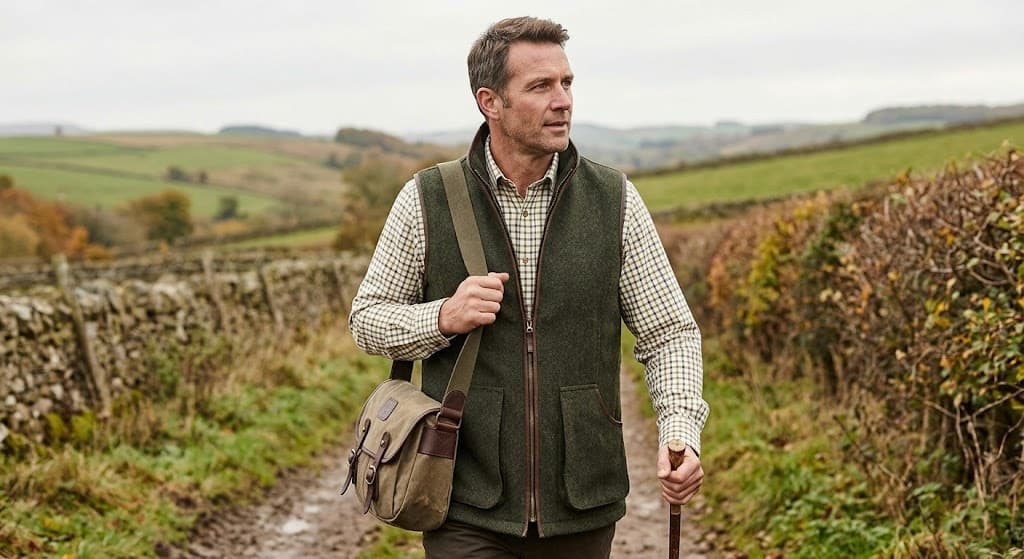

Camouflage in the UK is rarely about looking dramatic. More often, it is about blending into a landscape that changes with the weather, the season, and even the time of day. A pattern that works well in a conifer plantation may be far less effective on a windswept moor, while something suited to winter fields can stand out in summer hedgerows. That is why understanding local conditions matters so much when choosing outdoor clothing. For many people, the right kit sits somewhere between practicality, comfort, and the demands of the environment, which is why shooting apparel uk is often discussed in the context of both traditional field use and modern camouflage needs.
In the UK, the most effective camouflage patterns are the ones that match the terrain rather than simply following a trend. Woodland, farmland, wetland, moorland, and urban edges all present different visual challenges. Light levels are often low, vegetation is dense but uneven, and the landscape can shift quickly after rain or frost. The result is that no single camouflage pattern suits every situation. This article looks at where camouflage patterns work best across British conditions and explains how to choose clothing that is appropriate for the ground beneath your feet.
Key points
- British landscapes vary greatly, so camouflage works best when matched to specific terrain.
- Woodland, farmland, wetlands, moorland, and urban fringe areas each favour different pattern styles.
- Season, weather, and light conditions can alter how visible a pattern appears.
- Muted, natural colours often outperform highly contrastive designs in UK settings.
- Layering and fabric choice matter as much as the printed pattern itself.
Why UK conditions demand careful camouflage choice
The UK is not a single uniform environment. Even within a small area, the ground can change from dense woodland to open pasture, from damp ditch lines to dry stubble fields. Add in cloud cover, mist, drizzle, and the low winter sun, and visibility becomes highly variable. Camouflage patterns that rely on strong shadows and bold contrast may work in one setting but fail in another.
A useful way to think about camouflage in Britain is to focus on dominant shapes and colours. In woodland, broken outlines and layered greens are helpful. In open farmland, browns, straw tones, and dull greys are often more effective. Near waterways, darker greens and olive shades tend to sit more naturally against reeds and shaded banks. The aim is not invisibility in the absolute sense, but reduced contrast against the background.
Woodland: where dappled patterns perform best
Woodland is one of the most forgiving environments for camouflage, but it is also one of the most deceptive. Light filters through branches in uneven patches, creating a broken visual field. This is where patterns with mixed greens, browns, and darker shadow tones work particularly well. Designs that mimic leaf litter, bark, and undergrowth can help the wearer merge with the layered texture of trees and bracken.
Best features for woodland use
- Irregular shapes that interrupt the outline of the body
- Mid-tone greens rather than bright, saturated shades
- Brown and grey elements to reflect trunks and fallen branches
- Low sheen fabrics that do not catch the light
In UK woodlands, especially in winter, the canopy is often thin and the ground is exposed. That means patterns with too much green can look unnatural when leaves have fallen. In these conditions, a more balanced mix of brown, grey, and muted green usually works better than a strongly green design.
Farmland and hedgerows: muted tones are usually best
British farmland is a patchwork of ploughed soil, grass margins, dry crops, hedgerows, and drainage banks. Camouflage here should reflect the season. In spring and summer, greens may dominate, but by late summer and autumn, straw, earth, and faded vegetation become more important. The best patterns for farmland are often those that look understated from a distance and avoid looking too sharp up close.
Hedgerows create a particular challenge because they combine dense foliage with gaps of open sky or field behind. Clothing that breaks up the body shape and uses darker shadow tones can help reduce visibility when moving alongside a hedge line. If the ground is wet, darker browns and olive shades can also be useful, since mud and damp grass tend to deepen the landscape’s overall colour palette.
Wetlands, riverbanks, and marsh edges
Wetland environments are common across the UK, especially near estuaries, reed beds, and low-lying fields. These areas often feature vertical reeds, reflective water, and dark damp soil. Camouflage patterns with tall, narrow shapes or reed-like textures can be effective because they echo the upright forms found in the background.
Colour choice matters here as well. Deep olive, dark khaki, grey-green, and brown often suit marshy ground better than brighter woodland tones. Reflection from water can increase visibility, so matte fabrics are preferable. In misty weather, which is common in the early morning, subtle patterns often outperform heavy contrast because the background itself becomes softened and blurred.
Practical considerations for wet ground
- Choose fabrics that dry quickly and do not shine when wet
- Look for darker underlayers to reduce contrast in shadowed areas
- Avoid overly crisp patterns that stand out against soft natural edges
- Consider how mud, spray, and damp vegetation affect the overall appearance
Moorland and upland areas: less is often more
Moorland presents a very different visual landscape. Heather, grass, stone, peat, and open sky create an environment that is broad, muted, and often exposed. In these conditions, camouflage does not need to be dense or highly detailed. Instead, it should echo the subdued colour range of the terrain. Browns, slate greys, dull greens, and dusty earth tones are often the best fit.
The open nature of moorland means movement is more noticeable than pattern alone. Even a good camouflage design can be compromised if the clothing is noisy, reflective, or bulky. For this reason, fit and fabric matter greatly. A pattern that works in theory may fail in practice if the garment catches the wind or reflects light off a wet surface.
Winter versus summer: why season changes everything
One of the most important things to remember about camouflage in the UK is that seasonal change can alter the effectiveness of a pattern dramatically. Summer landscapes are greener and fuller, while winter landscapes are stripped back, darker, and more open. A pattern that blends into June foliage may look too vivid in January.
In winter, dead grass, bare branches, and muddy ground dominate. This makes muted browns, greys, and olive drabs more useful than bright green-heavy patterns. In summer, especially after rain, fresh greens and deeper shadow tones become more relevant. Autumn can be the most forgiving season, as many landscapes contain a natural mix of brown, gold, green, and grey.
Urban edges and mixed environments
Although camouflage is usually associated with rural use, many UK landscapes sit between town and country. Industrial margins, railway embankments, abandoned fields, and scrubby edges often contain concrete, rust, weeds, and rough grass. These mixed areas do not suit a single pure camouflage style. Instead, patterns with grey, brown, and olive combinations tend to work best.
In these settings, the strongest advantage often comes from avoiding obvious contrast. Clothing that is too clean, too bright, or too uniform can stand out against a backdrop of broken surfaces and mixed textures. A balanced, understated pattern is generally more versatile than a highly specialised one.
Pattern is only part of the picture
It is easy to focus on print design alone, but camouflage effectiveness depends on several other factors. Fabric texture, garment cut, noise, and fit all influence how visible the wearer appears. Shiny material can catch daylight, while stiff fabric can create hard outlines. Loose but functional clothing can help soften the body shape, especially when combined with natural colours.
Layering also plays a role. A patterned outer layer may be effective, but if the base layer flashes a bright colour at the wrist, neck, or hem, the overall effect is weakened. For that reason, people often pay close attention to collars, cuffs, and exposed accessories. Headwear, gloves, and gaiters can make a surprising difference in maintaining a consistent appearance.
How to choose the right camouflage for UK use
There is no universal answer, but there is a sensible process. Start by identifying the terrain you spend the most time in. Then consider the season, the amount of cover, and the distance from which you are likely to be seen. A pattern that works at close range in a woodland ride may be less useful in open fields where shapes are visible from much further away.
It is also worth testing clothing against the background in daylight and overcast conditions. The UK’s weather changes rapidly, and a pattern that disappears under cloud may stand out in bright sun or against frost. If possible, compare garments against the vegetation and ground tones you see most often, not just against a neutral indoor setting.
Conclusion
Camouflage patterns work best in the UK when they are chosen with the landscape in mind. Woodland, farmland, wetlands, moorland, and mixed edge environments all call for slightly different visual approaches. The most successful patterns are usually the ones that reflect the muted, changeable nature of British conditions rather than trying to dominate them.
By paying attention to season, light, texture, and terrain, you can make a more informed choice about what works best in the field. In the UK, effective camouflage is rarely about one perfect design. It is about matching clothing to the environment carefully and realistically, so that it supports the setting rather than fighting against it.
FAQ
What camouflage colours work best in the UK?
Muted greens, browns, greys, and olive tones usually work best because they reflect the natural colours found across British landscapes. The most suitable shade depends on the season and terrain.
Is woodland camouflage suitable for all UK conditions?
No. Woodland camouflage is effective in forests and dense cover, but it may be less suitable in open farmland, wetlands, or moorland where the background is more muted or exposed.
Does camouflage work differently in winter?
Yes. Winter landscapes are often browner, greyer, and more open, so camouflage with less green and more earth tones is usually more effective during colder months.
Are patterned fabrics better than plain colours?
Not always. Patterns help break up the body shape, but plain muted colours can work well in low-contrast environments. The key is how the clothing matches the surroundings.

