

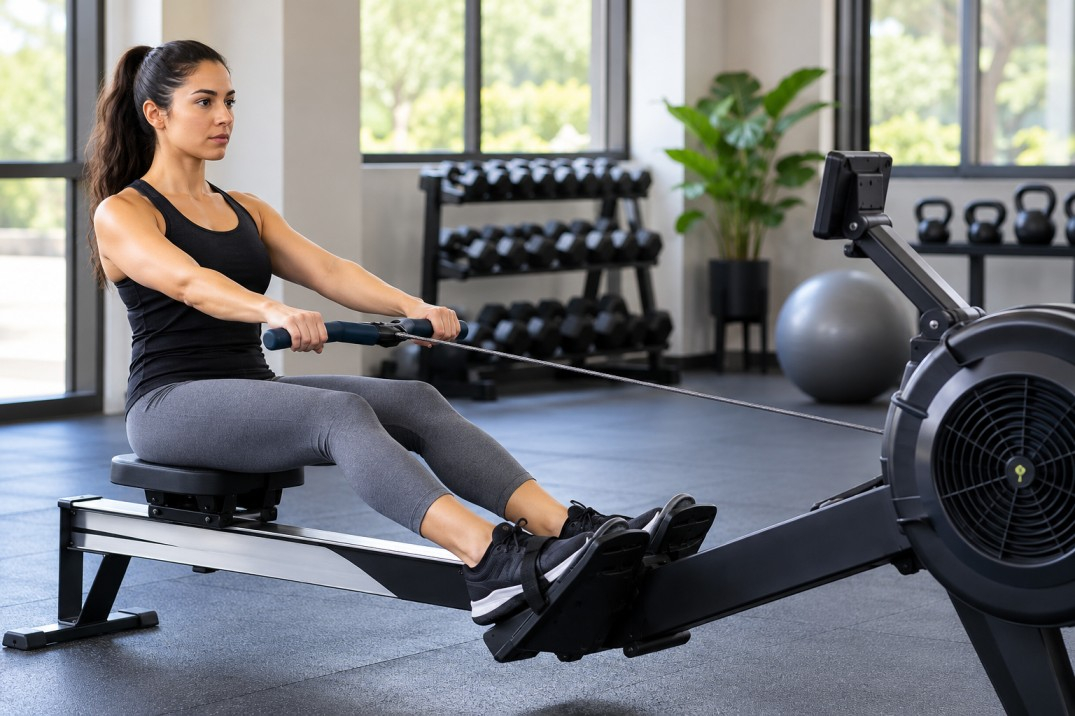

Rowing is one of the most effective exercises for improving overall fitness because it engages multiple muscle groups in a single workout. Whether you use a rowing machine at home or exercise at the gym, rowing combines cardiovascular training with muscular endurance and strength development. It works the legs, back, arms, shoulders, and core, making it an excellent full-body exercise.
But can rowing workouts actually build full-body strength? The answer is yes. When performed with proper technique and consistent resistance, rowing can help strengthen several major muscle groups while improving endurance and overall physical performance.
Let's explore how rowing workouts contribute to full-body strength and why they are worth including in your fitness routine.
1. Strengthens Leg Muscles
Your legs perform a significant portion of the work during rowing. Every stroke begins with a powerful push against the footrests, activating several lower-body muscles.
Rowing machine primarily engages the quadriceps, hamstrings, glutes, and calves. These muscles work together to generate force and move your body through each stroke.
Regular rowing sessions can help improve lower-body muscular endurance and strength. Increasing resistance and maintaining proper technique can make workouts more challenging.
2. Builds Back and Shoulder Strength
Rowing involves repeated pulling movements that activate the upper back and shoulder muscles.
During the pulling phase, muscles such as the latissimus dorsi, trapezius, and rhomboids help control the movement. Your shoulders also contribute to maintaining proper arm and upper-body positioning.
Consistent rowing can help develop upper-body muscular endurance and improve overall pulling strength.
Maintaining proper posture is important to avoid placing unnecessary stress on your shoulders and back.
3. Engages the Core Muscles
A strong core is essential for maintaining balance, stability, and proper movement during exercise.
Rowing activates abdominal muscles and the lower back as you maintain a stable position throughout each stroke. Your core helps transfer force between your upper and lower body.
Regular rowing workouts can improve core endurance and support better movement control.
For maximum benefits, avoid excessive leaning or rounding your back while rowing.
4. Develops Arm Strength
Although rowing power mainly comes from the legs, your arms also contribute to every stroke.
The biceps, forearms, and other arm muscles work during the pulling phase. Repeated rowing movements can help improve muscular endurance and pulling strength.
Using appropriate resistance and maintaining controlled movements can make your arm workout more effective.
5. Improves Cardiovascular Fitness
One major advantage of rowing is that it combines strength-focused movements with cardiovascular exercise.
Because multiple muscle groups work simultaneously, rowing can increase your heart rate and improve cardiovascular endurance.
Regular sessions may help improve stamina, support heart health, and make everyday physical activities easier.
6. Supports Weight Management
Rowing can also support weight management by helping your body burn calories through physical activity.
The number of calories burned depends on your body weight, workout duration, rowing intensity, and resistance level.
Combining rowing sessions with balanced nutrition and other healthy lifestyle habits can support long-term fitness goals.
7. How to Make Rowing Workouts More Effective
To get better strength and endurance benefits from rowing, focus on proper technique and consistency.
-
Start with a 5-minute warm-up.
-
Push through your legs before pulling with your arms.
-
Keep your back straight and core engaged.
-
Maintain a controlled rowing rhythm.
-
Gradually increase workout duration or resistance.
-
Allow sufficient recovery between challenging sessions.
Beginners can start with 10–15-minute sessions and gradually increase their workout time.
Conclusion
Yes, rowing workouts can help build full-body strength by engaging the legs, back, shoulders, arms, and core. They also improve cardiovascular endurance, muscular stamina, and overall fitness.
While rowing is excellent for developing functional strength and muscular endurance, combining it with resistance training can provide greater benefits for muscle growth and maximum strength.
A quality rowing machine can be a valuable addition to your home gym, helping you enjoy effective full-body workouts while working towards your fitness goals.

