

How Apex, SOQL, and Lightning Technologies Power Salesforce Application Developmen

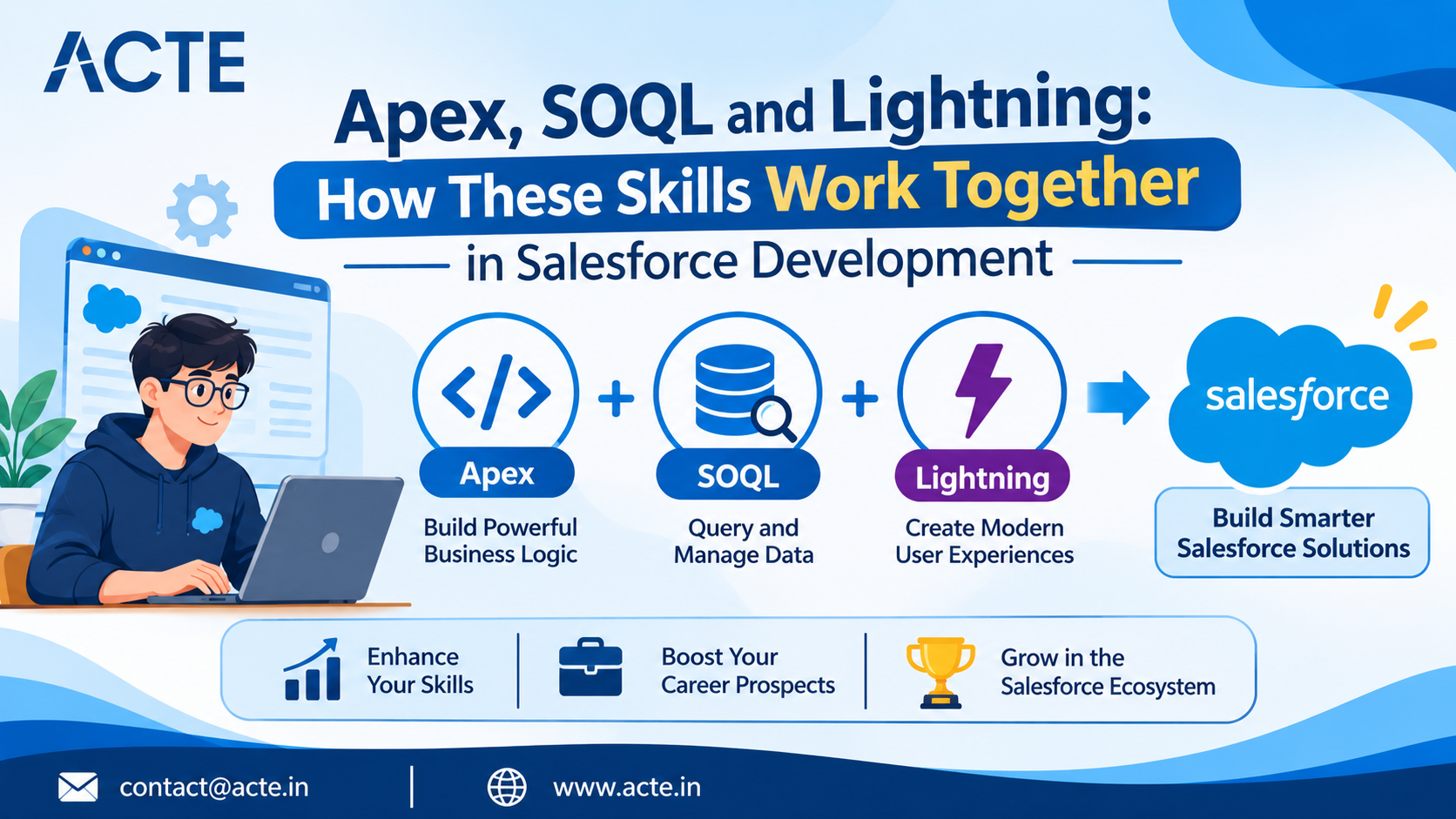
Salesforce development brings together several technologies that help organizations create customized applications, manage business information, and automate essential operations. Apex, Salesforce Object Query Language (SOQL), and Lightning are among the most important technologies used in this process. Apex enables developers to write customized business logic, SOQL provides access to the information stored in Salesforce databases, and Lightning supports the development of interactive user interfaces. Each technology performs a distinct function, but their integration makes it possible to build complete applications that address real business challenges. Understanding how these technologies operate together helps aspiring developers strengthen their platform knowledge and development capabilities. Individuals looking to gain practical experience can explore Salesforce Training in Chennai.
Understanding Apex and Its Contribution to Salesforce Programming
Apex is a Salesforce programming language that allows developers to extend standard platform functionality through customized code. It follows object-oriented programming principles and provides features for creating classes, methods, triggers, and reusable business logic. Developers commonly use Apex to automate organizational workflows, validate business information, process transactions, and implement complex application requirements. For example, when an opportunity record is modified, an Apex trigger can automatically update connected records or execute additional actions based on predefined conditions. Apex also supports integration with Salesforce services and external applications. Learning its programming concepts, execution methods, and exception-handling techniques helps developers create solutions that support specific business operations.
Exploring SOQL for Accurate Salesforce Data Access
SOQL is a specialized query language that helps developers retrieve information from Salesforce database objects. It provides the ability to select particular fields, filter records, organize query results, and retrieve related information through object relationships. For example, developers can use SOQL to identify accounts belonging to a specific industry, locate opportunities with pending statuses, or retrieve customer records that satisfy certain conditions. SOQL is frequently incorporated into Apex methods to obtain the information required for business calculations and automated processes. Understanding query syntax, relationship queries, filtering conditions, and efficient data retrieval techniques helps developers manage records effectively. Learners can strengthen their understanding of these database concepts through a structured Salesforce training program.
Designing User-Friendly Applications with Salesforce Lightning
Lightning provides a modern development environment for creating interactive and responsive Salesforce application interfaces. Lightning Web Components (LWC) allow developers to build reusable interface elements using HTML, JavaScript, and CSS. These components support the development of customized dashboards, forms, record pages, search features, and other application functionalities. For example, a sales department may require a customized dashboard that displays account information, current opportunities, and customer interactions together. Lightning components help developers organize these details into an easy-to-use interface. Understanding component properties, events, lifecycle methods, and data communication enables developers to create applications that improve usability and simplify everyday business activities.
Integrating Apex, SOQL, and Lightning for Complete Applications
The combined use of Apex, SOQL, and Lightning helps developers connect application interfaces with business processing and database operations. Lightning manages user interactions, Apex executes the required business logic, and SOQL retrieves the information needed from Salesforce objects. Consider a sales application that enables employees to access open opportunities linked to a selected customer account. The Lightning component receives the user's selection and sends the request to an Apex method. Apex processes the request and executes a SOQL query to retrieve the matching records. The results are then displayed through the Lightning interface. This coordinated structure separates different application responsibilities and makes development easier to manage. Individuals interested in gaining hands-on knowledge of this workflow can explore Salesforce Training in Bangalore.

Building Industry-Relevant Applications Through Practical Projects
Practical projects provide valuable opportunities to understand how Salesforce technologies support business requirements. Developers can create a sales performance dashboard that retrieves account information through SOQL, processes revenue calculations using Apex, and displays results through Lightning components. Another example is a customer support application that allows employees to search service cases, monitor request statuses, and update customer details. Other development ideas include lead management applications, inventory tracking systems, automated approval solutions, and customer service portals. Completing these projects improves practical knowledge of programming, database management, interface development, and software testing. It also gives learners the opportunity to demonstrate their technical abilities through project portfolios and real-world development examples.
Applying Security Standards and Performance Optimization Techniques
Creating reliable Salesforce applications requires developers to maintain strong security practices and efficient application performance. Apex programs should be designed for bulk processing and must operate within Salesforce governor limits. SOQL queries should be optimized to retrieve only the necessary records and fields, reducing unnecessary database operations. Developers must also consider object-level permissions, field-level security, and record-level access controls to protect confidential information. Testing is another essential activity that helps identify errors and verify application behavior. Apex test classes, debugging tools, exception handling, and Lightning component testing contribute to application reliability. Following these practices helps developers build secure, maintainable, and efficient Salesforce solutions.
Exploring Technical Career Opportunities with Salesforce Skills
Knowledge of Apex, SOQL, and Lightning can support career development in several areas of the Salesforce ecosystem. Professionals with practical experience in these technologies may explore roles such as Salesforce Developer, CRM Developer, Salesforce Technical Consultant, and Salesforce Application Support Specialist. Their responsibilities can include developing customized features, automating workflows, retrieving business information, creating user interfaces, and maintaining Salesforce applications. Practical project experience helps candidates demonstrate their ability to understand requirements and implement technical solutions. Creating a portfolio with project descriptions, development approaches, technologies, and testing procedures can also improve interview preparation. Learners interested in developing their technical expertise and preparing for these opportunities can consider Salesforce Training in Hyderabad.
Conclusion:
Apex, SOQL, and Lightning play complementary roles in developing customized Salesforce applications. Apex handles business logic and automation, SOQL retrieves the required database information, and Lightning creates interactive interfaces that allow users to work with application features. Bringing these technologies together enables developers to create solutions that support business processes and improve operational efficiency. Building practical projects, understanding application security, and applying efficient coding practices can further strengthen development knowledge. Learning how these technologies interact provides a valuable foundation for individuals aiming to develop professional skills and build a career in Salesforce application development.

