

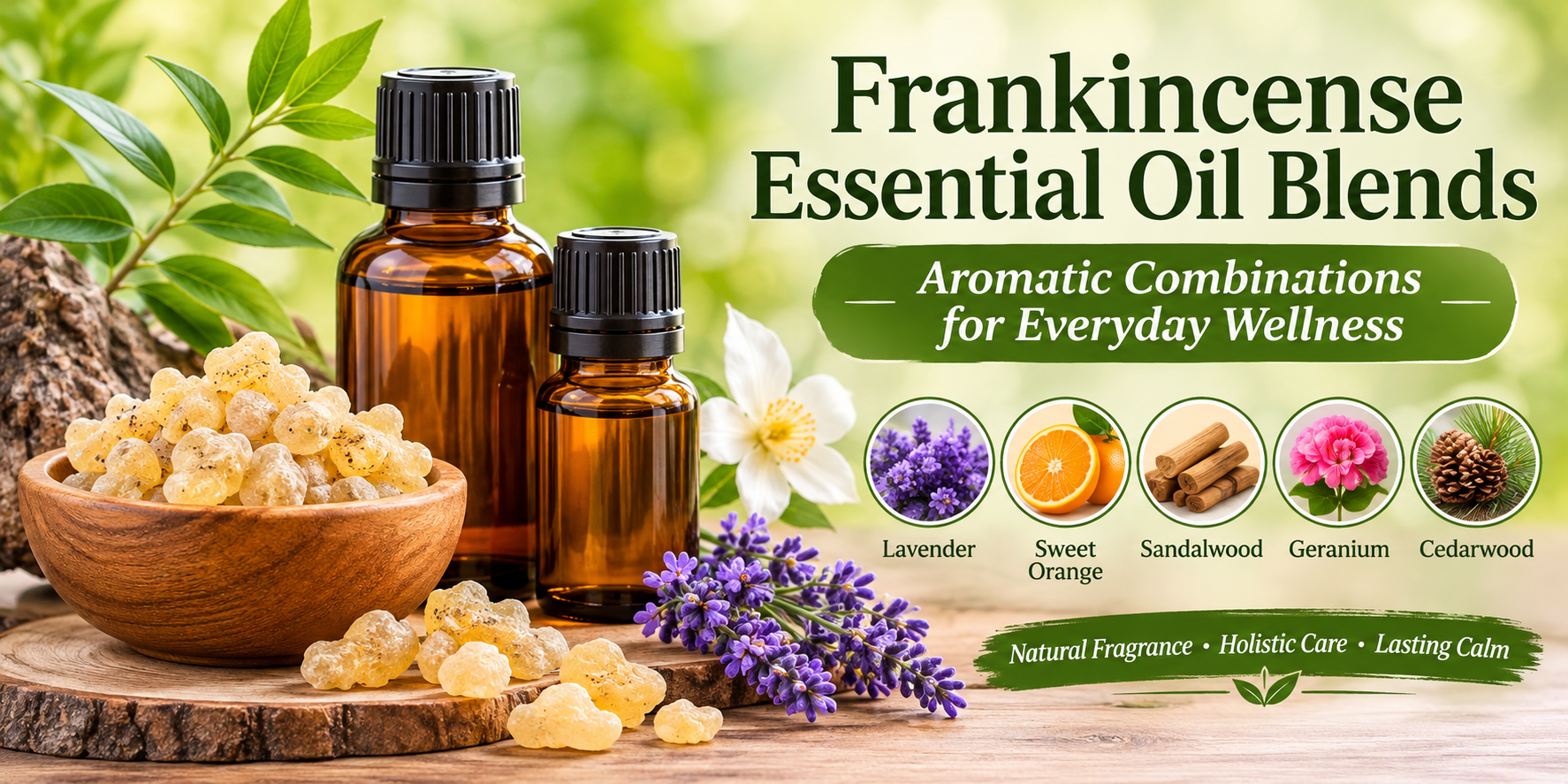
Frankincense Essential Oil Blends: Aromatic Combinations for Everyday Wellness

Frankincense has been appreciated for centuries for its warm, woody aroma and versatility in aromatherapy, skincare, and personal care. Today, frankincense oil blends offer an easy way to combine its distinctive fragrance with other botanical oils to create balanced aromatic experiences. Whether you enjoy relaxing scents, refreshing diffuser combinations, or natural skincare routines, exploring different essential oil pairings can help you discover new ways to enjoy this traditional botanical ingredient.
What Makes Frankincense Essential Oil Special?
Frankincense essential oil is obtained from the resin of trees belonging to the Boswellia genus. It is known for its rich, earthy, slightly sweet, and woody fragrance, making it a popular choice among aromatherapy enthusiasts.
Its versatility allows it to complement floral, citrus, herbal, and woody essential oils. This makes it suitable for creating personalized aromatic combinations for different preferences and occasions.
Frankincense is also frequently included in skincare formulations because of its traditional use in personal care products. When properly diluted in a suitable carrier oil, it can be incorporated into massage oils, facial oil formulations, and other topical preparations.
Popular Essential Oils to Blend with Frankincense
Choosing complementary oils is an important part of creating enjoyable aromatic combinations. Different essential oils bring their own fragrance characteristics, allowing you to customize your blends.
1. Frankincense and Lavender
Lavender essential oil has a soft, floral, and herbaceous aroma that pairs beautifully with the warm, woody fragrance of frankincense.
This combination is particularly popular for evening aromatherapy routines and relaxing home environments. Add a few appropriately measured drops of both oils to a diffuser according to the manufacturer's instructions.
2. Frankincense and Sweet Orange
Sweet orange essential oil introduces a bright, fresh, citrus fragrance that balances the deeper aroma of frankincense.
This pairing is ideal for people who enjoy warm yet uplifting fragrance combinations. It can be used in personal aromatherapy blends and diffuser recipes.
3. Frankincense and Sandalwood
Sandalwood offers a creamy, rich, woody fragrance that complements the resinous character of frankincense.
Together, these oils create a sophisticated aromatic profile suitable for meditation spaces, personal fragrance applications, and relaxing home environments.
4. Frankincense and Geranium
Geranium essential oil provides a fresh, floral, slightly rosy aroma. When combined with frankincense, it creates a balanced fragrance that appeals to people who appreciate floral and earthy scents.
This combination can also be explored in properly diluted massage and skincare formulations.
5. Frankincense and Cedarwood
Cedarwood has a dry, warm, woody fragrance that complements frankincense naturally. Their combination creates a grounding scent profile that works well in home fragrance products and diffuser blends.
Benefits of Exploring Frankincense Essential Oil Blends
There are several reasons why people enjoy experimenting with different essential oil combinations.
Versatile Aromatic Experiences: Combining frankincense with citrus, floral, or woody oils creates different fragrance profiles. This versatility makes it easy to personalize your aromatherapy experience.
Suitable for Different Routines: These combinations can be explored in diffuser applications, massage oils, and carefully formulated personal care products.
Customizable Fragrance: You can adjust the proportions of individual oils to create a fragrance that matches your preferences.
Complementary Botanical Scents: Different essential oils have distinctive aromatic characteristics. Combining them allows you to appreciate multiple botanical fragrances in one formulation.
Creative Personal Care: Properly diluted frankincense combinations can be incorporated into DIY body oils and other personal care preparations.
Remember that essential oils are highly concentrated. Their aromatic appeal does not establish medical benefits, and they should not be considered replacements for professional healthcare.
How to Create Your Own Frankincense Aromatherapy Blends
Creating personalized fragrance combinations does not require complicated equipment. A few carefully selected oils and suitable blending materials are enough to get started.
Follow these basic steps:
-
Choose Your Essential Oils: Select frankincense as your main ingredient and choose one or two complementary oils, such as lavender, orange, or cedarwood.
-
Start with Small Quantities: Experiment with small amounts to understand how the fragrances work together.
-
Use Suitable Containers: Store your prepared blends in clean, appropriately sized, airtight glass bottles.
-
Allow the Fragrance to Develop: Some combinations may smell slightly different after the oils have had time to combine.
-
Label Your Blends: Record the ingredients and proportions so you can recreate your preferred combinations.
For diffuser applications, follow the diffuser manufacturer's instructions and use the recommended number of drops. For topical applications, dilute essential oils in an appropriate carrier oil and perform a patch test before regular use.
Frankincense Oil Blends for Skincare and Personal Care
Frankincense is a popular ingredient in various botanical skincare formulations. Its distinctive fragrance makes it a suitable addition to thoughtfully prepared facial oils, body oils, and massage blends.
For a simple personal care formulation, consider combining properly diluted frankincense with a carrier oil such as jojoba, sweet almond, or argan oil.
Different carrier oils offer different textures and skin-feel characteristics. Jojoba oil is often selected for its lightweight feel, while sweet almond oil is commonly used in massage and body oil formulations.
Always check the quality and intended use of your ingredients. Essential oils should never be applied undiluted to the skin, and certain oils may cause irritation or photosensitivity. Avoid contact with eyes and sensitive areas.
Exploring Floral Essential Oils and Botanical Fragrance Combinations
Floral essential oils offer another interesting direction for people who enjoy experimenting with botanical fragrances. Lavender, rose, geranium, and ylang ylang are examples of floral oils that can complement the warm and resinous fragrance of frankincense.
If you are interested in learning more about floral aromas, their natural beauty applications, and everyday uses, explore this related article: The Natural Beauty and Everyday Benefits of Floral Essential Oils
This related resource provides another perspective on incorporating floral botanical fragrances into everyday personal care and aromatherapy routines. Exploring floral oils alongside frankincense can also help you discover new fragrance combinations and personalized blending ideas.
Choosing Quality Frankincense Essential Oils
The quality of ingredients plays an important role in creating enjoyable and consistent aromatic products. When purchasing essential oils, consider the botanical name, country of origin, extraction method, ingredient transparency, and available quality documentation.
Look for suppliers that provide clear product information and appropriate testing details. Proper storage is equally important. Keep essential oils tightly sealed in suitable bottles, away from direct sunlight, excessive heat, and moisture.
At Miracle Botanicals Essential Oils, customers can explore a selection of botanical oils and aromatic ingredients for creating personalized fragrance combinations and natural personal care formulations.
Whether you prefer floral, citrus, herbal, or woody aromas, selecting complementary botanical ingredients can make your blending experience more enjoyable.
Conclusion
Frankincense offers a distinctive fragrance that works beautifully with numerous botanical oils. From lavender and sweet orange to sandalwood and cedarwood, different combinations provide opportunities to explore personalized aromatherapy and fragrance applications.
Experimenting with frankincense essential oil blends allows you to discover aromatic combinations that suit your preferences and everyday routines. By choosing quality ingredients, following appropriate dilution guidelines, and understanding the characteristics of individual oils, you can create thoughtful botanical formulations for your home and personal care collection.
Frequently Asked Questions (FAQs)
1. What essential oils blend well with frankincense?
Frankincense pairs well with lavender, sweet orange, sandalwood, cedarwood, geranium, and other complementary floral, citrus, and woody essential oils.
2. Can frankincense essential oil be used in a diffuser?
Yes. Frankincense can be used in an essential oil diffuser according to the manufacturer's instructions. It can also be combined with complementary oils to create personalized aromatic experiences.
3. Are frankincense essential oil combinations suitable for skincare?
They can be incorporated into properly formulated skincare and personal care products when diluted with suitable carrier oils. Always perform a patch test and follow appropriate safety precautions.
4. Which carrier oils work well with frankincense?
Jojoba, sweet almond, argan, and fractionated coconut oil are commonly used carrier oils. The best option depends on the intended application and preferred skin feel.
5. How should homemade frankincense blends be stored?
Store blends in tightly sealed, clearly labeled glass bottles in a cool, dry place away from direct sunlight and excessive heat. Keep them out of reach of children and pets.

