

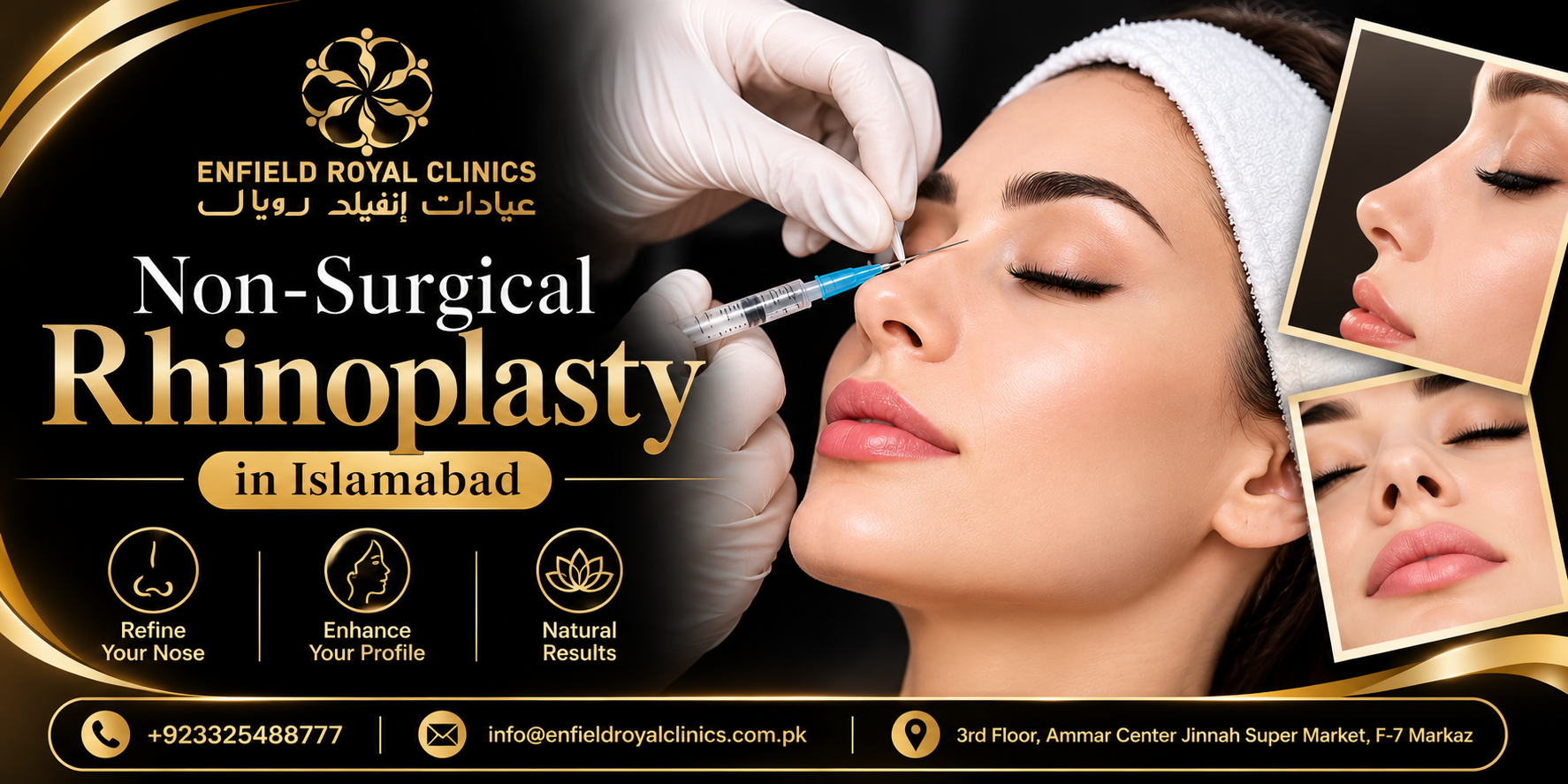

Many people consider improving their nose shape but hesitate because they are concerned about the recovery period associated with cosmetic surgery. Traditional rhinoplasty usually involves a longer healing process, swelling, and temporary changes to daily activities. Nonsurgical rhinoplasty offers a different approach by using injectable dermal fillers to adjust selected nasal contours without surgical incisions.
One of the main reasons this treatment attracts attention is its relatively short recovery period. However, minimal downtime does not mean that patients can ignore aftercare or return to every activity immediately. Some temporary reactions, such as swelling, redness, bruising, and tenderness, may occur after the injections.
People considering Nonsurgical Rhinoplasty in Islamabad should understand what recovery involves, how long common side effects may last, and which precautions can support a comfortable healing experience. Knowing what to expect helps patients plan their treatment and make informed decisions.
1. Does Nonsurgical Rhinoplasty Require Time Away from Daily Activities?
Nonsurgical rhinoplasty generally requires little downtime compared with traditional nose surgery. Since the procedure uses injectable fillers instead of surgical incisions, most patients do not need an extended recovery period.
Depending on the treatment and individual response, many patients can return to light daily activities shortly after their appointment. They may be able to continue ordinary routines, although some temporary swelling or redness can be noticeable.
The recovery experience is different for everyone. Factors such as the amount of filler used, injection technique, skin sensitivity, and individual healing response can influence how the treated area looks immediately afterward.
Patients with important social events, professional commitments, or photography sessions should consider scheduling treatment with enough time for any temporary swelling or bruising to settle.
Although the procedure is often described as a lunchtime treatment, it should not be treated casually. The nose has a complex blood supply, and safe injection practices are essential throughout the process.
2. What Temporary Side Effects Can Occur After Treatment?
Even though nonsurgical rhinoplasty does not involve traditional surgery, the injection process can cause temporary reactions. These effects are usually mild, but patients should understand which changes may occur during the initial recovery period.
Common temporary side effects include:
-
Swelling: The nose may appear slightly swollen after filler placement. This can affect the initial appearance before the area settles.
-
Redness: Small areas of redness may develop around injection points.
-
Bruising: Minor bruises can appear depending on the injection technique and individual sensitivity.
-
Tenderness: The treated area may feel sensitive or uncomfortable for a short period.
-
Mild discomfort: Some patients may experience temporary soreness around the nose.
These reactions generally improve as the area recovers. However, patients should not assume that every symptom is harmless.
Severe or increasing pain, pale or dusky skin, unusual discoloration, or any visual disturbance requires immediate emergency medical attention. These symptoms may indicate a serious vascular complication rather than ordinary recovery.
3. How Long Does Recovery Usually Take?
The recovery period after nonsurgical rhinoplasty is generally shorter than that of surgical rhinoplasty. However, there is no single recovery timeline that applies to every patient.
Some individuals experience very little swelling and can comfortably continue their usual routine. Others may have noticeable bruising or tenderness that takes longer to settle.
The initial appearance may also change as temporary swelling decreases. For this reason, patients should avoid judging the final cosmetic outcome immediately after the injections.
Several factors can influence recovery, including:
-
The patient's natural healing response.
-
The amount and type of filler used.
-
The injection locations.
-
Individual skin sensitivity.
-
Whether bruising or swelling develops.
During a consultation for Nonsurgical Rhinoplasty in Islamabad, patients should ask about the expected recovery experience based on their individual treatment plan. A qualified professional can explain which temporary effects are common and when follow-up assessment may be appropriate.
It is also important to understand that a short recovery period does not guarantee that complications cannot occur. Patients need clear instructions about recognising unusual symptoms and seeking help promptly.
4. What Precautions Should Patients Follow After Nonsurgical Rhinoplasty?
Aftercare plays an important role in supporting recovery. Although patients may not need to stay away from work or normal activities for an extended period, they should follow the instructions provided by the treating professional.
Some general precautions may include:
Avoid unnecessary pressure on the nose: Patients should avoid rubbing, pressing, or manipulating the treated area. Pressure can interfere with the carefully placed filler.
Do not massage the treated area without advice: Massaging the nose may affect filler placement. It should only be done if specifically recommended by the professional.
Follow guidance about exercise: Patients should ask when they can resume strenuous exercise. Temporary restrictions may be advised depending on the treatment and individual circumstances.
Be careful with skincare and cosmetics: The professional may recommend avoiding certain products or unnecessary contact with injection points for a period after treatment.
Attend follow-up appointments: A follow-up assessment allows the professional to review the treated area and discuss any concerns.
Patients should also avoid relying on general online aftercare advice instead of their personalised instructions. Different filler products and injection techniques may require different recommendations.
5. Can Patients Return to Work and Exercise After Treatment?
Many patients can return to light activities relatively soon after nonsurgical rhinoplasty. However, the decision depends on how the treated area responds and the type of activity involved.
People working in office environments or performing routine tasks may find it easier to resume their schedules. Those whose jobs involve physical exertion, heavy lifting, or activities that could cause accidental pressure on the nose may need additional guidance.
Exercise deserves particular attention. Strenuous physical activity can increase blood flow and may worsen temporary swelling or bruising in some patients. The treating professional can recommend when normal exercise routines should resume.
Patients who participate in contact sports or activities with a risk of facial injury should be especially cautious. An accidental impact could affect the treated area and create additional concerns.
For individuals considering Nonsurgical Rhinoplasty in Islamabad, planning the appointment around work responsibilities and physical activities can make the recovery experience more manageable.
6. How Is Downtime Different from Traditional Rhinoplasty Surgery?
One of the main differences between nonsurgical and surgical rhinoplasty is the recovery process.
Traditional rhinoplasty involves changes to nasal bone, cartilage, or other structures. Depending on the surgical technique, patients may experience swelling, bruising, nasal congestion, and a longer period of healing. Returning to normal activities can take more time, and the final appearance may continue developing over several months.
Nonsurgical rhinoplasty uses injectable fillers to improve selected external contours. It does not require surgical incisions or structural reshaping, so the recovery period is generally shorter.
However, the two procedures also have different purposes.
|
Nonsurgical Rhinoplasty |
Traditional Rhinoplasty |
|---|---|
|
Uses injectable dermal fillers |
Involves surgical techniques |
|
Adds volume to selected areas |
Can reshape bone and cartilage |
|
Usually has less downtime |
Generally requires longer recovery |
|
Results are temporary |
Results are intended to be long-lasting |
|
Cannot reduce actual nose size |
Can reduce or reshape nasal structures |
The shorter downtime of nonsurgical treatment does not automatically make it the better choice. Patients who need significant structural correction or want a smaller nose may benefit more from discussing surgical options with an appropriately qualified specialist.
7. When Should Patients Seek Medical Attention After Treatment?
Understanding warning signs is just as important as knowing what normal recovery may involve. Most temporary reactions are manageable, but nasal filler injections carry rare and potentially serious risks.
One major concern is vascular occlusion, which occurs when filler blocks or interferes with blood flow in a blood vessel. In the nose, this can lead to skin ischemia and tissue damage. In rare cases, interruption of blood supply involving the eye can cause permanent vision loss or blindness.
Patients should seek immediate emergency medical attention if they experience:
-
Severe or worsening pain.
-
Skin that becomes unusually pale or dusky.
-
Unexpected or spreading skin discoloration.
-
Blurred vision, loss of vision, or other visual changes.
These symptoms should never be dismissed as ordinary swelling or bruising. Prompt assessment is essential.
Hyaluronic acid fillers can sometimes be treated with hyaluronidase, an enzyme that dissolves the filler. However, this does not guarantee that every complication can be reversed.
For this reason, the treatment should only be performed by an appropriately qualified medical professional with specific experience in nasal filler injections and the ability to recognise and manage complications immediately. Patients should understand the emergency plan before agreeing to treatment.
For more information visit Enfield royal clinic in islamabad
Frequently Asked Questions (FAQs)
1. Can patients return to work immediately after nonsurgical rhinoplasty?
Many patients can return to light daily activities shortly after treatment. However, visible swelling, bruising, or tenderness may occur, so the timing depends on individual recovery and work responsibilities.
2. How long does swelling last after nonsurgical rhinoplasty?
Swelling varies from person to person. It may settle over the following days, but the exact duration depends on the amount of filler, injection technique, and individual healing response.
3. Can patients exercise after nonsurgical rhinoplasty?
Patients may need to avoid strenuous exercise temporarily because increased physical activity can worsen swelling or bruising. The treating professional should provide personalised advice about when exercise can safely resume.
4. Is nonsurgical rhinoplasty recovery easier than surgical rhinoplasty recovery?
Generally, yes. Nonsurgical rhinoplasty usually involves less downtime because it does not require surgical incisions or structural changes. However, it has different limitations and carries its own potentially serious injection-related risks.
Conclusion
Nonsurgical rhinoplasty generally requires less downtime than traditional nose surgery, making it an appealing option for people seeking subtle cosmetic improvements without an extended recovery period. Many patients can return to light daily activities relatively quickly, although temporary swelling, bruising, redness, and tenderness may occur.
However, minimal downtime should never be confused with an absence of risk. Anyone considering Nonsurgical Rhinoplasty in Islamabad should understand the aftercare requirements, recognise serious warning signs, and choose an appropriately qualified professional with specific experience in nasal filler treatments.
A detailed consultation and realistic expectations can help patients decide whether this temporary cosmetic procedure is suitable for their needs.

