

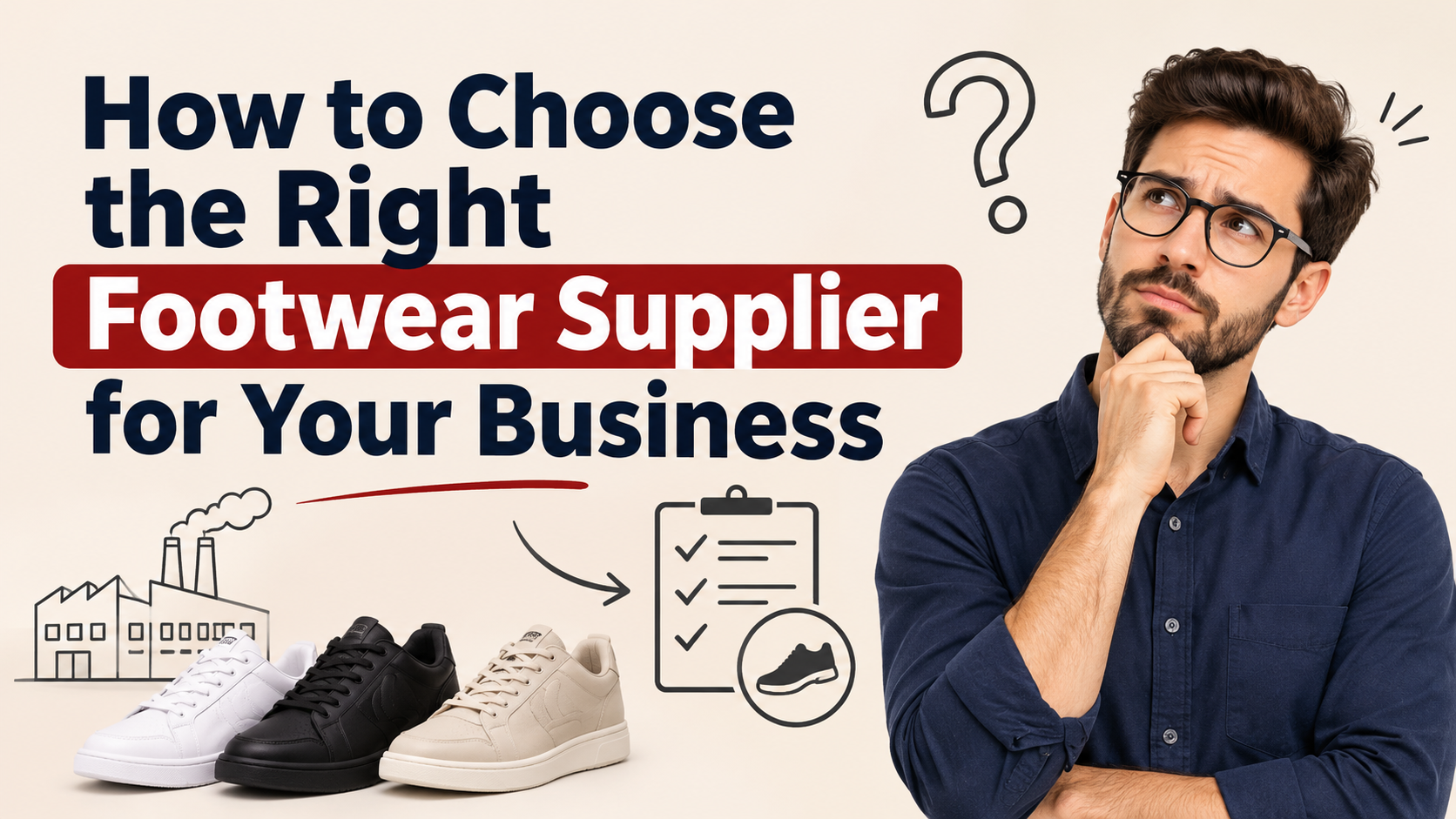

Starting or expanding a footwear business requires careful planning, especially when selecting the right manufacturing and sourcing partner. Whether you are a retailer, wholesaler, distributor or startup brand, choosing a reliable footwear supplier can help you manage product quality, pricing and bulk inventory.
India has a growing footwear industry, offering different sourcing options for businesses looking to purchase footwear in bulk or develop products under their own brand.
1. Understand Your Footwear Business Requirements
Before contacting a supplier, identify the type of footwear you want to sell. Consider your target customers, market demand, preferred styles and expected order quantity.
Businesses planning to sell Shoes in Bulk for Resale should compare product availability, size options, pricing and packaging requirements. Having a clear product plan also helps suppliers provide more accurate quotations.
2. Explore Private Label and OEM Manufacturing
If you want to establish your own footwear brand, private label and OEM manufacturing can be useful sourcing options.
Private label manufacturing allows businesses to sell products under their own brand name, subject to the manufacturer's available customization options. OEM manufacturing generally involves producing footwear according to agreed buyer specifications.
Before selecting a supplier, compare available designs, branding options, sampling facilities, minimum order quantities and production capabilities.
You can also explore this guide on Private Label Sneaker Manufacturers in India to understand supplier selection, customization, MOQ and manufacturing considerations.
3. Compare Footwear Manufacturing Costs
Pricing is an important factor when planning a wholesale footwear business. Manufacturing costs depend on raw materials, sole type, product design, labour, packaging, branding and order quantity.
Instead of comparing only the quoted price per pair, ask suppliers for an itemized quotation that includes additional expenses.
For a better understanding, read this detailed guide on Footwear Manufacturing Cost in India, which explains cost components, MOQ and budgeting considerations.
4. Choose a Reliable Footwear Supplier
A good supplier should clearly communicate product specifications, pricing, order requirements and delivery timelines.
Before placing a bulk order, consider these points:
-
Check product samples and material quality.
-
Confirm the minimum order quantity.
-
Discuss available branding and packaging options.
-
Understand payment and delivery terms.
-
Check quality inspection procedures.
-
Verify the supplier's manufacturing capabilities.
These steps can help businesses make informed sourcing decisions and avoid unexpected costs.
5. Plan Your Bulk Footwear Orders Carefully
Ordering footwear in bulk requires proper inventory planning. Businesses should consider market demand, popular sizes, product categories and available storage space before finalizing quantities.
Working with an experienced supplier can make bulk purchasing and product sourcing more organized.
Picaaso Footwear is an Indian footwear business offering B2B footwear sourcing and manufacturing-related solutions for wholesalers, distributors, retailers and bulk buyers. Businesses can explore available product categories, discuss order requirements and enquire about suitable branding and packaging options.
Visit Picaaso Footwear to explore footwear sourcing options and submit bulk enquiries.
Conclusion
Choosing the right footwear supplier involves more than finding the lowest price. Product quality, manufacturing capabilities, customization, MOQ and delivery arrangements all play an important role.
By comparing suppliers and understanding production costs, businesses can make better purchasing decisions and build a more organized footwear sourcing strategy.

