

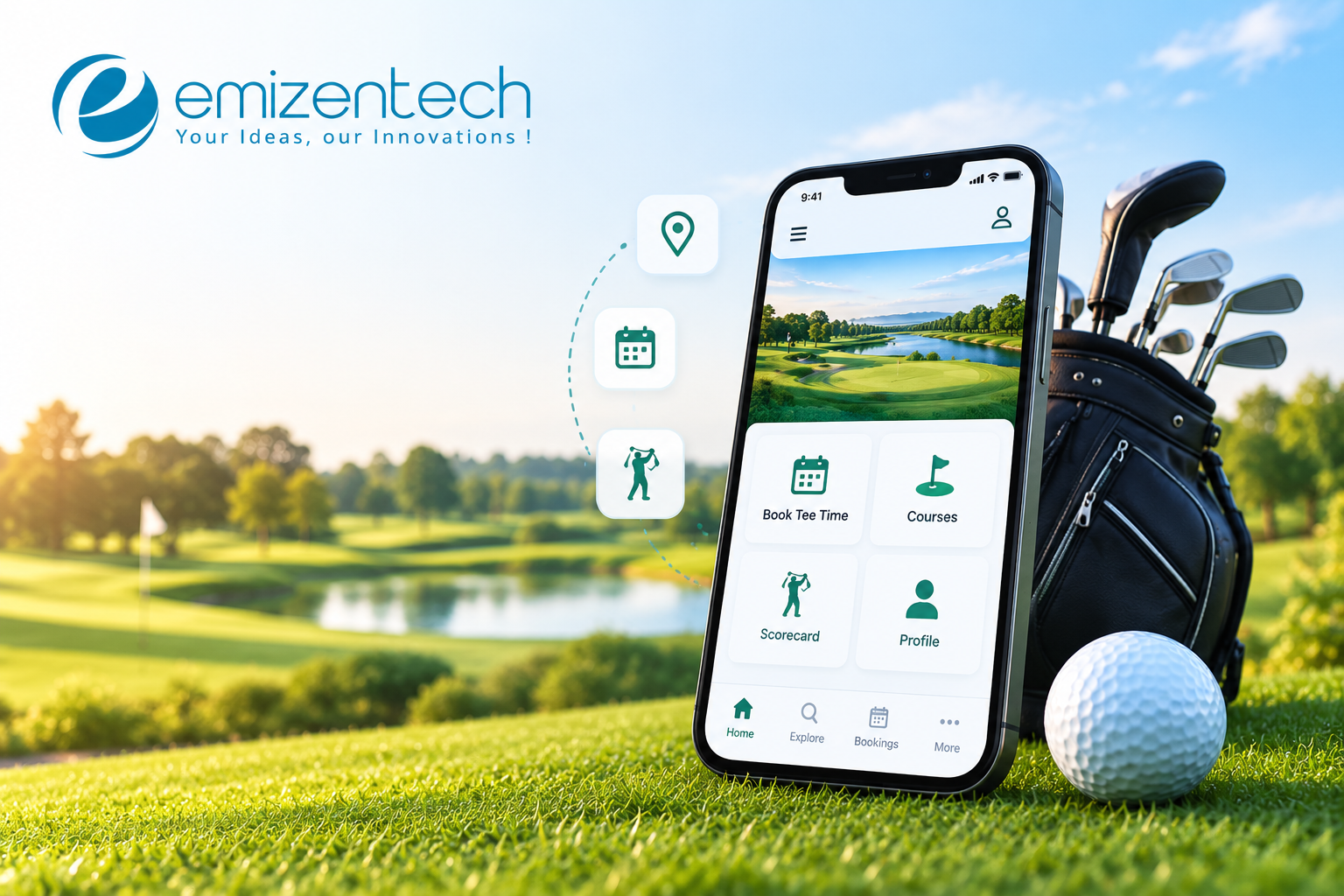
Building an AI-Powered Golf App: Key Features, Technologies, and Development Process

Golf has always been a game of precision, patience, and data. Players track scores, study courses, and fine-tune swings for years. Today, smartphones and artificial intelligence are changing how all of this works. An AI-powered golf app can analyze a swing in seconds, suggest the right club for a shot, and predict how a round may unfold based on past performance.
For golf clubs, coaching academies, equipment brands, and sports-tech startups, this is a strong opportunity. This guide covers the key features, technologies, and development process behind an AI-powered golf app, along with the ways AI can extend into other industries such as real estate.
Why AI Is Changing Golf Apps
Golf apps have moved far beyond digital scorecards. Artificial intelligence allows them to learn from every shot, identify patterns in player behavior, and provide guidance that feels personal and practical.
Traditional apps recorded information but offered limited analysis. AI makes this data more useful by identifying patterns that players might otherwise miss. For example, an AI engine can detect recurring slices on longer holes and suggest relevant practice drills. It can also analyze swing videos to highlight differences in tempo, posture, and movement.
This shift from basic tracking to intelligent guidance helps golfers understand their performance and identify areas for improvement. Developing these capabilities requires the right combination of AI technology, user-friendly design, and reliable functionality. Specialized golf app development services can help turn these ideas into practical mobile applications.
Key Features of an AI-Powered Golf App
A strong golf app combines useful everyday tools with intelligent AI capabilities. These are the main features that help players improve their game and help clubs run smoother operations daily.
- AI swing analysis: Using the phone camera and computer vision, the app detects body position, club path, and swing speed, then gives instant visual feedback on every stage of the swing.
- Smart course GPS and shot tracking: Accurate distances to greens and hazards, plus automatic shot tracking, help players see exactly where they lose strokes during a round.
- Personalized club recommendations: The app combines average distances, wind, elevation, and lie to suggest the best club, improving as it learns the player’s real performance.
- Virtual coaching and practice plans: An AI coach builds weekly drills around weaknesses, while a chatbot answers rule and technique questions in simple language.
- Tee-time booking and dynamic pricing: AI forecasts demand, recommends pricing for peak and off-peak slots, and sends reminders that reduce no-shows.
- Handicap management and tournaments: Automatic handicap calculation and live leaderboards suit both casual groups and organized clubs.
- Wearable and sensor integration: Smartwatches and club sensors feed live tempo, clubhead speed, and heart rate data into the app for deeper analysis.
- Social and community features: Challenges, shared rounds, and in-app messaging build a community, which is one of the best ways to improve retention.
How AI Improves the Overall Experience
Beyond new features, AI improves how the entire app performs for both players and operators. These are the most practical benefits that users and business owners notice soon after launch.
- Personalization: Every user sees tips, drills, and course suggestions that match their skill level.
- Accuracy: Machine learning models refine distance and club predictions with every round played.
- Operational efficiency: Demand forecasting, automated support, and smart scheduling reduce manual work for club staff.
- Higher engagement: Progress insights and goal tracking give players a reason to open the app after every round.
- Better decisions: Course owners can study booking patterns and player behavior to plan events, memberships, and promotions.
Technologies Behind an AI-Powered Golf App
The right technology stack decides how fast, accurate, and scalable your golf app will be. Below are the tools commonly used to build AI-powered golf products across mobile, cloud, and data layers.
- Mobile frameworks: Flutter or React Native for cross-platform apps, or Swift and Kotlin for native performance.
- AI and ML tools: TensorFlow, PyTorch, and Core ML for building, training, and deploying models.
- Computer vision: OpenCV and MediaPipe for pose estimation and swing analysis.
- Backend: Node.js, Python (Django or FastAPI), or Java for APIs and business logic.
- Cloud platforms: AWS, Google Cloud, or Azure for storage, model training, and scaling.
- Maps and location: Google Maps SDK and Mapbox for accurate course mapping and distances.
- Databases: PostgreSQL, MongoDB, or Firebase for user data and real-time sync.
- Payments: Stripe, PayPal, or Razorpay for bookings, memberships, and in-app purchases.
Because these tools must work together smoothly, many businesses rely on professional golf app development services to select, integrate, and optimize the right stack from the start.
The Development Process, Step by Step
Building an AI-powered golf app follows a clear sequence, from early research to long-term upkeep. Each stage reduces risk and keeps the project aligned with business goals and user needs.
Discovery and Planning
Define the target audience, whether casual golfers, serious players, coaches, or club managers. Study competitors, list must-have features, and decide which AI capabilities will give your new product a clear competitive edge.
UI/UX Design
Golfers use apps outdoors, often in bright sunlight and with one hand. Large buttons, high-contrast screens, and quick-access layouts matter more than decoration, so design should focus on speed, clarity, and simplicity.
Data Collection and Model Training
AI features depend on quality data. Teams gather swing videos, course maps, and shot records, then train and test models until swing detection and club recommendations reach an acceptable level of accuracy.
App Development
Developers build the front end, backend, and AI integrations in short sprints. This approach allows regular testing, quick feedback from stakeholders, and steady improvements before the app moves toward its final release.
Testing
Beyond standard QA, golf apps need field testing on real courses. Teams check GPS accuracy, battery consumption, and swing detection under different lighting and weather conditions to ensure reliable performance for golfers.
Launch and Deployment
The app is released on the App Store and Google Play after final checks. Analytics are set up from day one, so teams can track installs, usage patterns, and user feedback closely.
Maintenance and Improvement
AI models improve with new data, so regular updates matter. Bug fixes, performance tuning, and new feature additions should be part of the long-term product plan to keep users engaged and satisfied.
An experienced golf mobile app development company can also guide field testing and model tuning, which are the stages where most first-time teams struggle.
AI Beyond Golf: The Real Estate Connection
Golf courses often sit within residential and resort developments, so the link with property is natural. The same AI ideas can power real estate app development services with little change.
- Smart property recommendations: Club suggestion logic can be adapted to match buyers with homes based on budget, location, and lifestyle preferences.
- Virtual property tours: Computer vision used for swing analysis can support virtual walkthroughs and automatic image tagging for listings, especially for luxury projects.
- Demand and price forecasting: Models that predict tee-time demand can estimate property demand, rental yields, and pricing trends.
- 24/7 AI chatbots: The assistants that answer golf rule questions can handle buyer inquiries, schedule site visits, and qualify leads around the clock.
- Personalized communication: Behavior tracking helps send relevant offers to members, residents, and investors, increasing engagement and conversions.
- Connected member experience: Developers of golf communities can combine a golf app with a property module, giving members, residents, and investors one unified platform for bookings, payments, and updates.
Common Challenges to Plan For
Every AI-powered product comes with hurdles that need early planning. Addressing these points during design and development saves time, protects users, and keeps the budget under control.
- Data privacy: Swing videos and location data are personal, so strong security and clear user consent are necessary.
- Battery and connectivity: Courses often have weak coverage, so offline modes and efficient GPS usage are important.
- Model accuracy: Poor lighting or camera angles can affect swing analysis, so models need training on varied conditions.
- Cost and timeline: AI adds complexity, so starting with a focused MVP and expanding later is usually the smarter approach.
Conclusion
AI is turning golf apps from simple scorekeepers into intelligent companions that coach, predict, and personalize every round. With the right features, a sound technology stack, and a well-planned development process, an AI-powered golf app can serve players, clubs, and brands equally well, and the same foundations can extend into areas like real estate.
If you are ready to build one, Emizentech can help you design, develop, and launch a smart, scalable golf app tailored to your business goals.

