


Imagine a manufacturing facility where a critical machine suddenly stops working during peak production hours. The maintenance team discovers the problem only after production has been interrupted, orders are delayed, and operational costs begin increasing. What if the team could identify early warning signs before the equipment actually fails?
Unplanned equipment downtime is one of the biggest challenges facing manufacturing plants, industrial facilities, and businesses that depend on continuous machine operations. Unexpected failures can disrupt production schedules, increase maintenance expenses, reduce productivity, and affect customer satisfaction.
This is where Industrial Internet of Things (IIoT) technology makes a difference.
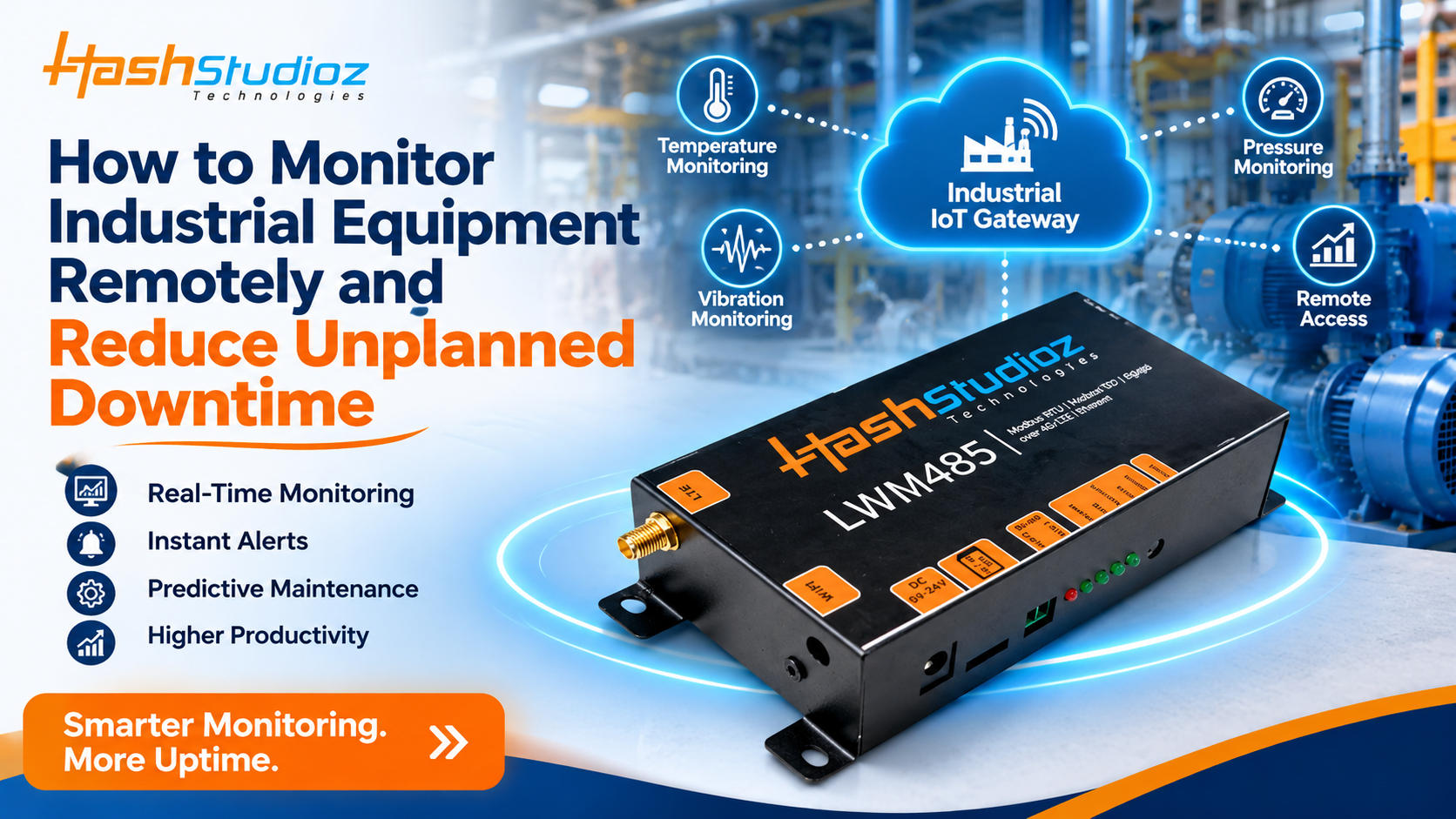
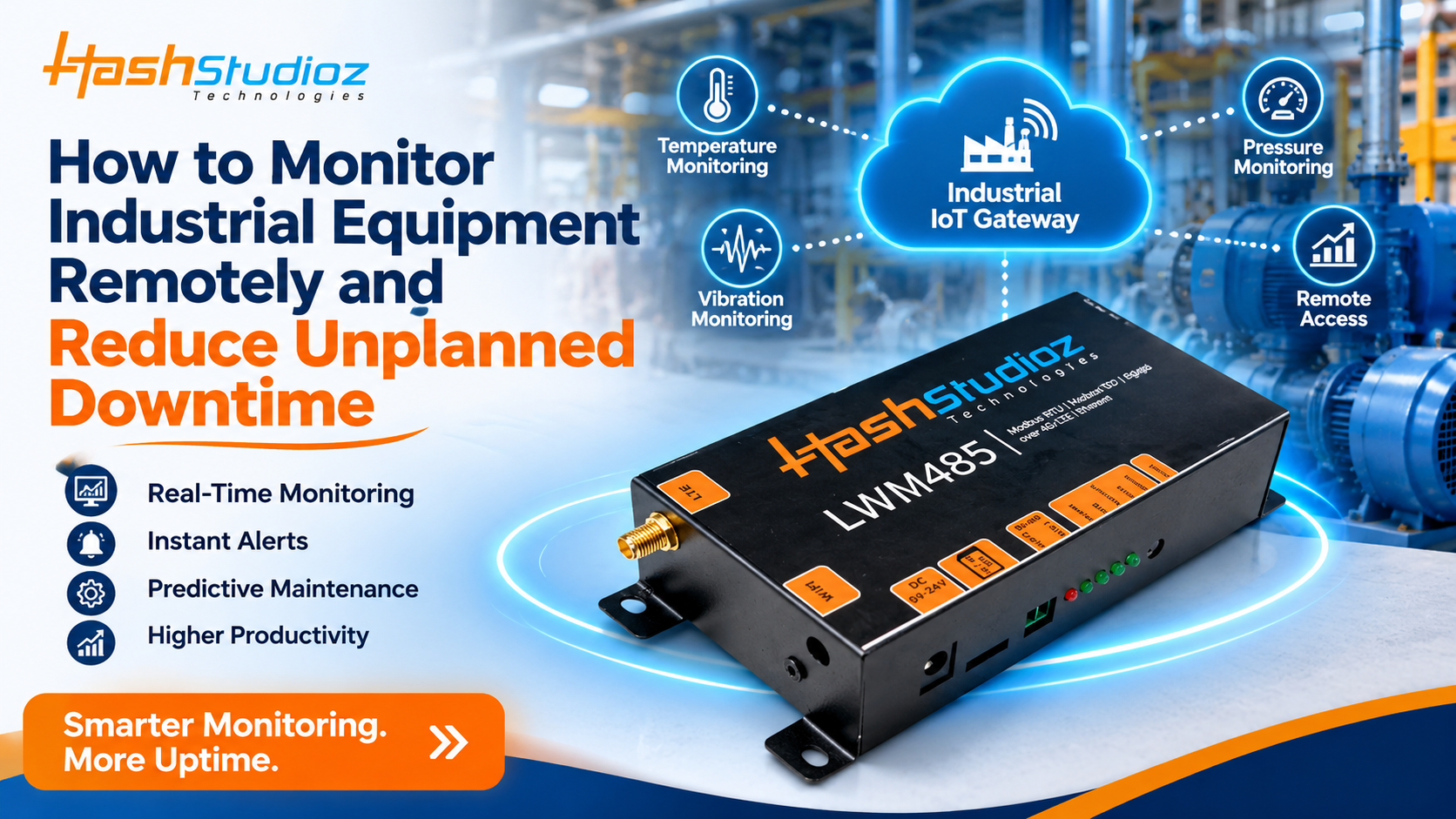
By using an Industrial IoT Gateway, businesses can collect data from industrial equipment, connect existing devices to modern monitoring platforms, and access important operational information remotely. Combined with sensors, analytics, and real-time alerts, this technology helps maintenance teams detect abnormal conditions and respond before minor issues become major failures.
Why Unplanned Industrial Equipment Downtime Is a Major Problem
Industrial equipment operates under demanding conditions. Motors, pumps, compressors, generators, conveyor systems, and other machines experience continuous mechanical and electrical stress.
Over time, components may wear out, temperatures may increase, vibration levels may become abnormal, and electrical performance may deteriorate.
Without continuous monitoring, these problems can remain unnoticed until equipment stops functioning.
Common Causes of Equipment Downtime
Some of the most common causes include:
-
Mechanical failures: Worn bearings, damaged gears, misaligned shafts, and excessive vibration.
-
Electrical problems: Voltage fluctuations, overheating, motor faults, and power supply issues.
-
Temperature abnormalities: Excessive heat caused by poor ventilation, friction, or overloading.
-
Pressure fluctuations: Unexpected changes in hydraulic, pneumatic, or fluid pressure.
-
Poor maintenance planning: Delayed inspections and missed maintenance schedules.
-
Limited equipment visibility: Lack of continuous access to machine operating conditions.
How Downtime Affects Business Operations
Unexpected machine failures can create several financial and operational challenges.
For example, when a production line stops unexpectedly, the company may experience:
-
Reduced production output.
-
Increased emergency repair expenses.
-
Delayed customer deliveries.
-
Higher labor and operational costs.
-
Wasted raw materials.
-
Lower overall equipment effectiveness (OEE).
For manufacturers operating multiple production lines, even a short interruption can affect several interconnected processes.
This makes proactive equipment monitoring an important part of modern industrial operations.
What Is Remote Industrial Equipment Monitoring?
Remote industrial equipment monitoring is the process of collecting machine operating data and accessing it through connected monitoring systems without requiring employees to be physically present near every machine.
It allows maintenance teams and facility managers to monitor important equipment parameters from a centralized dashboard.
How Remote Monitoring Works
A typical remote monitoring system includes the following components:
-
Industrial equipment: Machines such as motors, pumps, compressors, and generators.
-
Sensors: Devices that measure vibration, temperature, pressure, current, and other operating parameters.
-
Industrial controllers: PLCs, meters, and other devices that collect or process machine information.
-
RS-485 communication network: A communication interface used by many industrial devices.
-
RS-485 IoT Gateway: A device that collects industrial data and transfers it to connected monitoring systems.
-
Cloud or server platform: A centralized environment for storing, analyzing, and visualizing equipment information.
-
Monitoring dashboard: An interface that helps users understand machine conditions and receive alerts.
Through this setup, businesses can monitor equipment performance, identify unusual operating conditions, and make maintenance decisions based on available data.
How an RS-485 IoT Gateway Connects Industrial Equipment
Many industrial machines and automation devices communicate using serial protocols such as Modbus RTU over RS-485.
However, traditional serial communication systems are not always directly compatible with modern cloud-based monitoring platforms.
An RS-485 IoT Gateway helps bridge this communication gap.
Understanding RS-485 Communication
RS-485 is a widely used industrial serial communication standard designed for reliable data transmission in electrically noisy environments.
It is commonly found in:
-
Industrial PLCs.
-
Energy meters.
-
Temperature controllers.
-
Motor drives.
-
Power monitoring devices.
-
Industrial sensors.
-
Building automation systems.
Its differential signaling and support for multidrop networks make it suitable for many industrial applications.
How the Gateway Transfers Equipment Data
An RS-485 gateway can collect information from compatible industrial devices and make that information available through supported network protocols.
Depending on the device, configuration, and software capabilities, communication may involve:
-
Modbus RTU to Modbus TCP conversion.
-
Serial data to MQTT communication.
-
Serial data to HTTP-based applications.
-
Ethernet connectivity for industrial monitoring.
-
Data forwarding to remote servers or IoT platforms.
For example, a factory may have several temperature controllers connected through an RS-485 network.
The gateway reads the available temperature values and forwards them to a monitoring platform. Maintenance personnel can then review temperature conditions through a centralized dashboard.
This approach helps businesses connect existing industrial equipment without necessarily replacing their entire automation infrastructure.
Key Equipment Parameters to Monitor Remotely
Effective remote monitoring starts with identifying the parameters that provide useful information about equipment health.
Different machines require different monitoring strategies depending on their operating conditions and maintenance requirements.
Temperature Monitoring
Excessive temperature can indicate overheating, poor ventilation, excessive friction, or electrical problems.
Monitoring motor, bearing, and equipment temperatures helps maintenance teams identify abnormal heat conditions.
Practical example: A manufacturing company monitors the temperature of its industrial motors. When a motor consistently operates above its configured temperature threshold, the monitoring system sends an alert so the maintenance team can investigate.
Vibration Monitoring
Vibration analysis is particularly useful for rotating equipment such as pumps, motors, fans, and compressors.
Changes in vibration patterns may indicate:
-
Bearing deterioration.
-
Shaft misalignment.
-
Mechanical imbalance.
-
Loose mounting components.
-
Other developing mechanical issues.
By analyzing vibration data over time, maintenance teams can identify potential problems earlier.
Pressure Monitoring
Industrial systems involving fluids, compressed air, and hydraulic equipment often require continuous pressure monitoring.
Unexpected pressure changes may indicate leakage, blockages, pump problems, or system instability.
Remote pressure monitoring helps operators investigate abnormal conditions before they affect connected processes.
Current and Power Monitoring
Monitoring electrical current and power consumption can provide useful information about equipment performance.
Unexpected increases in current consumption may indicate motor overloading, mechanical resistance, or electrical issues.
Energy monitoring also helps businesses understand consumption patterns and identify opportunities to improve energy efficiency.
Equipment Status Monitoring
In addition to sensor measurements, businesses can monitor machine operating states such as:
-
Running.
-
Stopped.
-
Idle.
-
Fault condition.
-
Maintenance mode.
This information helps managers understand equipment utilization and identify recurring interruptions.
How Remote Monitoring Helps Reduce Unplanned Downtime
Remote monitoring becomes valuable when collected information helps maintenance teams take timely action.
An Industrial IoT Gateway supports this process by connecting equipment data with monitoring and analytics platforms.
Identify Problems Before Equipment Failure
Continuous monitoring makes it easier to recognize abnormal conditions.
For example, if vibration levels gradually increase over several days, maintenance personnel can investigate the equipment before a serious mechanical failure occurs.
This supports a shift from reactive maintenance toward condition-based and predictive maintenance practices.
Receive Real-Time Alerts
Monitoring platforms can be configured to generate alerts when equipment parameters exceed predefined limits.
Examples include:
-
Motor temperature exceeding a configured threshold.
-
Abnormal vibration readings.
-
Unexpected pressure drops.
-
Excessive current consumption.
-
Equipment unexpectedly going offline.
Alerts can be delivered through supported notification channels such as dashboards, email, or mobile applications.
The benefit is simple: maintenance teams do not need to wait for a manual inspection to discover every abnormal condition.
Reduce Unnecessary Physical Inspections
Facilities with equipment distributed across multiple locations often spend significant time performing manual inspections.
Remote monitoring gives maintenance teams access to relevant operating information from a centralized location.
This allows personnel to prioritize physical inspections based on actual equipment conditions.
Improve Maintenance Planning
When businesses maintain historical equipment data, they can identify recurring problems and understand how machine conditions change over time.
This information supports better maintenance scheduling and resource planning.
Instead of relying entirely on fixed inspection intervals, maintenance teams can consider equipment condition when prioritizing maintenance activities.
Important: Remote monitoring can help identify warning signs, but it cannot guarantee that equipment failures will always be prevented. Accurate results depend on suitable sensors, data quality, equipment configuration, and appropriate maintenance practices.
The Role of an Industrial IoT Gateway in Smart Manufacturing
An Industrial IoT Gateway is an important component of connected industrial infrastructure.
It connects field-level equipment with higher-level applications, enabling industrial data to move between different communication environments.
Protocol Conversion and Device Connectivity
Industrial facilities often contain equipment from different manufacturers using different communication protocols.
A suitable gateway helps connect these devices to a common monitoring environment.
For example, a facility may use Modbus RTU-based energy meters, temperature controllers, and PLCs.
A compatible gateway can collect their data and forward it through supported communication protocols.
Edge Processing and Data Filtering
Some advanced gateways support edge computing capabilities.
Instead of transmitting every available data point continuously, the gateway may perform selected local processing tasks, depending on its hardware and software capabilities.
These may include:
-
Filtering unnecessary data.
-
Processing selected sensor readings.
-
Applying threshold-based rules.
-
Buffering data during temporary network interruptions.
-
Sending important events to remote platforms.
This can help reduce unnecessary network traffic and improve the efficiency of monitoring systems.
Reliable Industrial Communication
Industrial environments may contain electrical interference, long cable distances, and challenging operating conditions.
When selecting a gateway, businesses should evaluate its communication interfaces, operating temperature range, power requirements, enclosure rating, and industrial certifications.
The right device should match the actual operating environment.
Practical Example: Remote Monitoring of Industrial Motors
Consider a manufacturing facility operating 25 industrial motors across different production areas.
Previously, maintenance personnel inspected the motors at scheduled intervals. Problems were often discovered only when unusual noise, overheating, or equipment failure became noticeable.
The company decides to implement a remote monitoring solution.
Before Implementation
-
Motor temperature was checked manually.
-
Vibration conditions were not continuously monitored.
-
Maintenance teams had limited historical data.
-
Equipment faults were sometimes discovered after production interruptions.
-
Maintenance planning depended heavily on fixed schedules.
After Implementing Remote Monitoring
The company installs suitable temperature and vibration sensors and connects compatible equipment through an RS-485 IoT Gateway.
The monitoring system collects relevant data and displays it through a centralized dashboard.
The improved process works as follows:
-
Sensors measure motor temperature and vibration.
-
Compatible controllers collect the sensor information.
-
The gateway reads available data over the RS-485 network.
-
Relevant information is transmitted to the monitoring platform.
-
Dashboards display machine conditions and historical trends.
-
Configured alerts notify maintenance personnel about abnormal readings.
-
Technicians investigate the affected equipment and schedule maintenance when required.
As a result, the company gains better visibility into equipment conditions and can prioritize maintenance activities more effectively.
The solution does not eliminate mechanical failures, but it helps the business identify potential problems earlier and make more informed maintenance decisions.
Important Factors to Consider When Choosing an RS-485 IoT Gateway
Selecting the right gateway is essential for building a reliable industrial monitoring solution.
Not every gateway supports the same communication protocols, connectivity options, or operating conditions.
Here are some important considerations.
1. Communication Protocol Compatibility
Check whether the gateway supports the protocols used by your existing equipment.
For example, if your devices communicate through Modbus RTU, ensure the gateway supports the required serial communication and data handling.
2. RS-485 Interface Support
Review the number of serial ports, supported baud rates, wiring requirements, and communication configurations.
Ensure the gateway can support the number of connected devices in your installation.
3. Network Connectivity
Evaluate the connectivity options required by your facility.
These may include:
-
Ethernet.
-
Wi-Fi.
-
4G LTE.
-
Cellular connectivity.
-
Other supported industrial networking interfaces.
The right choice depends on whether equipment is installed inside a connected facility or at remote locations.
4. Data Transmission Protocols
Check whether the gateway supports the protocols required by your monitoring platform, such as MQTT, HTTP, or Modbus TCP.
Compatibility helps simplify system integration.
5. Industrial Reliability
Industrial equipment often operates in environments with temperature variations, vibration, dust, and electrical interference.
Review the device's operating specifications and certifications before installation.
6. Security Features
Remote monitoring systems should be designed with appropriate cybersecurity controls.
Consider:
-
Secure communication protocols.
-
Authentication mechanisms.
-
Network access restrictions.
-
Firewall capabilities where supported.
-
Firmware updates.
-
Secure remote access.
Protecting connected industrial equipment is just as important as collecting its data.
Actionable Tips for Implementing Remote Industrial Monitoring
Businesses do not need to monitor every machine parameter immediately. A phased implementation approach can help reduce complexity and make the investment more effective.
Here are some practical recommendations.
1. Start with Critical Equipment
Identify machines whose failure would create the greatest production or financial impact. Begin monitoring these assets first.
2. Identify the Right Monitoring Parameters
Choose relevant measurements such as temperature, vibration, pressure, and current based on equipment type and failure risks.
3. Check Existing Communication Interfaces
Review the communication capabilities of your PLCs, meters, controllers, and sensors before selecting a gateway.
4. Set Meaningful Alert Thresholds
Configure alerts based on equipment specifications and operating conditions. Avoid excessive notifications that may cause alert fatigue.
5. Maintain Historical Equipment Data
Store relevant readings so that maintenance teams can analyze trends and identify recurring abnormalities.
6. Integrate Monitoring with Maintenance Workflows
Ensure that alerts lead to investigation, maintenance activities, and documented corrective actions.
7. Prioritize Network and Device Security
Use secure configurations, restrict unnecessary access, and regularly review connected devices.
8. Evaluate System Performance Regularly
Track downtime frequency, maintenance response time, equipment availability, and recurring fault patterns to understand whether the monitoring system is delivering value.
Conclusion
Unplanned equipment downtime can disrupt production, increase maintenance expenses, and affect overall business performance. Traditional manual inspection methods often make it difficult to identify developing equipment problems before they become serious.
Remote industrial equipment monitoring provides a smarter approach by connecting sensors, industrial controllers, gateways, and monitoring platforms.
An RS-485 IoT Gateway helps businesses connect existing industrial equipment with modern IoT systems, making important operational information accessible through centralized dashboards and remote monitoring applications.
When combined with appropriate sensors, data analytics, and alert mechanisms, an Industrial IoT Gateway can support condition-based maintenance, improve equipment visibility, and help reduce unexpected production interruptions.

