

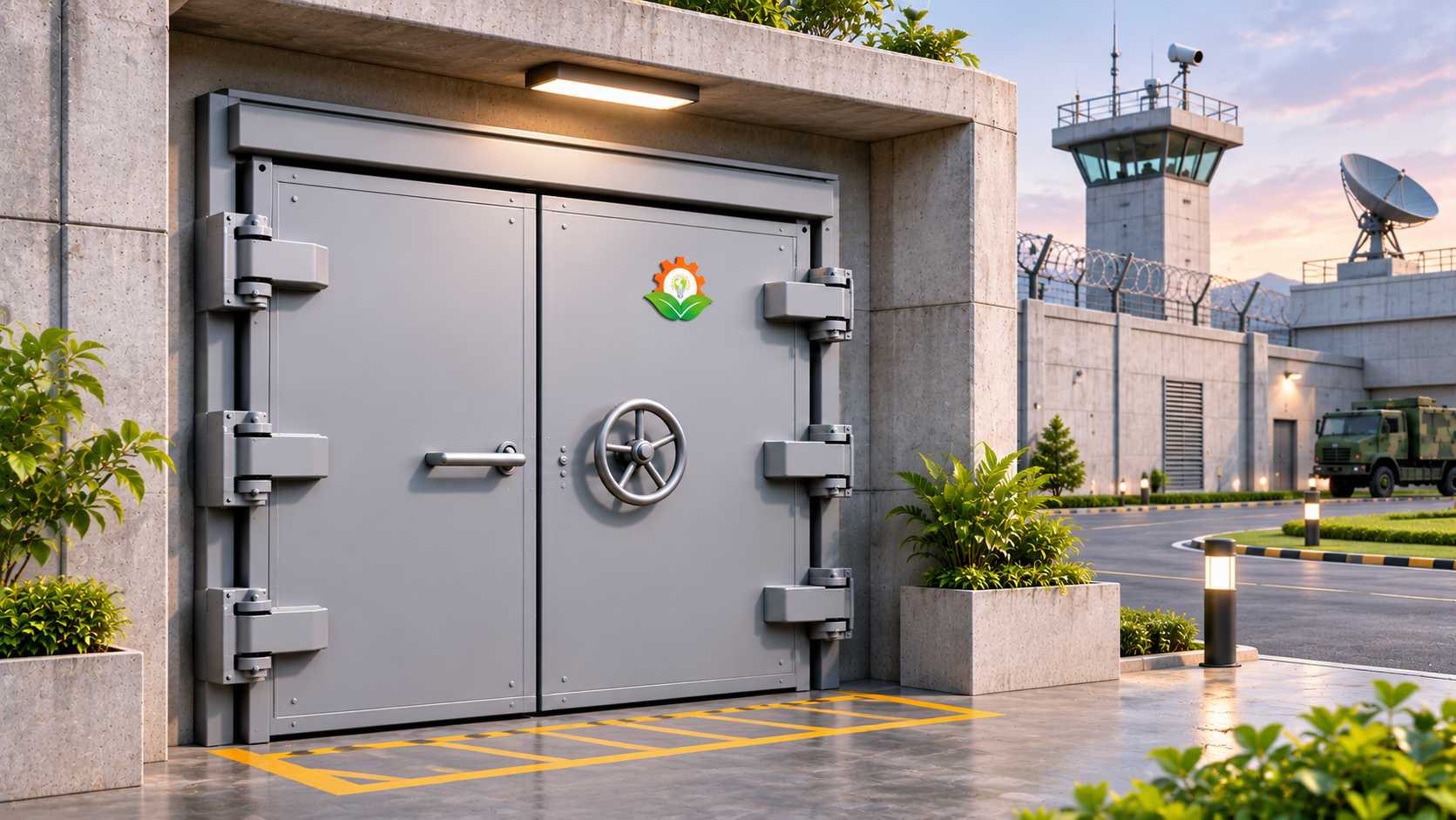

A newly commissioned oil and gas control facility had invested in a certified blast protection system after completing a detailed risk assessment. During the final inspection, engineers discovered that one door frame had been anchored incorrectly, reducing its ability to transfer blast loads into the surrounding concrete wall. Although the blast proof door itself met the required specification, improper installation could have compromised the entire protection system. This example highlights why installation is just as important as design and manufacturing.
A blast proof door is engineered to protect people, equipment, and critical infrastructure from explosive pressure waves, but its performance depends on correct installation. Every stage—from structural assessment to commissioning—must follow engineering specifications to ensure the door functions as a complete blast protection system. Whether installed in a defence facility, embassy, refinery, or data centre, professional installation is essential for long-term safety and operational reliability.
Blast Proof Door Installation: Step-by-Step Guide
Installing a blast-resistant door involves much more than fixing a steel door into an opening. The process requires structural engineering, precision alignment, certified hardware, and rigorous quality checks to ensure the complete assembly performs under design blast loads.
Step 1: Structural Assessment and Blast Door Design
The installation process begins long before the door reaches the site.
Engineers first evaluate:
- Expected blast pressure
- Structural wall capacity
- Door opening dimensions
- Reinforced concrete strength
- Steel framework
- Emergency access requirements
This information determines the final blast door design, frame configuration, anchoring method, and reinforcement requirements.
Every installation should be based on project-specific engineering rather than a standard construction detail.
Step 2: Verify Blast Ratings and Certification
Before installation begins, engineers verify that the supplied door matches the approved project specifications.
Documentation should confirm:
- Blast pressure rating
- Engineering calculations
- Manufacturing quality records
- Hardware specifications
- Testing and certification
- Compliance with IS/BIS requirements and recognised international blast standards
When sourcing products from blast proof door manufacturers in India, certification should always be reviewed before installation starts.
Step 3: Prepare the Structural Opening
The surrounding wall plays a critical role in blast resistance.
Before installing the frame, contractors inspect:
- Concrete strength
- Reinforcement details
- Wall dimensions
- Surface alignment
- Embedded structural components
Any defects are corrected before proceeding because structural weaknesses can compromise the performance of even the strongest blast resistant doors.
Step 4: Install the Reinforced Frame
The frame transfers blast forces into the building structure.
During installation, engineers ensure:
- Accurate positioning
- Correct vertical alignment
- Level installation
- Approved anchor spacing
- Structural weld quality
- Frame rigidity
Improper frame installation remains one of the most common causes of reduced blast protection performance.
Step 5: Install the Door Leaf and Hardware
Once the frame is secured, the door leaf is positioned using specialised lifting equipment.
Installation includes:
- Heavy-duty hinges
- Multi-point locking systems
- Reinforced bearings
- Operating mechanisms
- Adjustable seals
- Safety hardware
Correct alignment ensures the door operates smoothly while maintaining its designed structural performance.
Step 6: Seal and Integrate the Complete System
Modern blast resistant door systems often provide protection against multiple hazards.
Installation may include:
- Airtight sealing
- Fire-resistant sealing materials
- Smoke barriers
- Corrosion-resistant finishing
- Protective coatings
- Chemical-resistant seals
Proper sealing improves both operational performance and environmental protection.
Step 7: Functional Testing and Commissioning
Before handover, engineers conduct detailed inspections.
Typical commissioning activities include:
- Door operation testing
- Locking system verification
- Seal inspection
- Hardware adjustment
- Frame alignment confirmation
- Documentation review
Although physical blast testing is not performed on installed project doors, installation quality is verified against approved engineering drawings and specifications.
Structural Performance After Installation
A properly installed blast proof door functions as part of the building's structural defence system.
During an explosion, blast pressure is transferred through:
- Door leaf
- Internal reinforcement
- Hinges
- Locking systems
- Reinforced frame
- Structural anchors
- Surrounding wall
Each component must work together to safely absorb and distribute explosive forces.
Fire Resistance and Automation Integration
Modern blast doors frequently combine structural protection with advanced operational features.
These may include:
- Fire-rated construction
- Smoke containment
- Corrosion-resistant coatings
- Electronic access control
- Biometric authentication
- CCTV integration
- Building Management System (BMS) connectivity
- Emergency lockdown systems
Integration is usually completed during installation and verified during commissioning.
Key Features to Verify During Installation
Installation teams should confirm that every critical engineering feature performs as intended.
These include:
- Structural strength
- Certified blast pressure rating
- Corrosion resistance
- Fire resistance
- Airtight sealing
- Security-grade locking systems
- Heavy-duty hinges
- Durable protective finishes
- Low-maintenance hardware
- Certification compliance
Verification at this stage reduces future maintenance issues.
Where Blast Proof Doors Are Installed
Professional installation is essential across many high-risk industries.
Typical applications include:
- Defence and military installations
- Government and administrative buildings
- Embassies and consulates
- Oil and gas facilities
- Petrochemical plants
- Power generation stations
- Data centres
- Ammunition depots
- Industrial process units handling hazardous materials
Certain facilities may also specify explosion proof doors, depending on their operational hazards and applicable engineering requirements.
Installation Costs and Investment Factors
Installation forms an important part of the total blast door price.
Key cost factors include:
- Blast rating and pressure class
- Door size and configuration
- Material and plate thickness
- Frame and anchoring engineering
- Testing and certification
- Automation and locking systems
- Site-specific structural assessment
- Installation complexity
- Long-term maintenance planning
Reducing installation costs by compromising engineering quality often results in significantly higher lifecycle expenses.
Buyer's Guide: Choosing the Right Installation Partner
Selecting experienced installers is just as important as selecting the manufacturer.
When evaluating blast proof door manufacturers in India, look for organisations that offer:
- Structural engineering expertise
- Certified installation teams
- Compliance with recognised standards
- Precision manufacturing
- Custom engineering capability
- Technical documentation
- Commissioning support
- Preventive maintenance services
- Proven project experience
Working with a company that provides complete project execution simplifies coordination. Sigma Power Tech blast door solutions are supported by Sigma Power Tech manufacturer and service provider capabilities, delivering engineering, manufacturing, installation, commissioning, and after-sales maintenance under one integrated approach.
Common Installation Mistakes to Avoid
Several installation errors can reduce blast protection performance.
Avoid:
- Selecting contractors based only on price
- Ignoring site-specific blast assessments
- Incorrect frame anchoring
- Poor wall integration
- Underestimating fire or corrosion exposure
- Skipping certification verification
- Neglecting maintenance planning
- Ignoring future security upgrades
Correct installation ensures the system performs as intended throughout its operational life.
Conclusion
Installing a blast proof door is a specialised engineering process that requires accurate structural assessment, certified components, reinforced frame integration, professional installation, and comprehensive commissioning. Every stage contributes directly to the system's ability to resist blast loads and protect critical infrastructure.
Whether the project involves defence installations, government buildings, industrial plants, or hazardous process facilities, organisations should prioritise certified engineering, experienced installation teams, and long-term structural reliability over short-term cost savings. A professionally installed blast protection system provides dependable performance, enhanced safety, and lasting operational resilience when it matters most.

